Opening of the Lincoln Tunnel – December 22, 1937
1937 · New York City, United States
The Lincoln Tunnel in New York City was opened to traffic, providing a crucial connection between Manhattan and New Jersey under the Hudson River.
October 24, 1931
George Washington Bridge was opened to the public, connecting New York City with Fort Lee, New Jersey, across the Hudson River.
New York City, United States | Port Authority of New York and New Jersey
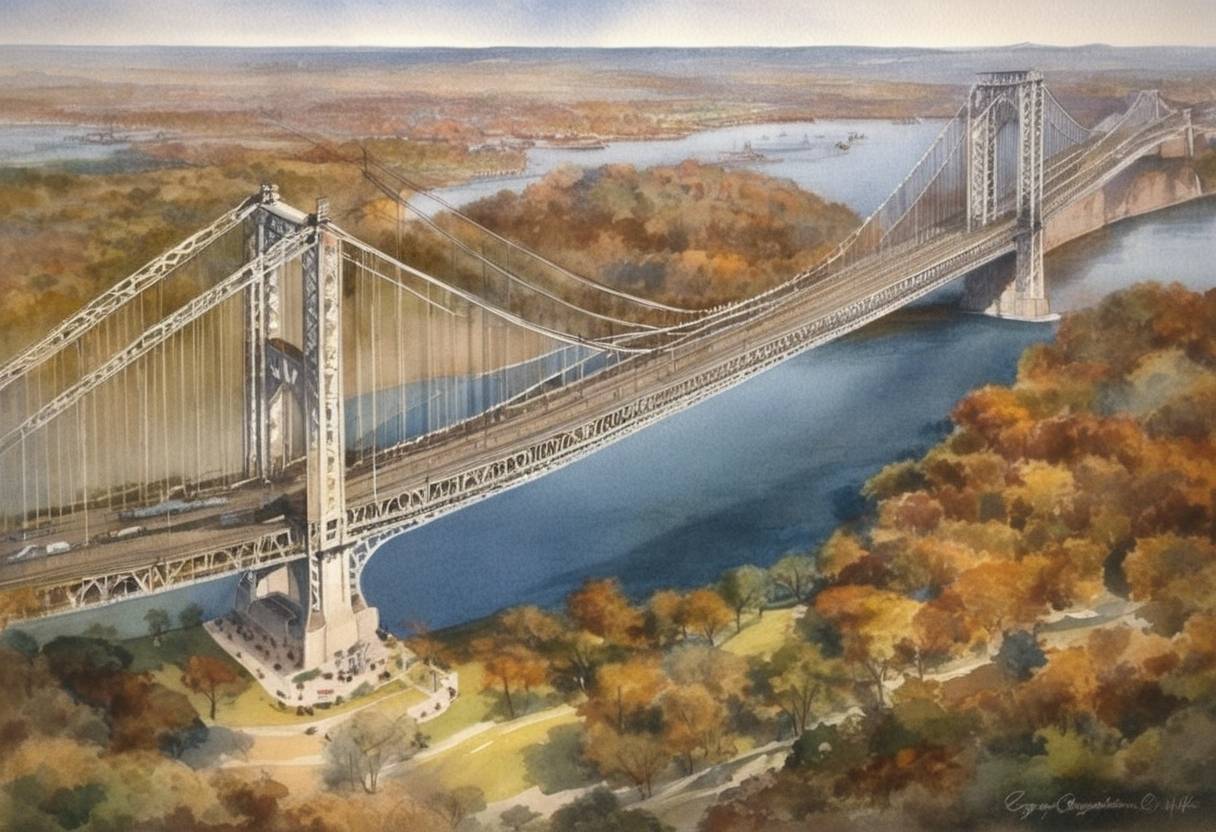
On October 24, 1931, the George Washington Bridge was officially opened to the public, establishing a critical connection between New York City and Fort Lee, New Jersey, across the Hudson River. This engineering marvel marked a significant milestone in American infrastructure, establishing itself as a vital link for the Northeast corridor.
The bridge was designed by Othmar Ammann, a Swiss-born structural engineer, who proposed a bridge that was both economically feasible and structurally innovative. Construction of the bridge began in 1927 and was initially predicted to cost \(75 million but was completed under budget at \)59 million. The bridge featured a suspension design, which was groundbreaking at the time due to its unprecedented span of 3,500 feet between towers, making it the longest suspension bridge in the world upon its completion.
The bridge significantly improved transit across the Hudson River and facilitated the movement of goods and people between New York and New Jersey. Initially, the bridge had six lanes on a single deck, but growing traffic demands necessitated expansions. By 1946, an additional lane was added, and a second deck was constructed in 1962, further expanding its capacity.
The opening of the George Washington Bridge symbolized a significant achievement in engineering and urban planning. It reflected the economic optimism of the United States in the late 1920s and served as a critical infrastructure link during the Great Depression. It not only connected two states but also became a testament to the ingenuity and ambition of early 20th-century America.
The George Washington Bridge remains an iconic infrastructure piece and a vital transport link, enduring as one of the most heavily trafficked bridges in the world. Its innovation in construction techniques influenced future bridge designs, contributing significantly to the development of modern suspension bridges.
Source: en.wikipedia.org