Norway's EU Membership Referendum, 1994
1994 · Oslo, Norway
Norway held a referendum in which the Norwegian people voted against joining the European Union.
June 7, 1905
Norway's parliament, the Storting, dissolved the union with Sweden.
Kristiania (now Oslo), Norway | Storting
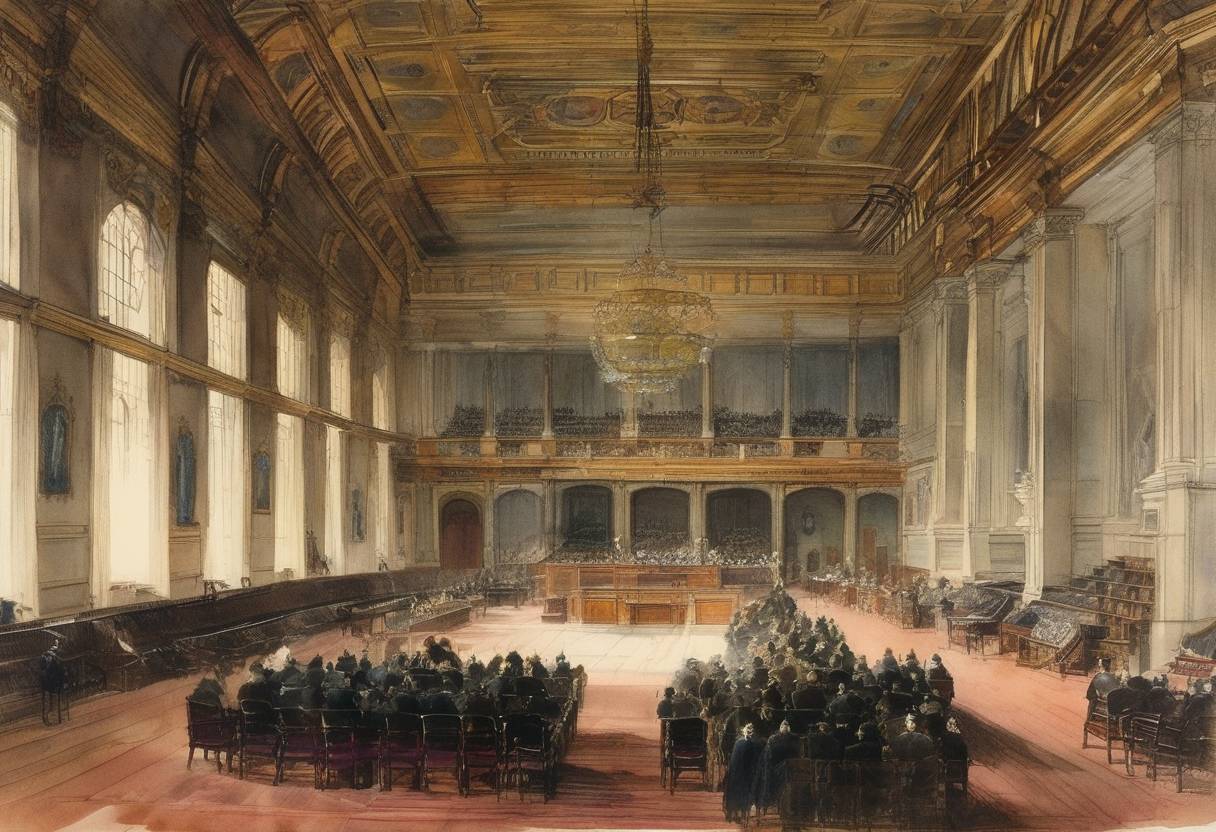
On June 7, 1905, the Norwegian Storting, Norway’s parliament, took a monumental step in dissolving the union with Sweden, which had been in place since 1814. This decision marked a pivotal moment in Scandinavian history, allowing Norway to emerge as an independent nation.
The union between Norway and Sweden was established under the Convention of Moss in 1814 following the Napoleonic Wars. It was a consequence of the Treaty of Kiel, where Denmark-Norway was forced to cede Norway to Sweden. Despite this political union, Norway maintained significant domestic autonomy and had its own constitution.
Throughout the 19th century, tensions simmered due to Norway’s desire for greater independence and distinct national identity. Friction was exacerbated by issues such as the implementation of separate Norwegian consulates and disagreements over foreign policy, which were under Swedish control.
Amid growing national sentiment and demands for sovereignty, the political atmosphere reached a climax in early 1905. Negotiations for a more equitable relationship within the union had stalled, and the situation worsened when the Swedish government rejected calls for separate Norwegian consulates.
In response, the Storting took decisive action on June 7, passing a resolution that unilaterally dissolved the union. The resolution declared King Oscar II of Sweden had ceased to act as King of Norway by failing to form a new Norwegian government. Subsequently, the monarchy in Norway was considered vacant, leading to the declaration of Norway’s independence.
The dissolution of the union was generally peaceful, though it carried the risk of military conflict. Fortunately, both nations chose to settle the matter diplomatically. Negotiations occurred throughout the summer, resulting in the Karlstad Agreement in September 1905, which facilitated a peaceful end to the union.
A national plebiscite held in August 1905 saw overwhelming support for independence among Norwegians. By October 1905, the Storting offered the Norwegian throne to Prince Carl of Denmark, who accepted and became King Haakon VII, marking the beginning of a new constitutional monarchy in Norway.
The dissolution of the union on June 7, 1905, is celebrated as a foundational moment in Norwegian national identity, playing a critical role in shaping modern Norway as an independent and sovereign state.
Source: en.wikipedia.org