Napoleon Bonaparte Proclaimed Emperor of the French
1804 · Paris, France
Napoleon Bonaparte is proclaimed Emperor of the French by the French Senate, marking the transition from the French Consulate to the First French Empire.
March 26, 1871
The Paris Commune was formally established after a municipal council was elected by the people of Paris. This was an early and influential form of government, where the workers of Paris assumed power and ran the city until its suppression in May 1871.
Paris, France | The Paris Commune
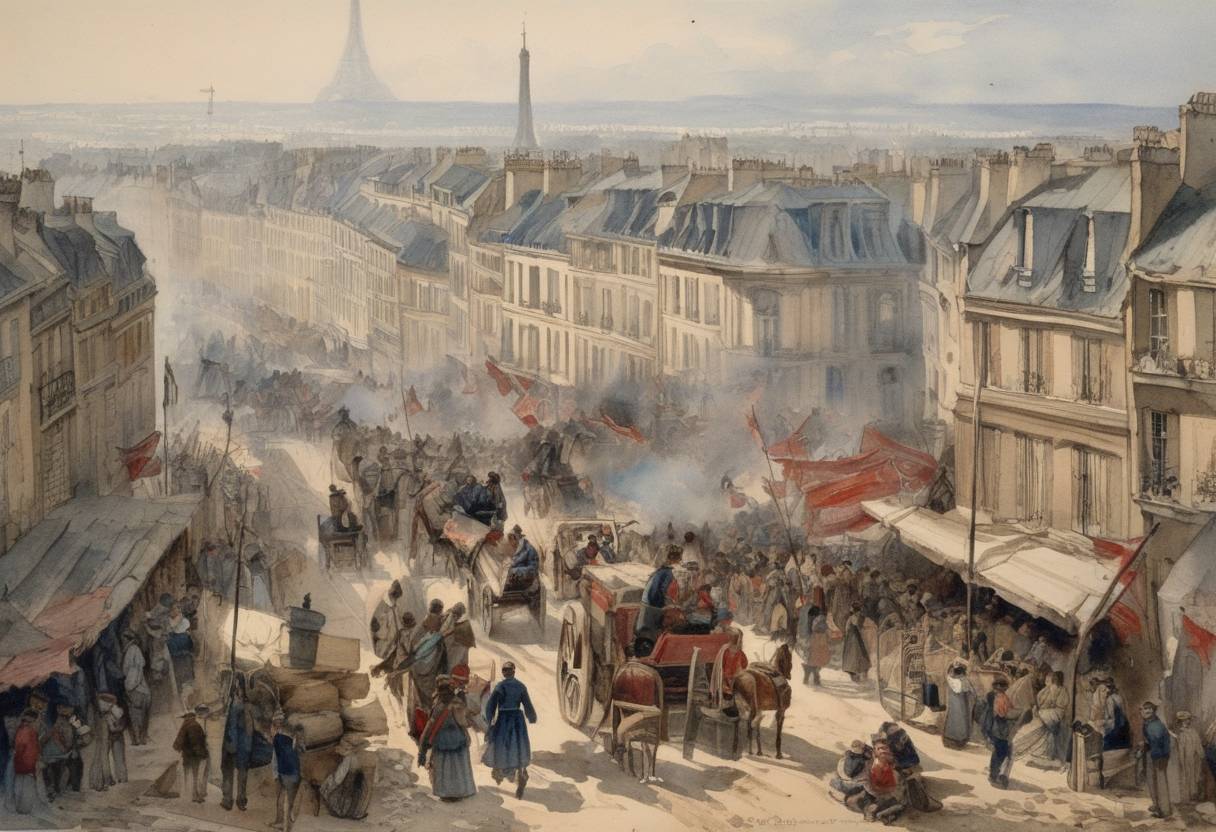
The Paris Commune was officially established on March 26, 1871, following the election of a municipal council by the citizens of Paris. This significant political event marked the beginning of a radical socialist and revolutionary government that arose in the wake of France’s defeat in the Franco-Prussian War and the subsequent fall of the Second Empire.
France’s defeat in the Franco-Prussian War and the capture of Emperor Napoleon III at the Battle of Sedan in September 1870 led to the collapse of the Second French Empire. In the vacuum that ensued, the Third Republic was proclaimed. Hostilities persisted, culminating in the Siege of Paris, which ended in January 1871. The cessation of hostilities with Prussia, facilitated by the Treaty of Versailles negotiations, was viewed as unacceptable by many Parisians, who were already suffering greatly from the siege.
Amidst the political instability, Parisians, especially workers, were disillusioned by the existing national government and its monarchist tendencies. This discontent was exacerbated by socio-economic struggles and a powerful revolutionary impulse was festering within the city.
On March 26, 1871, citizens of Paris convened elections to form a Commune that would govern the city autonomously. This municipal council was composed of socialists, anarchists, and other radical factions, reflecting the varied revolutionary ideologies of the time. Officially recognized on March 28, 1871, the Paris Commune sought to implement policies centered around social and economic reforms. These included the separation of church and state, workers’ rights, and the establishment of secular, compulsory education.
Democratization and Social Policies: The Commune implemented progressive reforms, including limiting work hours and ensuring workers’ rights, showcasing the strong influence of socialist ideologies.
Secularization Efforts: Religious symbols and associations were removed from schools and government offices in an effort to establish a secular state.
Direct Democracy Practices: Encouraged a decentralized form of government where public meetings and participatory democracy were promoted. Elected officials were bound by mandates and were subject to recall by their electorate.
The Paris Commune’s attempt at self-rule and radical reform was short-lived. The National Government in Versailles, led by Adolphe Thiers, mounted a military campaign to suppress the Commune. This culminated in the “Bloody Week” (La Semaine Sanglante) that saw intense fighting and resulted in the fall of the Commune by May 28, 1871. The suppression was brutal, with thousands of Communards killed or arrested.
The Paris Commune remains a pivotal event in the history of revolutionary movements. It served as an inspiration for future socialist and communist ideologies and is often referenced as a prototype of proletarian governance. While its existence was brief, the Paris Commune’s legacy continues to influence political thought and action well beyond 1871.
Source: en.wikipedia.org