Naval Battle off the Coast of Brittany - January 13, 1797
1797 · off the coast of Brittany, France
French Revolutionary Wars: A naval battle between French and British fleets occurs off the coast of Brittany.
June 16, 1755
The French navy captures 300 British merchant and transport ships while on a convoy from Nova Scotia to South Carolina.
Atlantic Ocean, International Waters | French Navy
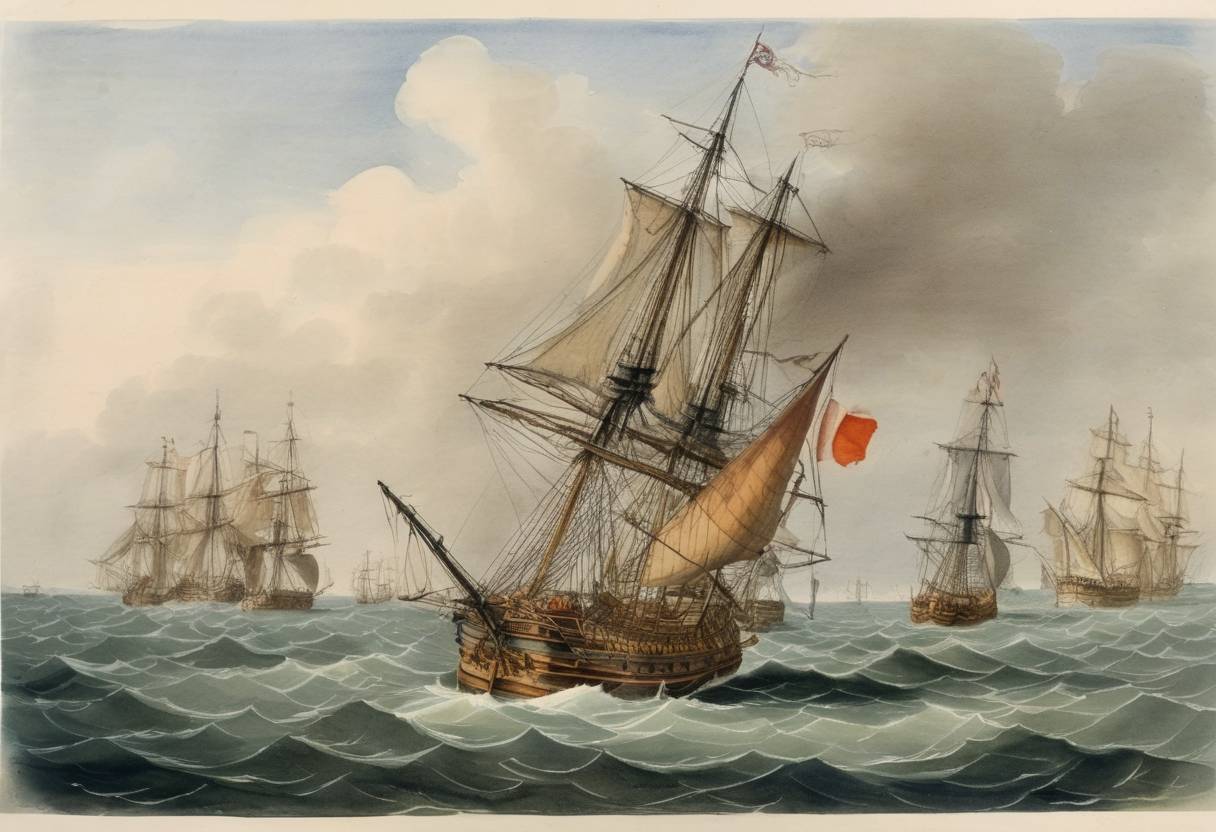
On June 16, 1755, a pivotal event in the context of the escalating hostilities between Britain and France occurred, preluding the formal outbreak of the Seven Years’ War. The French navy successfully intercepted and captured approximately 300 British merchant and transport ships. These ships were part of a convoy traveling from Nova Scotia to South Carolina.
During the mid-18th century, both Britain and France were vying for global supremacy. Their imperial and maritime ambitions often led to skirmishes on various continents. North America became a crucial theater for these imperial contests, given its economic potential and strategic importance.
The colonial tensions were exacerbating, especially in areas like the Ohio Valley, which both countries sought to control. By 1754, various military engagements were already taking place, laying the groundwork for what would become known as the Seven Years’ War (1756-1763).
The capture on June 16, 1755, struck a significant blow to British naval operations in North America. A considerable number of British ships, involved in commercial and military logistics, were seized by the French. This action not only impeded the British supply chain but also demonstrated France’s formidable naval presence in the Atlantic and their commitment to curtail British influence.
The convoy captured held a variety of goods, crucial for both sustenance and military operations, and the loss impacted both British economic interests and military readiness in the region.
In the aftermath of this significant capture, friction between Britain and France intensified. This event served as one of several provocations prompting Britain to formally declare war on France in 1756, thus transitioning the existing skirmishes into full-scale war.
The seizure also showcased the vulnerabilities of British supply routes in the North Atlantic, leading to strategic reconsiderations and eventually to more vigorous naval campaigns against France.
Ultimately, while the capture itself was a tactical victory for the French, it set the stage for a broader conflict that would shape global colonial boundaries and influence international relations for decades to come.
This incident underscores the importance of naval power in 18th-century warfare and the complexities of colonial rivalry between dominant European powers. It contributed to the chronicling of the root causes and early engagements of the Seven Years’ War, which is often referred to as the first “world war” due to its widespread theaters of conflict across Europe, America, Africa, and Asia.
Source: www.britannica.com