Grenfell Tower Fire - June 14, 2017
2017 · London, United Kingdom
A fire broke out in the Grenfell Tower, a residential high-rise building in North Kensington, London, resulting in 72 fatalities.
August 22, 1985
A fire broke out on a British Airtours flight at Manchester Airport during takeoff, resulting in the deaths of 55 people. The incident led to significant changes in aircraft safety regulations, particularly concerning the use of fire-retardant materials and evacuation procedures.
Manchester, United Kingdom | British Airtours
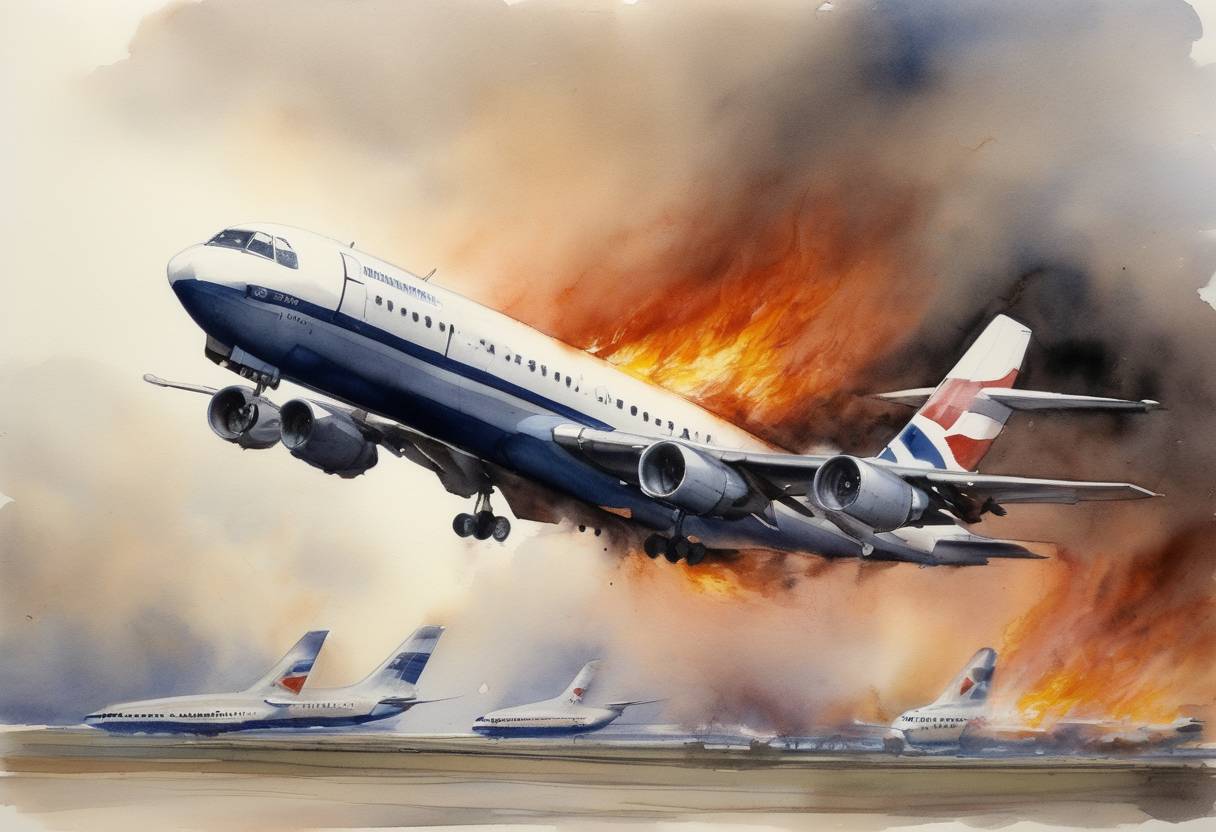
On August 22, 1985, a catastrophic incident occurred involving British Airtours Flight 28M at Manchester Airport, England. This tragic event involved a Boeing 737-236 aircraft that was scheduled for a flight from Manchester to Corfu, Greece. During the takeoff roll on Runway 24, a fire broke out on the aircraft, leading to the deaths of 55 individuals and prompting substantial changes in aviation safety regulations.
As Flight 28M began its takeoff procedure at approximately 7:13 AM local time, a loud bang was heard. This sound was caused by the failure of the left engine due to a compressor blade failure. The fracture of the blade resulted in a rupturing of the fuel tank, leading to a severe fire on the left wing.
The fire quickly spread to the cabin, exacerbated by the wind direction pushing flames and toxic smoke towards the fuselage. The crew’s attempt to abort takeoff allowed the aircraft to stop on the runway, but the fire engulfed the rear of the plane before a full evacuation could be completed.
Out of the 137 passengers and crew aboard, 55 lost their lives, primarily from smoke inhalation and fire asphyxiation. The rapid spread of the fire and the dense, toxic fumes greatly hampered evacuation efforts. Furthermore, difficulties with the aircraft doors and the substantial fire damage delayed rescue operations.
The tragedy underscored deficiencies in aircraft safety measures and led to a comprehensive review of aviation safety regulations. Significant changes were enacted in the following areas:
Fire-Retardant Materials: The aviation industry mandated the use of more effective fire-retardant materials in aircraft cabins to prevent rapid fire spread.
Evacuation Procedures and Design: Enhanced evacuation protocols were developed, including improvements to emergency lighting, clearer markings, and the training of cabin crew in executing swift evacuations.
Engine Design Improvements: To prevent similar mechanical failures, engine designs were revised to ensure better containment of internal malfunctions.
The British Airtours Flight 28M incident became a turning point in aviation safety. The changes instituted in its wake have contributed to improved survivability in subsequent aviation incidents. The legacy of the victims is remembered through these vital enhancements, which continue to safeguard the lives of air travelers worldwide.
Source: aviation-safety.net