Expulsion of Jews from France by King Charles VI on September 17, 1394
1394 · Paris, France
King Charles VI of France ordered the expulsion of all Jews from France.
May 17, 1337
The dispute between King Edward III of England and King Philip VI of France escalates when Philip confiscates the Duchy of Aquitaine from Edward, a key event that helps catalyze the Hundred Years' War.
Paris, France | French Monarchy
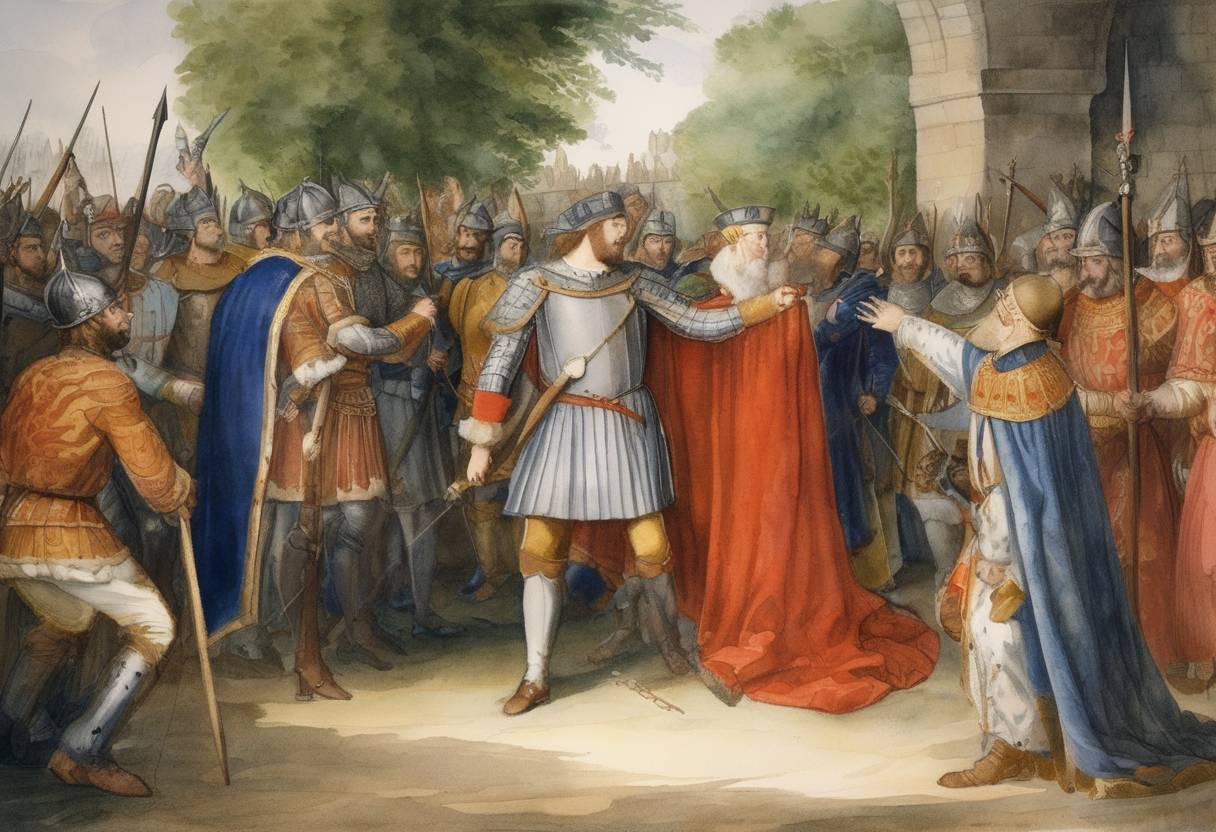
The confiscation of the Duchy of Aquitaine by King Philip VI of France from King Edward III of England on May 17, 1337, marked a pivotal escalation in the tensions between the two kingdoms, setting the stage for the Hundred Years’ War.
The roots of this conflict lay in the complex feudal allegiances and territorial disputes of medieval Europe. Aquitaine, a significant French territory, had been under English control since the late 12th century due to the marriage of Eleanor of Aquitaine to Henry II of England. Despite being a French vassal, the English monarchs had long claimed these lands, leading to a delicate and often tense relationship between England and France.
In 1328, the French throne was left without a direct male heir, resulting in Philip VI’s ascension. Edward III, whose mother, Isabella of France, was Philip IV’s daughter, also staked a claim to the French crown. This claim was not immediately pursued due to political considerations and power dynamics in Europe. However, the relationship between Edward and Philip strained further as disputes over the Gascony region, a portion of the Duchy of Aquitaine, grew more contentious.
The immediate catalyst for the confiscation was Edward’s refusal to act with the subservience expected of a vassal towards Philip. Additionally, Edward’s protection of Robert of Artois, a political rival to Philip, further antagonized the French king. On May 24, 1337, Philip VI formally declared the confiscation of Aquitaine, citing breaches of fealty as the reason. However, historical records indicate the decision was made as early as May 17. This act effectively stripped Edward of a major revenue source and a key strategic foothold in France.
Edward III’s response to the confiscation was to assert his claim to the French throne, thus transforming a territorial dispute into a struggle for sovereignty. This claim added a dynastic dimension to the conflict, leading to a protracted period of warfare known as the Hundred Years’ War, lasting from 1337 to 1453.
The war had profound implications for both nations, influencing military technology and tactics, such as the increased use of the longbow. It also contributed to a developing sense of national identity within both England and France.
The confiscation of Aquitaine was not merely a regional dispute but a symbolic breaking point that highlighted the enduring structural tensions between French and English claims. It foreshadowed the broader military and political struggles that would dominate much of the European landscape for over a century. The events of May 17, 1337, thus stand as a poignant illustration of how territorial and dynastic rivalries can erupt into prolonged conflicts with far-reaching consequences.
Source: www.britannica.com