Execution of Thomas Cromwell: July 28, 1540
1540 · London, England
Thomas Cromwell, chief minister to King Henry VIII of England, was executed on charges of treason and heresy.
June 10, 1540
Thomas Cromwell, 1st Earl of Essex, is arrested for treason charges on orders from King Henry VIII of England.
London, England | Kingdom of England
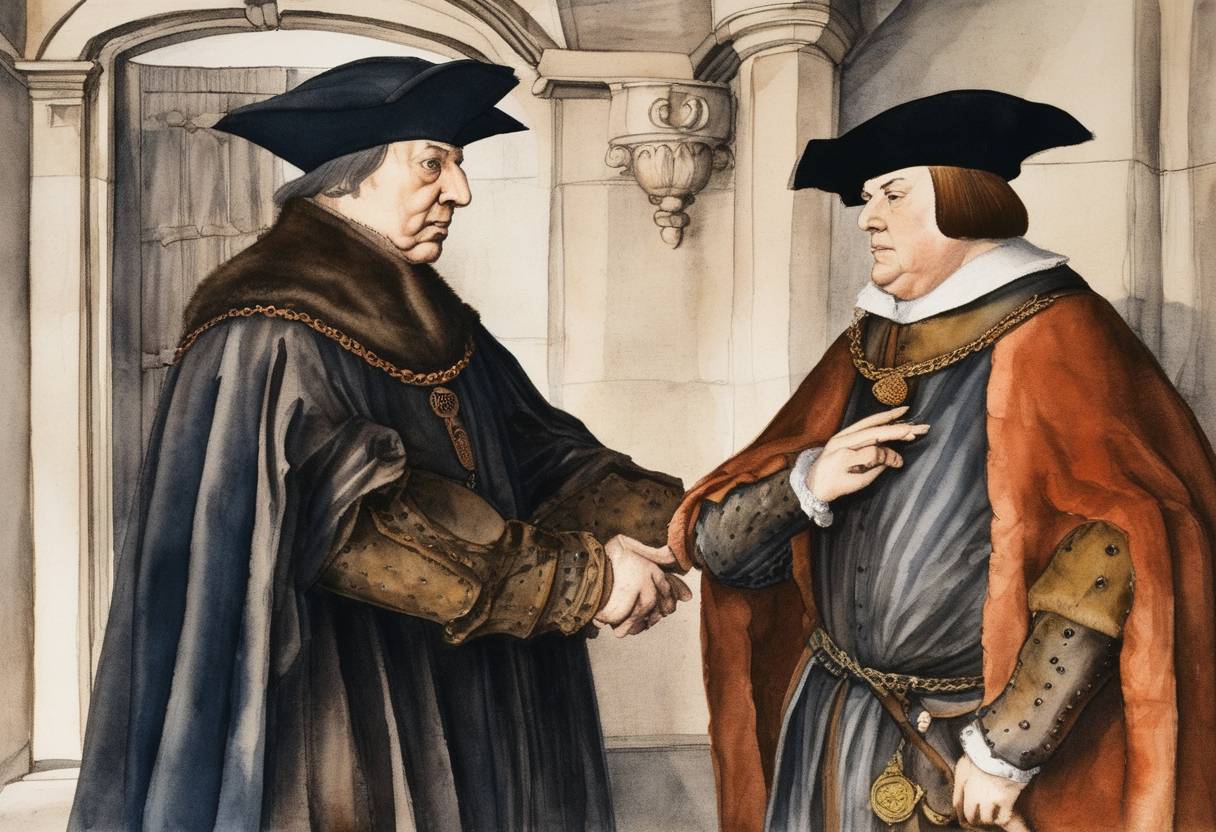
Thomas Cromwell, 1st Earl of Essex, was arrested for treason on June 10, 1540, marking a dramatic turn in the politics of King Henry VIII’s court. Cromwell was a prominent statesman who played a pivotal role as Henry’s chief minister. His arrest was a consequence of political intrigue, religious reform, and Cromwell’s own diminishing favor with the King.
Thomas Cromwell rose from humble beginnings to become one of the most powerful officials in England. He was instrumental in engineering the English Reformation and the king’s divorce from Catherine of Aragon, famously orchestrating the dissolution of the monasteries. Cromwell’s rise was closely tied to his ability to enact radical reforms and modernize governance, but it also earned him numerous enemies at court.
The foundations for his downfall were partly laid by his advocacy of Henry’s ill-fated marriage to Anne of Cleves. Cromwell saw Anne as a Protestant ally, aligning with European Protestant states against the Catholic Habsburgs. However, Henry found Anne unattractive, leading to the marriage’s swift annulment, which severely damaged Cromwell’s standing.
On June 10, 1540, during a meeting of the Privy Council at Westminster, Cromwell was arrested. The move was unexpected, as he was seized abruptly and accused of multiple charges, including heresy and treason. The arrest was orchestrated by his rivals, particularly Thomas Howard, 3rd Duke of Norfolk, who exploited the King’s disillusionment with Cromwell.
Cromwell was swiftly incarcerated at the Tower of London, where he was stripped of his titles and possessions. Despite his arrest, his allies could do little to support him, partially due to the King’s pervasive power and partially because of the entangled political alliances.
Cromwell’s trial was swift, and he was condemned without a formal trial, a testament to the volatile and dangerous nature of Tudor politics. He was executed by beheading on July 28, 1540, an event that was reportedly regretted by Henry shortly afterward, as he is alleged to have exclaimed that Cromwell was “the most faithful servant he ever had.”
Cromwell’s execution marked the end of a significant phase of reform in England. His contributions to the English Reformation, although controversial, were pivotal in shaping the future of religion and governance in Tudor England. His fall from grace is a reflection of the volatile nature of Tudor court, where political fortunes could change rapidly, resulting in dramatic shifts in influence and power.