March 23, 2018: President Donald Trump Signs $1.3 Trillion Spending Bill
2018 · Washington, D.C., United States
U.S. President Donald Trump signs a $1.3 trillion spending bill to keep the government open, despite earlier threats to veto it.
November 14, 1995
A budget standoff between President Bill Clinton and the Republican-controlled Congress results in a temporary government shutdown in the United States.
Washington, D.C., United States | U.S. Government
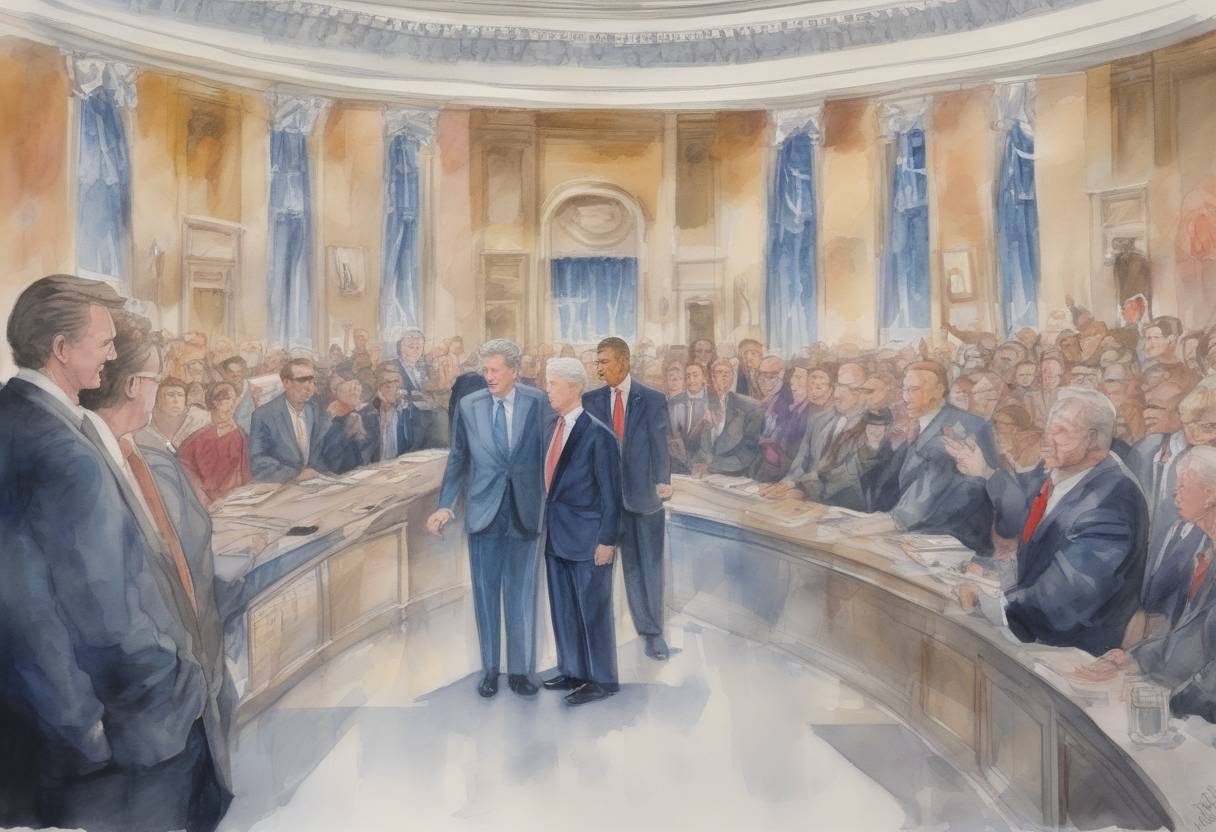
On November 14, 1995, the United States experienced a significant government shutdown, marking a pivotal moment in the ongoing budgetary conflict between President Bill Clinton and the Republican-controlled Congress. This event was a culmination of escalating tensions over fiscal policy and budget priorities.
The mid-1990s were characterized by a political landscape in which the Republican Party, led by Speaker of the House Newt Gingrich, held a majority in Congress following the 1994 midterm elections. The Republicans had campaigned on the “Contract with America,” which promised significant tax cuts, welfare reform, and a balanced budget. This set the stage for a confrontation with President Clinton, a Democrat, who had different priorities, particularly in areas like healthcare, education, and social services.
Budget Proposals and Disagreements: The primary contention was over the federal budget for the fiscal year 1996. Republicans proposed a budget that aimed to eliminate the federal deficit within seven years, primarily through spending cuts in Medicare, Medicaid, education, and environmental programs. President Clinton opposed these cuts, arguing they were too severe and would harm vulnerable populations.
Continuing Resolutions: As the fiscal year began on October 1, 1995, Congress and the President failed to agree on a budget. To keep the government running, they passed a series of short-term continuing resolutions. However, these were temporary fixes and did not resolve the underlying disagreements.
Veto and Standoff: On November 13, 1995, President Clinton vetoed a continuing resolution and a debt ceiling extension that included provisions he found unacceptable. This action set the stage for the shutdown, as no agreement was reached by the deadline.
The shutdown began on November 14, 1995, and lasted until November 19, 1995. During this period, approximately 800,000 federal employees were furloughed, and many government services were suspended. National parks, museums, and monuments were closed, and many federal agencies operated with minimal staff.
Public Perception and Political Impact: The shutdown had significant political ramifications. Public opinion largely blamed the Republican Congress for the impasse, which affected their standing with voters. President Clinton’s approval ratings, conversely, improved as he was perceived as standing firm against what many saw as excessive demands.
Resolution and Further Shutdown: The immediate shutdown ended with a temporary spending bill, but the underlying issues were not fully resolved. A second, longer shutdown occurred from December 16, 1995, to January 6, 1996, before a final budget agreement was reached.
Long-term Effects: The 1995-1996 shutdowns highlighted the potential for significant disruption from budgetary standoffs and set a precedent for future negotiations. They underscored the importance of compromise and the challenges of divided government.
In summary, the November 14, 1995, government shutdown was a critical moment in U.S. political history, reflecting deep divisions over fiscal policy and governance. It demonstrated the complexities of balancing budgetary priorities with political realities and had lasting impacts on subsequent budget negotiations.
Source: www.britannica.com