The Treaty of Basel: Ending the Swabian War
1499 · Basel, Switzerland
The Treaty of Basel was signed, ending the Swabian War between the Swiss Confederation and the Holy Roman Empire.
July 22, 1499
The Battle of Dornach took place, marking the last battle of the Swabian War, where the Swiss decisively defeated the Swabian League, leading to the conclusion of the war and the eventual recognition of Swiss independence by the Holy Roman Empire.
Dornach, Switzerland | Swiss Confederation
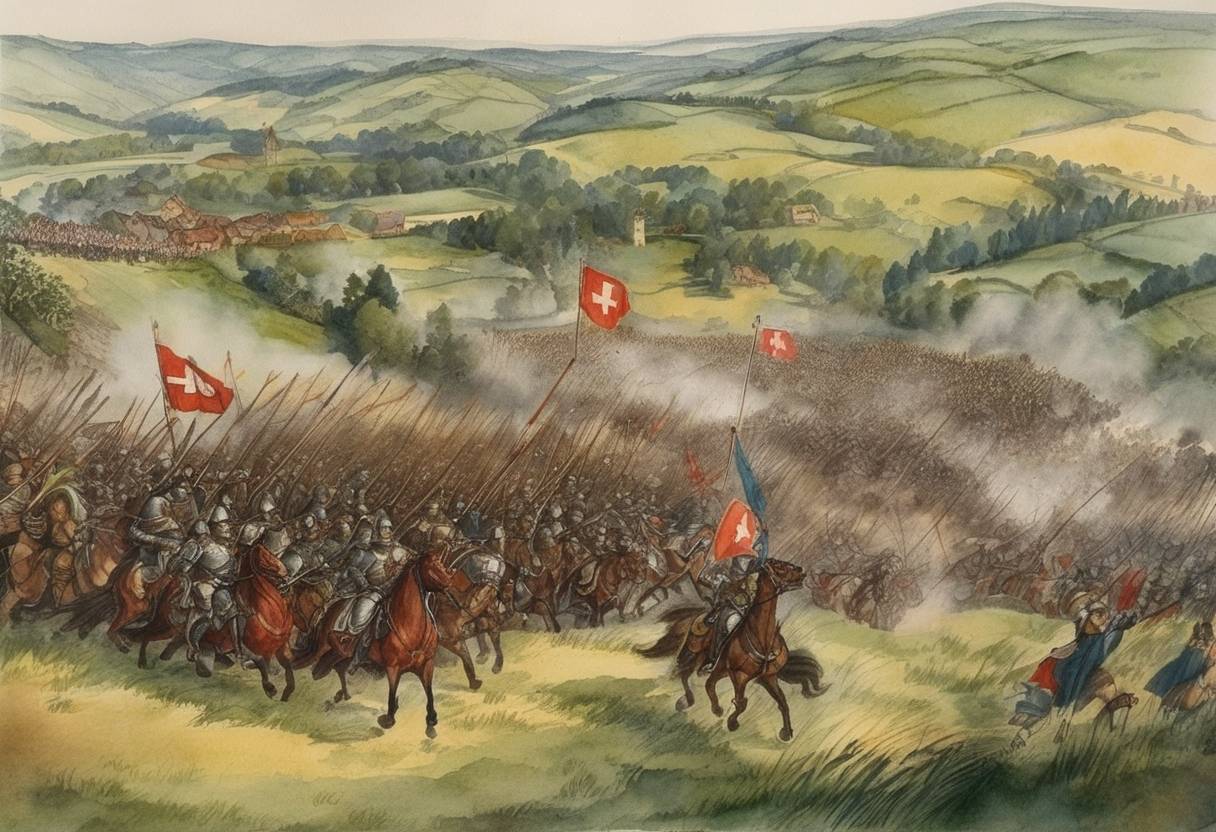
The Battle of Dornach, fought on July 22, 1499, near the town of Dornach in present-day Switzerland, marked the climactic confrontation of the Swabian War. This conflict saw the Swiss Confederacy pitted against the Swabian League, a coalition of cities and knights within the Holy Roman Empire, backed by Emperor Maximilian I.
The Swabian War, part of a series of conflicts during the late 15th century involving the Swiss, arose from tensions between the Swiss Confederacy and the Habsburg dynasty. After the Treaty of Basel in 1499, Maximilian I sought to reassert control over the Swiss, fearing their rising autonomy as part of the larger struggle between central powers and regional entities in medieval Europe.
On the morning of July 22, the Swabian League’s forces, consisting of approximately 12,000 men, confronted a Swiss army that numbered around 6,000. Despite being outnumbered, the Swiss made strategic use of their knowledge of the hilly terrain, fighting fiercely with the halberds characteristic of their infantry, known as the Swiss pikemen.
As the battle unfolded, the Swiss forces executed a devastating attack against the Swabian flanks, capitalizing on their opponents’ formation and coordination shortcomings. The Swabian troops, inexperienced and ill-prepared for the Swiss tactics, suffered significant losses.
The decisive victory for the Swiss at Dornach effectively ended the Swabian War. The Swabian League was unable to recover from their defeat, and this loss forced Emperor Maximilian I to negotiate peace terms. The Treaty of Basel, signed shortly after, recognized Swiss independence from the Holy Roman Empire, marking a crucial step toward full sovereignty, which would be formally established decades later.
The Battle of Dornach and the Swabian War played an essential role in shaping the Swiss Confederacy’s identity and political landscape in Europe. The conflict underscored the effectiveness of Swiss military tactics and contributed to Switzerland’s reputation for having one of Europe’s most formidable infantry forces. Moreover, the victory at Dornach cemented the Confederacy’s growing independence and set a precedent for future diplomatic relations with European powers.
In conclusion, the Battle of Dornach held not only immediate military importance but also long-lasting effects on the political autonomy and international status of the Swiss Confederacy, setting the stage for Switzerland’s unique position in European history.
Source: www.britannica.com