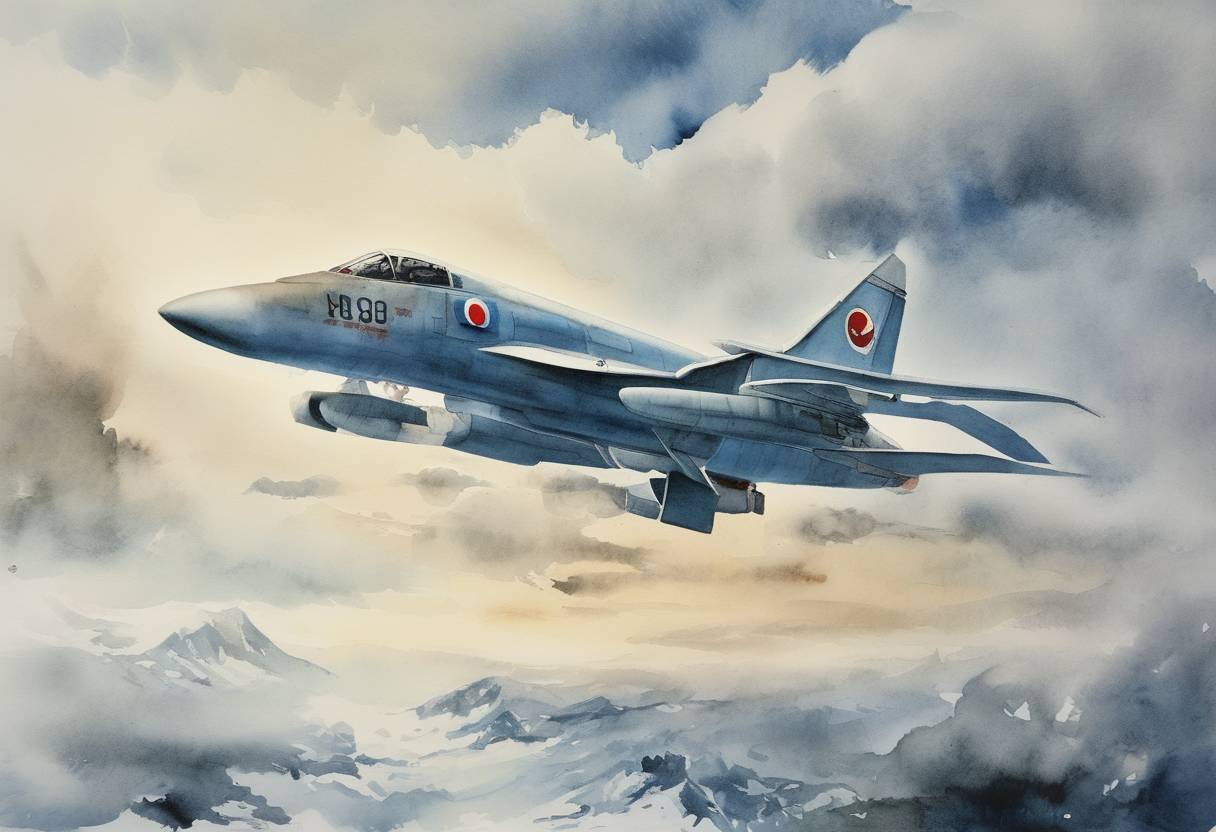
Korean Air Lines Flight 007 Incident
On September 1, 1983, Korean Air Lines Flight 007, a scheduled commercial flight from New York City to Seoul via Anchorage, was shot down by a Soviet Su-15 interceptor. This tragic incident resulted in the loss of all 269 passengers and crew aboard and significantly escalated tensions during the Cold War.
Background
- Flight Path: KAL 007 was a Boeing 747-230B, which departed from John F. Kennedy International Airport in New York on August 31, 1983, and made a stopover in Anchorage, Alaska, for refueling before heading to its final destination, Gimpo International Airport in Seoul, South Korea.
- Navigation Error: Shortly after departing Anchorage, the aircraft deviated from its planned route, entering Soviet airspace over the Kamchatka Peninsula and later over Sakhalin Island. The deviation was attributed to a navigation error, possibly due to the autopilot being set incorrectly.
The Incident
- Soviet Response: The Soviet Union, on high alert due to heightened tensions with the United States, perceived the intrusion as a potential military threat. Soviet air defense forces scrambled fighter jets to intercept the aircraft.
- Interception and Attack: Despite attempts to communicate with the aircraft, the Soviet pilots received orders to engage. At approximately 18:26 UTC, a Soviet Su-15 interceptor fired two air-to-air missiles, striking KAL 007 and causing it to crash into the Sea of Japan.
Aftermath and Consequences
- Immediate Reactions: The incident sparked international outrage and condemnation, particularly from the United States and its allies. The Soviet Union initially denied knowledge of the incident but later admitted to shooting down the aircraft, claiming it was on a spy mission.
- Cold War Tensions: The downing of KAL 007 exacerbated Cold War tensions, leading to a deterioration in U.S.-Soviet relations. It also intensified debates over airspace security and the use of civilian aircraft in intelligence operations.
- Policy Changes: In response to the incident, the United States accelerated the deployment of the Global Positioning System (GPS) for civilian use to prevent future navigation errors. Additionally, the International Civil Aviation Organization (ICAO) implemented stricter airspace regulations and communication protocols.
Broader Historical Significance
The KAL 007 incident highlighted the dangers of Cold War-era military posturing and the potential for miscommunication to lead to catastrophic consequences. It underscored the need for improved international aviation safety standards and contributed to ongoing discussions about the balance between national security and civilian safety in global air travel.