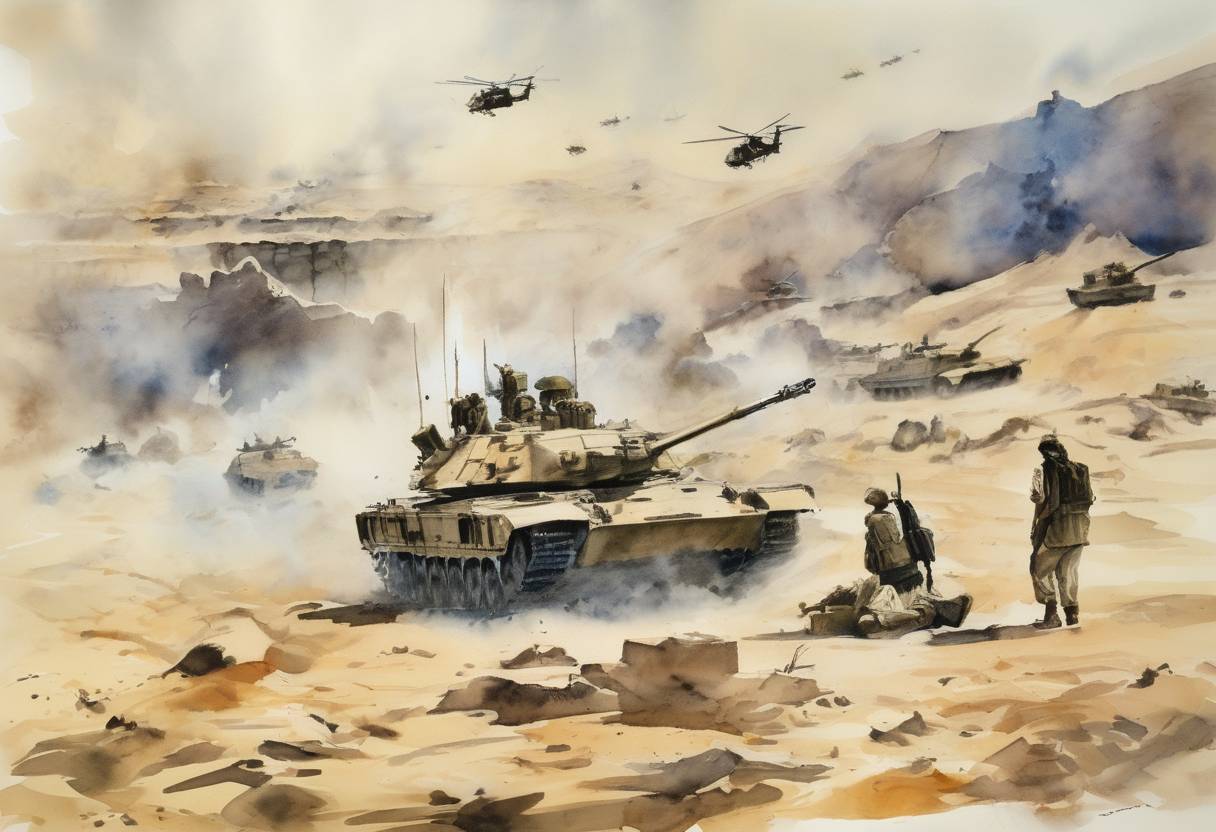
The Yom Kippur War: October 6, 1973
On October 6, 1973, the Yom Kippur War, also known as the October War or the Ramadan War, began when a coalition of Arab states, primarily Egypt and Syria, launched a coordinated surprise attack on Israel. This conflict erupted on Yom Kippur, the holiest day in Judaism, and during the Muslim holy month of Ramadan, marking a significant moment in Middle Eastern history.
Background
The roots of the Yom Kippur War can be traced back to the Six-Day War of 1967, during which Israel captured the Sinai Peninsula from Egypt, the Golan Heights from Syria, and the West Bank and East Jerusalem from Jordan. The loss of these territories was a major blow to the Arab states, and they sought to regain them through diplomatic and military means.
In the years leading up to 1973, tensions remained high. Egypt, under President Anwar Sadat, and Syria, led by President Hafez al-Assad, sought to reclaim their lost territories and restore Arab pride. Despite diplomatic efforts, including the failed Rogers Plan, a peaceful resolution was not achieved.
The Outbreak of War
The war began on October 6, 1973, with a surprise attack by Egyptian and Syrian forces. The timing was strategic, as it coincided with Yom Kippur, when many Israeli soldiers were on leave, and during Ramadan, when Arab forces were prepared for a holy struggle.
- Egyptian Front: Egyptian forces crossed the Suez Canal and breached the Bar Lev Line, a series of Israeli fortifications, with the aim of reclaiming the Sinai Peninsula.
- Syrian Front: Simultaneously, Syrian troops attacked the Golan Heights, seeking to regain the territory lost in 1967.
Key Developments
The initial phase of the war saw significant successes for the Arab forces, catching Israel off guard. However, Israel quickly mobilized its reserves and launched counterattacks.
- Israeli Counteroffensive: Within days, Israeli forces began to push back the Syrian troops on the Golan Heights and launched a counteroffensive across the Suez Canal into Egypt.
- Superpower Involvement: The war drew in the superpowers, with the United States supporting Israel and the Soviet Union backing the Arab states. This involvement heightened Cold War tensions and led to a global alert.
Ceasefire and Aftermath
The conflict lasted until October 25, 1973, when a United Nations-brokered ceasefire was implemented. The war resulted in significant casualties on both sides and had profound geopolitical consequences:
- Territorial Changes: While the war ended in a military stalemate, it led to subsequent negotiations that eventually resulted in Israel’s withdrawal from the Sinai Peninsula under the Camp David Accords in 1978.
- Oil Embargo: The war prompted the Organization of Arab Petroleum Exporting Countries (OAPEC) to impose an oil embargo, leading to the 1973 oil crisis and highlighting the strategic importance of Middle Eastern oil.
- Shift in U.S. Policy: The war underscored the need for a more balanced U.S. policy in the Middle East, leading to increased diplomatic efforts to achieve peace.
Historical Significance
The Yom Kippur War had lasting impacts on the Middle East and international relations. It reshaped the geopolitical landscape, influenced energy policies worldwide, and set the stage for future peace negotiations. The conflict also demonstrated the volatility of the region and the potential for rapid escalation involving global powers.