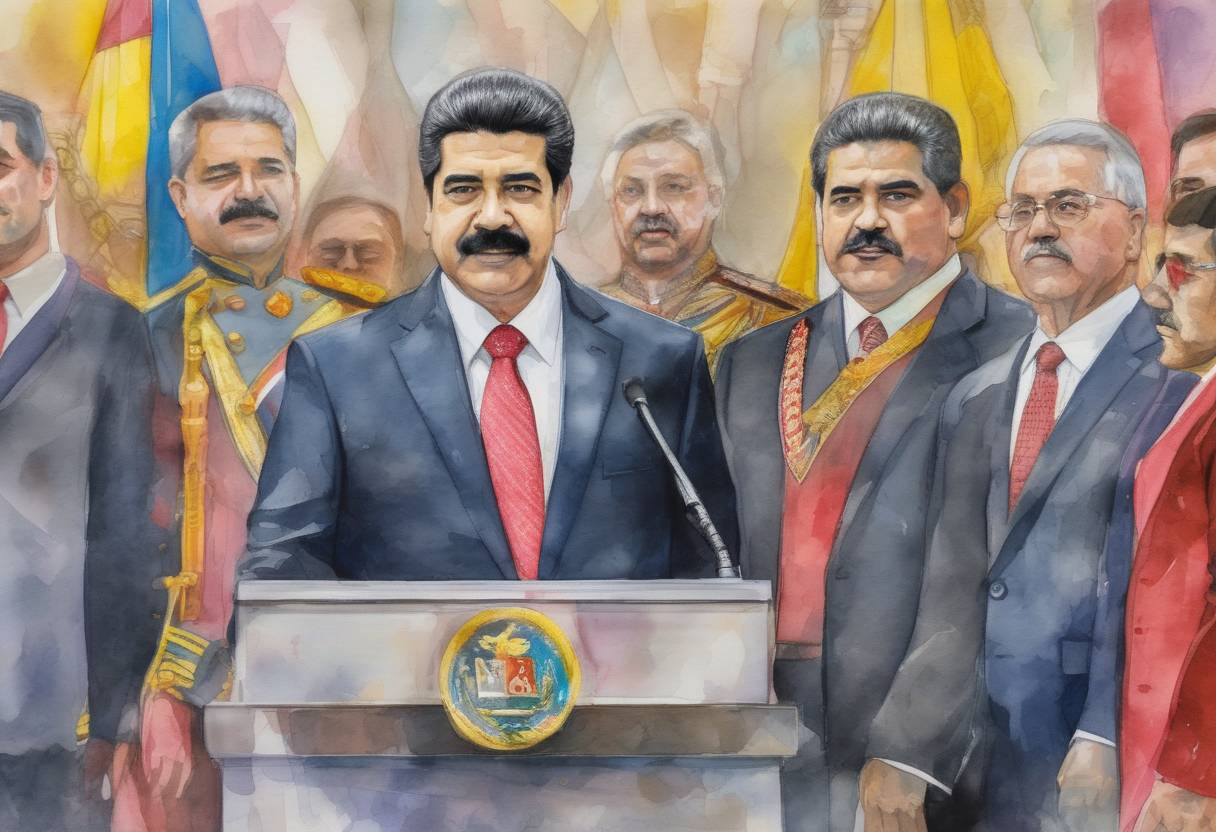
Nicolás Maduro’s Second Term Inauguration - January 10, 2019
On January 10, 2019, Nicolás Maduro was sworn in for a second term as the President of Venezuela. This event marked a significant moment in Venezuelan politics, characterized by widespread international condemnation and allegations of election fraud.
Background
Nicolás Maduro first assumed the presidency in 2013 following the death of his predecessor, Hugo Chávez. His first term was marred by economic turmoil, hyperinflation, and widespread shortages of basic goods, leading to a humanitarian crisis and mass emigration from Venezuela.
The presidential election held on May 20, 2018, which led to Maduro’s second term, was highly controversial. The election was boycotted by the main opposition parties, who claimed it was neither free nor fair. The electoral process was criticized for irregularities, including the banning of popular opposition candidates and the lack of independent international observers.
International Reaction
Maduro’s inauguration for a second term was met with significant international backlash:
Regional Response: The Organization of American States (OAS) and the Lima Group, a coalition of Latin American countries and Canada, refused to recognize the legitimacy of Maduro’s presidency. They cited the flawed electoral process and called for new elections.
United States: The U.S. government, under President Donald Trump, also refused to recognize Maduro’s presidency, imposing sanctions on Venezuelan officials and entities in response to the perceived illegitimacy of the election.
European Union: The EU expressed deep concerns about the electoral process and urged the Venezuelan government to hold new, transparent elections.
Support from Allies: Despite the widespread condemnation, Maduro retained support from countries such as Russia, China, and Turkey, which recognized his presidency and continued diplomatic relations.
Domestic Impact
Domestically, Maduro’s inauguration did little to quell the political and economic crises facing Venezuela. The country continued to experience severe economic challenges, including hyperinflation, food and medicine shortages, and a deteriorating infrastructure. The political landscape remained deeply polarized, with ongoing protests and calls for change from opposition groups.
Aftermath
The inauguration set the stage for further political turmoil in Venezuela. In January 2019, Juan Guaidó, the head of the National Assembly, declared himself interim president, challenging Maduro’s authority and gaining recognition from numerous countries, including the United States and several EU members.
The political standoff between Maduro and Guaidó persisted, exacerbating the country’s instability and contributing to the ongoing humanitarian crisis. The situation in Venezuela remains a complex and evolving issue with significant implications for regional and international politics.
In summary, Nicolás Maduro’s second term inauguration on January 10, 2019, was a pivotal event that underscored the deep political divisions within Venezuela and highlighted the international community’s concerns over democratic governance and human rights in the country.