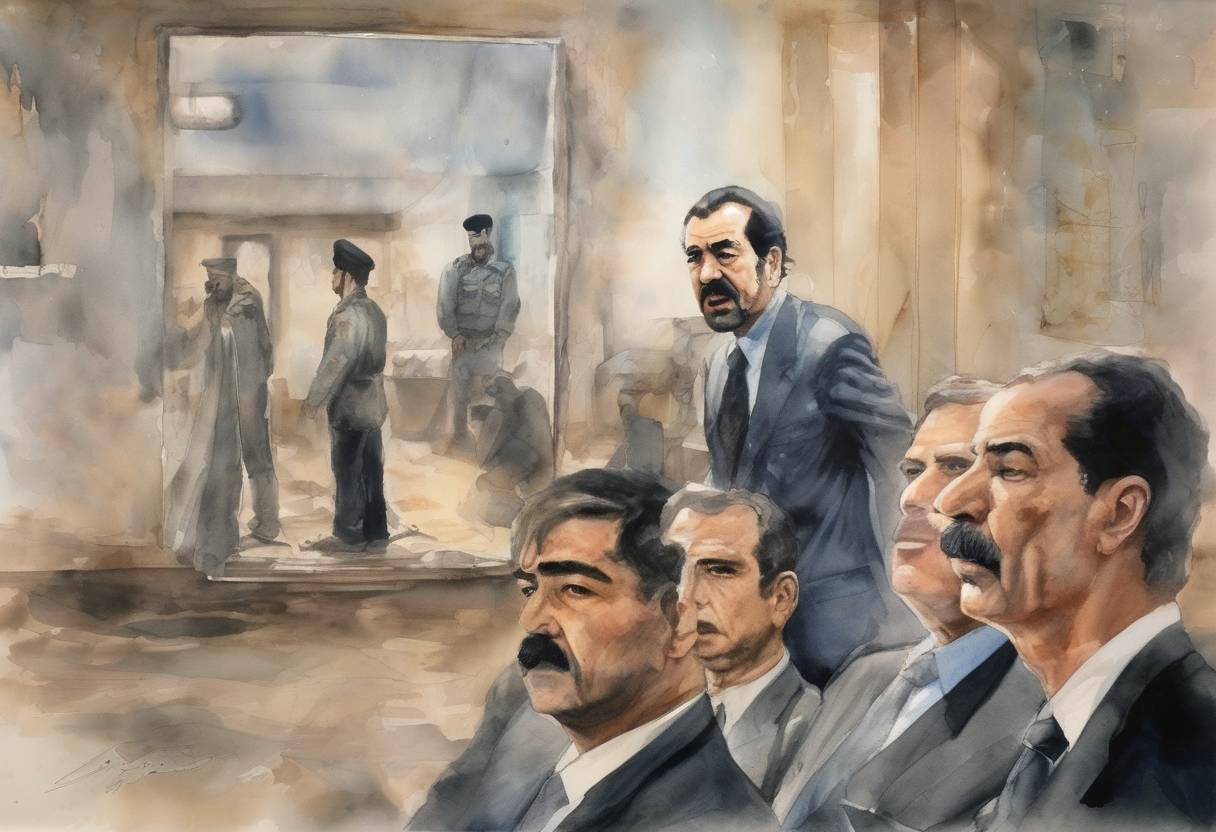
Execution of Saddam Hussein: December 30, 2006
On December 30, 2006, former Iraqi President Saddam Hussein was executed by hanging after being convicted of crimes against humanity. This event marked a pivotal moment in Iraq’s history, particularly in the aftermath of the U.S.-led invasion in 2003.
Background
Saddam Hussein rose to power in Iraq in 1979, becoming the country’s fifth president. His regime was characterized by authoritarian rule, widespread human rights abuses, and aggressive military campaigns, including the Iran-Iraq War (1980-1988) and the invasion of Kuwait in 1990, which led to the Gulf War.
The U.S.-led invasion of Iraq in 2003, justified by allegations of weapons of mass destruction and links to terrorism, resulted in the toppling of Saddam’s regime. He was captured by U.S. forces on December 13, 2003, after being found hiding in a hole near his hometown of Tikrit.
Trial and Conviction
Saddam Hussein was tried by the Iraqi Special Tribunal, a court established to prosecute members of his regime for crimes committed during their rule. The trial began on October 19, 2005, with Saddam facing charges related to the 1982 massacre of 148 Shiite Muslims in the town of Dujail, following an assassination attempt against him.
On November 5, 2006, Saddam was found guilty of crimes against humanity and sentenced to death by hanging. His trial was marked by controversy, including allegations of political influence, questions about the fairness of the proceedings, and the assassination of several defense lawyers.
Execution
Saddam Hussein’s execution took place in the early hours of December 30, 2006, at an Iraqi military base in Baghdad. The execution was carried out swiftly following the rejection of his appeal on December 26, 2006. The event was recorded on video, and footage of the execution was later leaked, sparking international debate over the manner in which it was conducted.
Aftermath and Significance
The execution of Saddam Hussein was a significant milestone in Iraq’s post-invasion history. It symbolized the end of an era and the dismantling of a regime that had ruled Iraq with an iron fist for decades. However, it also highlighted the deep sectarian divisions within the country and the challenges of rebuilding a stable and unified Iraq.
The execution was met with mixed reactions globally. While some viewed it as a necessary step towards justice and closure for the victims of Saddam’s regime, others criticized it as a politically motivated act that could exacerbate sectarian tensions.
In the years following his execution, Iraq continued to face significant challenges, including insurgency, sectarian violence, and political instability, underscoring the complex legacy of Saddam Hussein’s rule and the ongoing struggle for peace and reconciliation in the region.