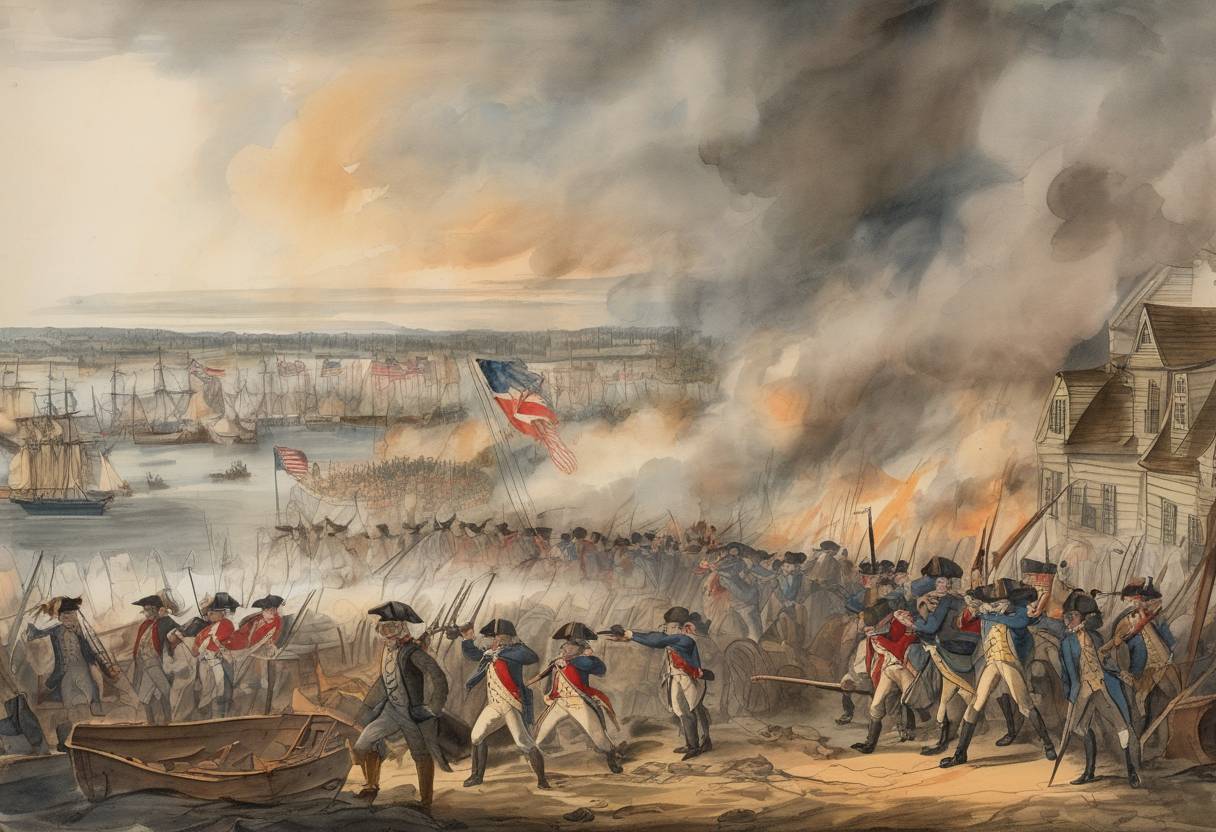
The Siege of Boston Begins: April 20, 1775
The Siege of Boston was a pivotal early event in the American Revolutionary War, marking the first major military engagement between the colonial militia and British forces. It began on April 20, 1775, following the battles of Lexington and Concord, which occurred just a day earlier on April 19.
Context and Prelude
- Tensions Escalate: By 1775, tensions between the American colonies and the British government had reached a boiling point. The colonies were increasingly frustrated with British taxation and governance without representation.
- Lexington and Concord: On April 19, 1775, British troops marched from Boston to seize colonial military supplies in Concord, Massachusetts. They were met by colonial militia at Lexington, leading to the first shots of the Revolutionary War. The British faced fierce resistance and suffered significant casualties during their retreat to Boston.
The Siege Begins
- April 20, 1775: Following the skirmishes at Lexington and Concord, colonial militia forces quickly mobilized and surrounded the city of Boston, where the British troops had retreated. This marked the beginning of the Siege of Boston.
- Militia Mobilization: Thousands of colonial militia from New England, including Massachusetts, Connecticut, New Hampshire, and Rhode Island, converged on Boston. They effectively trapped the British forces within the city, cutting off land access.
- George Washington: Although not yet appointed, George Washington would soon become the Commander-in-Chief of the Continental Army, taking command of the forces besieging Boston in July 1775.
- General Thomas Gage: The British commander in Boston, tasked with maintaining control over the city and its surroundings.
The Siege’s Progress
- Fortifications: The colonial forces began constructing fortifications around Boston, establishing a blockade to prevent British movement.
- Supply Shortages: The British, isolated in Boston, faced shortages of food and supplies, exacerbating their situation.
- Continental Army: In June 1775, the Continental Congress formally established the Continental Army, with Washington appointed as its leader.
Aftermath and Significance
- Evacuation of Boston: The siege lasted until March 17, 1776, when the British evacuated Boston following the fortification of Dorchester Heights by the Continental Army, which threatened British naval operations.
- Strategic Victory: The successful siege demonstrated the resolve and capability of the colonial forces, boosting morale and support for the revolutionary cause.
- Broader Impact: The Siege of Boston set the stage for further military engagements and was a significant early victory for the American colonies in their quest for independence.
The Siege of Boston was a crucial early chapter in the American Revolutionary War, showcasing the determination of the colonial forces and setting the tone for the conflict that would eventually lead to American independence.