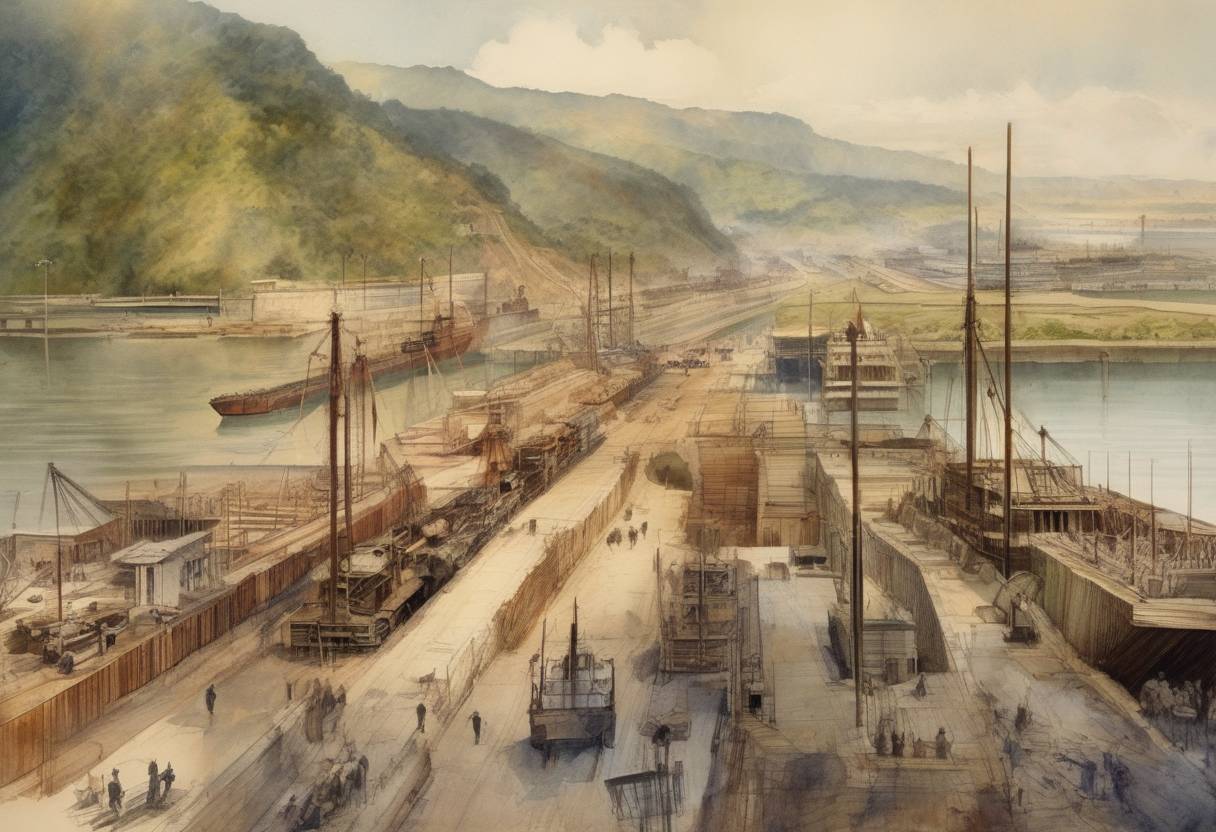
The United States Takes Over the Panama Canal Construction - May 4, 1904
On May 4, 1904, the United States officially took control of the construction of the Panama Canal, a pivotal moment in engineering and geopolitical history. This transition marked a significant step towards the completion of a project that would become a crucial maritime passage connecting the Atlantic and Pacific Oceans.
Background
The idea of a canal across the Isthmus of Panama dates back to the early 16th century, but serious efforts began in the late 19th century. The French, led by Ferdinand de Lesseps, who had successfully overseen the construction of the Suez Canal, initiated the project in 1881. However, the French endeavor was plagued by engineering challenges, tropical diseases like malaria and yellow fever, and financial mismanagement, leading to its eventual abandonment in 1889.
The U.S. Involvement
The United States, recognizing the strategic and economic importance of a canal, became interested in the project. The Hay-Herrán Treaty of 1903 initially attempted to secure U.S. rights to build the canal, but it was rejected by the Colombian Senate. Subsequently, the U.S. supported Panama’s independence from Colombia, leading to the signing of the Hay-Bunau-Varilla Treaty with the newly established Republic of Panama. This treaty granted the U.S. control over the Canal Zone.
Transition and Construction
On May 4, 1904, the U.S. formally took over the canal project from the French. The U.S. faced the monumental task of overcoming the challenges that had thwarted the French efforts. Under the leadership of engineers like John Frank Stevens and later George Washington Goethals, the U.S. implemented new construction techniques and extensive sanitation measures to combat disease.
Completion and Impact
The Panama Canal was completed on August 15, 1914, significantly ahead of schedule and under budget. Its opening revolutionized global trade by drastically reducing the travel distance for ships between the Atlantic and Pacific Oceans. The canal’s completion underscored the United States’ growing influence as a global power and its engineering prowess.
Broader Significance
The successful construction of the Panama Canal had far-reaching implications:
- Economic Impact: It facilitated international trade and contributed to the economic growth of the United States and other nations.
- Military Strategy: The canal became a strategic military asset, allowing for quicker naval deployment between oceans.
- Engineering Achievement: The project set new standards in engineering and project management.
The Panama Canal remains a vital artery of global commerce and a testament to human ingenuity and perseverance. Its history reflects the complex interplay of international diplomacy, engineering challenges, and the transformative power of infrastructure.