Establishment of South African College
1829 · Cape Town, South Africa
South African College is established in Cape Town, which later becomes the University of Cape Town.
December 16, 1838
The Battle of Blood River is fought between Voortrekkers and Zulu forces in South Africa.
Blood River, South Africa | Voortrekkers
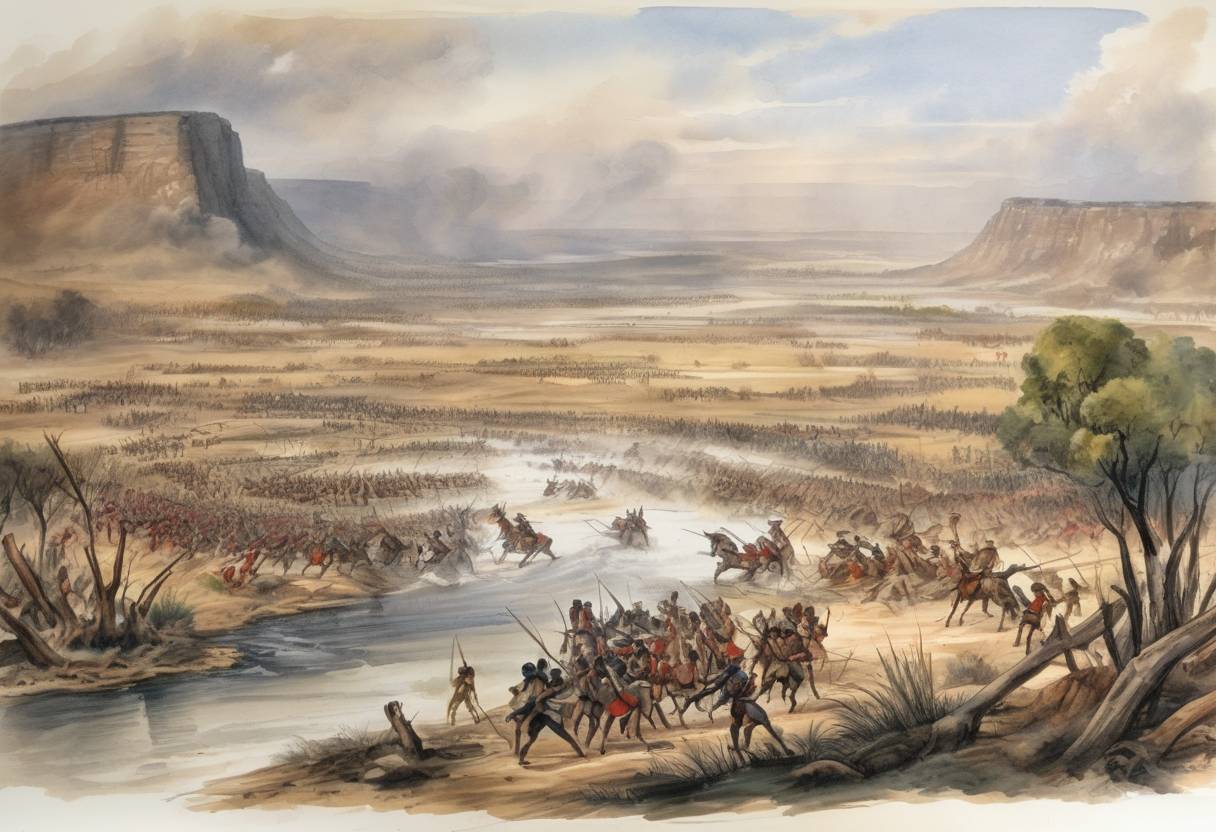
The Battle of Blood River, fought on December 16, 1838, was a pivotal conflict between the Voortrekkers, Dutch-speaking settlers, and the Zulu Kingdom in what is now South Africa. This battle is a significant event in South African history, symbolizing the struggle between European settlers and indigenous African kingdoms during the era of colonial expansion.
The Great Trek: The Voortrekkers were part of the Great Trek, a migration of Dutch-speaking settlers (Boers) who moved inland from the Cape Colony to escape British rule. This movement began in the 1830s and was driven by a desire for autonomy and new land.
Tensions with the Zulu: As the Voortrekkers moved into the interior, they encountered the powerful Zulu Kingdom, led by King Dingane. Tensions escalated due to land disputes and cultural misunderstandings.
The Retief Massacre: Prior to the battle, a delegation of Voortrekkers led by Piet Retief was massacred by the Zulu under Dingane’s orders in February 1838. This event heightened hostilities and set the stage for further conflict.
Voortrekker Forces: Led by Andries Pretorius, the Voortrekkers numbered around 470 men. They were equipped with muskets and had several wagons, which they arranged in a defensive laager (circle).
Zulu Forces: The Zulu army, commanded by generals Ndlela kaSompisi and Dambuza, consisted of approximately 10,000 to 15,000 warriors, armed primarily with traditional spears and shields.
Location: The battle took place near the Ncome River, which would later be known as Blood River due to the bloodshed.
Outcome: The Voortrekkers, utilizing their strategic laager and superior firepower, decisively defeated the Zulu forces. The Zulu suffered heavy casualties, with estimates of over 3,000 warriors killed, while the Voortrekkers reported no fatalities.
Voortrekker Victory: The victory at Blood River solidified the Voortrekkers’ position in the region and led to the establishment of the Boer Republic of Natalia.
Cultural Legacy: December 16th became a significant date in South African history, commemorated as the Day of the Vow by Afrikaners, who saw the victory as a divine intervention.
Long-term Impact: The battle marked a turning point in the power dynamics of the region, influencing subsequent interactions between European settlers and African kingdoms. It also contributed to the shaping of South Africa’s complex socio-political landscape.
The Battle of Blood River remains a subject of historical analysis and reflection, representing both the triumphs and tragedies of South Africa’s colonial past.
Source: en.wikipedia.org