Henry Hudson Discovers Delaware Bay - August 28, 1609
1609 · Delaware Bay, United States
Henry Hudson discovers Delaware Bay during his exploration of the New World.
September 12, 1609
Henry Hudson began his exploration of the river that would later be named after him, the Hudson River, during his search for a Northwest Passage.
New York, United States | Dutch East India Company
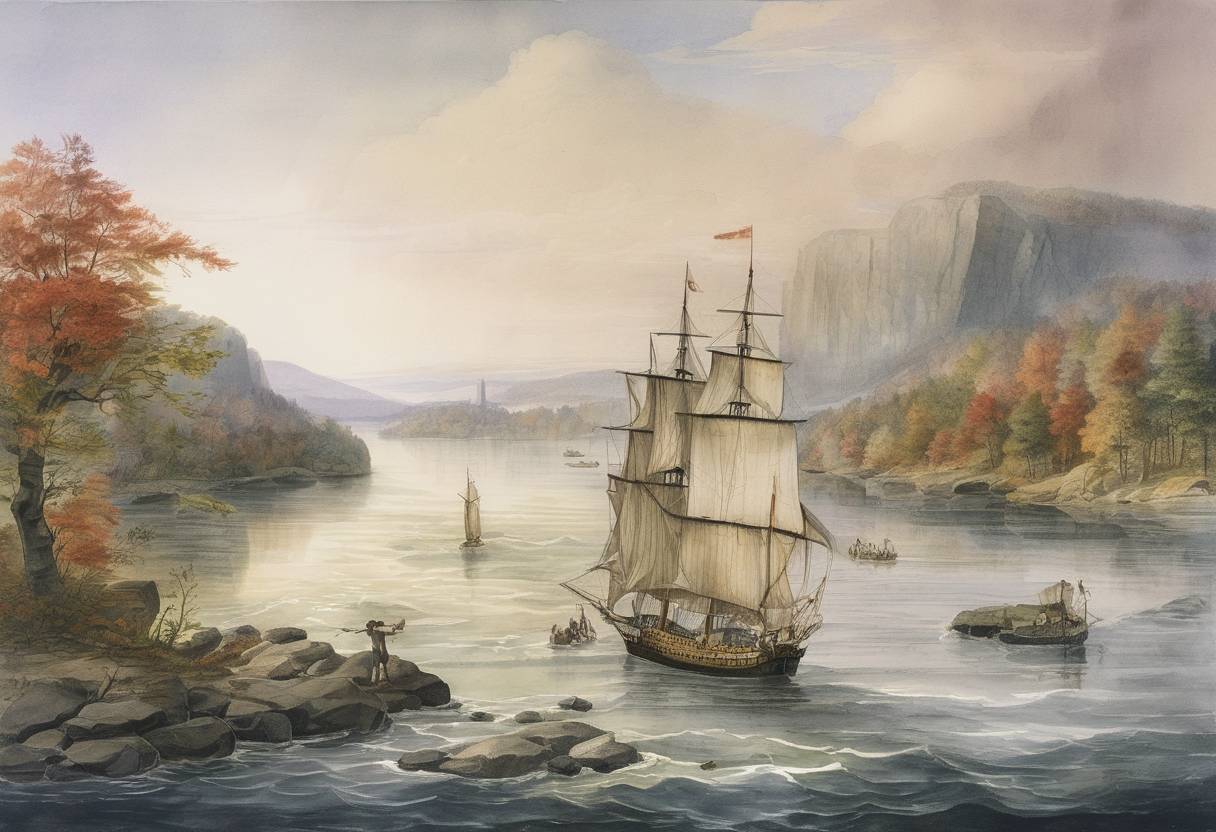
On September 12, 1609, the English explorer Henry Hudson embarked on a significant exploration of the river that would later bear his name—the Hudson River. This journey was part of his quest to find a Northwest Passage to Asia, a route that European powers believed would offer a lucrative shortcut for trade.
Henry Hudson was an experienced navigator and explorer, having previously undertaken voyages to find a northern passage to Asia. In 1609, he was employed by the Dutch East India Company to seek a more accessible route to the Orient. Hudson’s expedition was aboard the ship Halve Maen (Half Moon), a vessel equipped for long voyages.
Initial Voyage: Hudson set sail from Amsterdam in April 1609. Initially, he attempted to navigate a northeast passage above Russia but was thwarted by ice and harsh conditions.
Change of Course: Deciding to alter his course, Hudson sailed westward across the Atlantic, arriving off the coast of North America. He explored the coastline from Newfoundland down to the Chesapeake Bay.
Discovery of the River: On September 12, 1609, Hudson entered the mouth of a large river, which he initially believed might be the sought-after passage to Asia. This river, known to the indigenous Lenape people as “Muhheakantuck,” would later be named the Hudson River.
Exploration of the River: Hudson and his crew sailed upriver, reaching as far as present-day Albany, New York. During this exploration, Hudson noted the fertile lands and the potential for trade with the native populations.
Naming of the River: Although Hudson did not find the Northwest Passage, his exploration of the river laid the groundwork for Dutch claims to the region. The river was later named in his honor.
Impact on Colonization: Hudson’s voyage contributed to the establishment of Dutch settlements in the area, most notably New Amsterdam, which would become New York City.
Legacy: Henry Hudson’s exploration of the river is considered a pivotal moment in the history of North American exploration. It opened the door for further European exploration and colonization in the region.
Hudson’s journey on the river marked a significant chapter in the Age of Exploration, highlighting the persistent European quest for new trade routes and the eventual impact on indigenous populations and the development of the New World.
Source: en.wikipedia.org