Anesthetic Ether Used for the First Time by Dr. William Morton
1846 · Boston, United States
Anesthetic ether is used for the first time by American dentist Dr. William Morton during a tooth extraction.
September 13, 1848
Phineas Gage, a railroad construction foreman, survived a severe brain injury when an iron rod was accidentally driven through his skull, leading to significant changes in his personality and contributing to the study of neuroscience.
Cavendish, United States | Rutland and Burlington Railroad
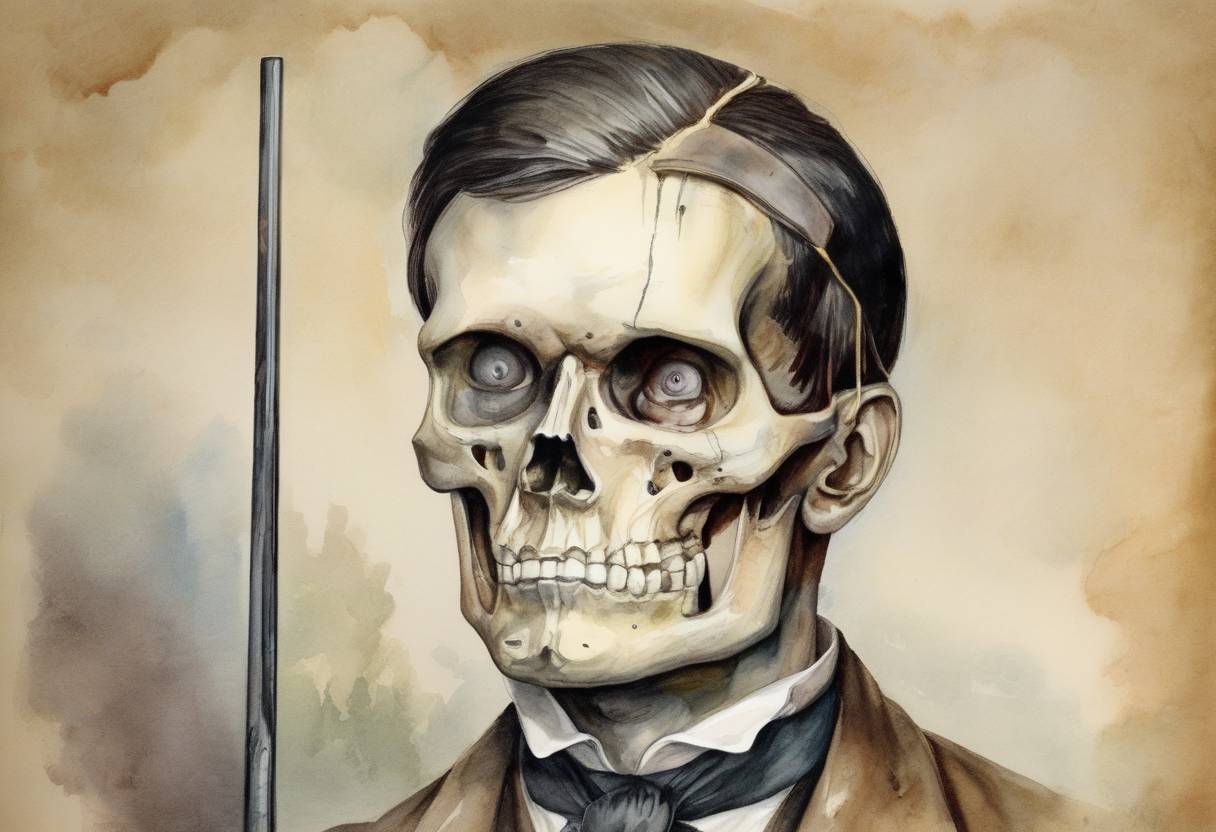
On September 13, 1848, Phineas Gage, a 25-year-old railroad construction foreman, experienced a life-altering accident that would become a pivotal case in the study of neuroscience and psychology. The incident occurred near Cavendish, Vermont, during the construction of a new railway line for the Rutland & Burlington Railroad.
While preparing a blasting site, Gage was using a tamping iron to pack explosive powder into a rock. Unfortunately, a spark ignited the powder, propelling the 43-inch long and 1.25-inch diameter iron rod through his left cheek, behind his left eye, and out through the top of his skull. Remarkably, Gage survived the accident and was able to walk and talk shortly afterward.
Dr. John Martyn Harlow, a local physician, treated Gage. Despite the severity of the injury, Gage’s physical recovery was relatively swift. However, the damage to his frontal lobes led to profound changes in his personality and behavior, which were documented by Dr. Harlow and others who knew him.
Before the accident, Gage was described as a capable and efficient foreman, known for his leadership and social skills. Post-accident, his personality reportedly changed dramatically. He became impulsive, irritable, and unable to adhere to social norms, leading to difficulties in maintaining employment and personal relationships. These changes provided early evidence of the role of the frontal lobes in personality and social behavior.
Phineas Gage’s case became one of the first to suggest a link between brain function and personality, highlighting the importance of the frontal lobes. His story has been extensively studied and cited in neuroscience and psychology as a foundational example of how brain injuries can affect behavior and personality.
Gage’s skull and the tamping iron are preserved at the Warren Anatomical Museum at Harvard Medical School, serving as enduring symbols of the intersection between brain science and human behavior. His case continues to be referenced in discussions about brain function, neuroplasticity, and the biological basis of personality.
In summary, the accident on September 13, 1848, not only altered Phineas Gage’s life but also significantly contributed to the understanding of the brain’s role in personality, influencing the fields of neuroscience and psychology for generations.
Source: en.wikipedia.org