The Beginning of the Anglo-Zulu War
1879 · Ulundi, South Africa
The Anglo-Zulu War began when British troops under Lieutenant General Frederic Augustus invaded as part of a plan to confederate South Africa.
July 4, 1879
Anglo-Zulu War: The Zululand capital of Ulundi is captured by British forces, effectively ending the war.
Ulundi, South Africa | British Empire
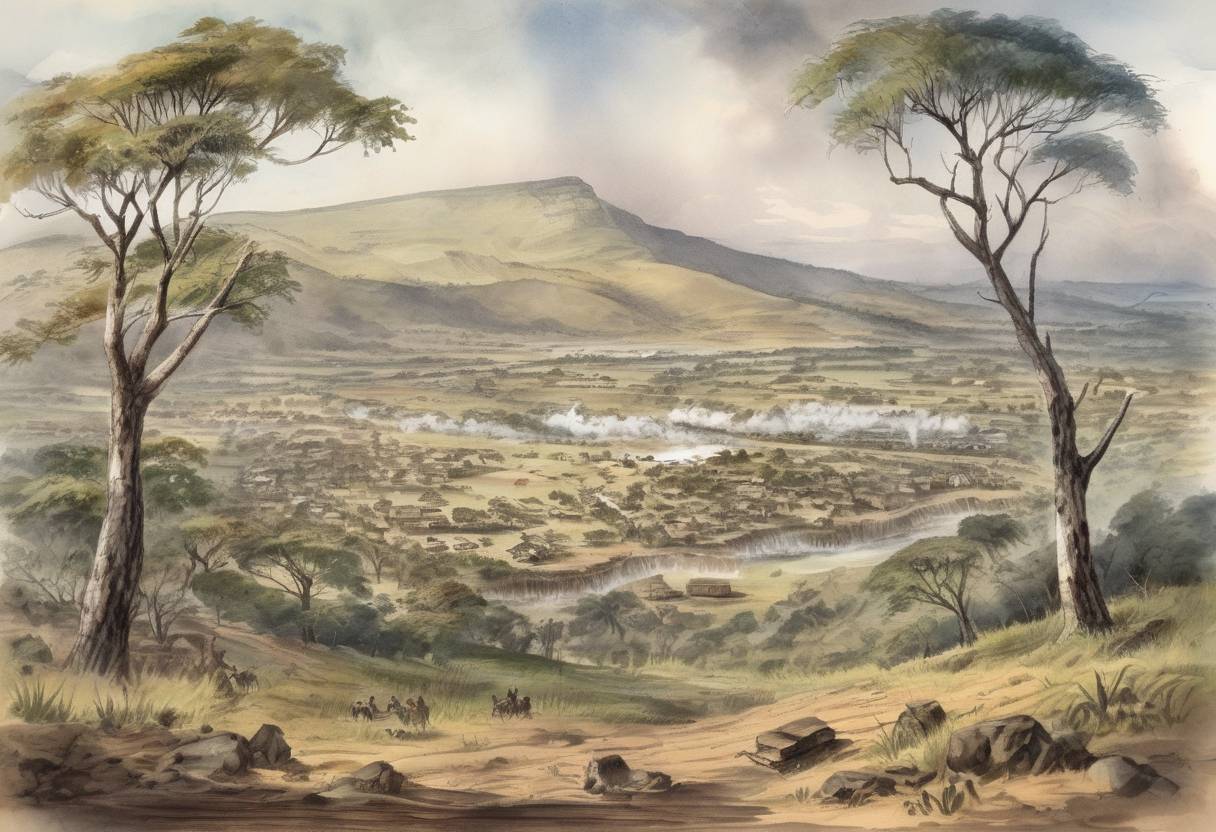
On July 4, 1879, the British forces captured the Zulu capital of Ulundi, marking a decisive end to the Anglo-Zulu War. This conflict, which began in January 1879, was a pivotal moment in the history of Southern Africa, characterized by a series of battles between the British Empire and the Zulu Kingdom.
The Anglo-Zulu War was primarily instigated by British colonial ambitions in Southern Africa. The British sought to consolidate their control over the region, which included the annexation of the Zulu Kingdom. Tensions had been escalating due to border disputes and the British demand for the disbandment of the Zulu military system, which King Cetshwayo refused.
Battle of Isandlwana (January 22, 1879): The war began with a significant Zulu victory at Isandlwana, where the Zulu forces overwhelmed a British column, resulting in one of the worst defeats for the British Army in colonial warfare.
Battle of Rorke’s Drift (January 22-23, 1879): On the same day as Isandlwana, a small British garrison successfully defended the mission station at Rorke’s Drift against a Zulu attack, earning several Victoria Crosses for the defenders.
British Reinforcements and Strategy Shift: Following the initial setbacks, the British reinforced their troops and adjusted their military strategy under the leadership of Lord Chelmsford. They adopted a more cautious approach, focusing on securing supply lines and fortifying positions.
Battle of Kambula (March 29, 1879): The British achieved a significant victory at Kambula, which marked a turning point in the war, weakening the Zulu military capacity.
Battle of Gingindlovu (April 2, 1879): Another British victory that further diminished Zulu resistance and paved the way for the final assault on Ulundi.
The British forces, numbering around 5,000 men, advanced towards Ulundi in early July 1879. The Zulu army, led by King Cetshwayo, attempted to defend their capital with approximately 15,000 warriors. The decisive battle took place on July 4, 1879, where the British employed a square formation, a tactic that proved effective against the Zulu’s traditional fighting methods.
The British artillery and disciplined infantry firepower overwhelmed the Zulu forces. The capture of Ulundi effectively ended the war, as it led to the collapse of organized Zulu resistance. King Cetshwayo fled, and the British subsequently dismantled the Zulu Kingdom’s political structure.
Annexation and Division: Following the war, the British annexed Zululand and divided it into 13 chiefdoms, undermining the centralized power of the Zulu monarchy.
Impact on Zulu Society: The war and its aftermath had profound effects on Zulu society, leading to significant social and political changes.
Legacy: The Anglo-Zulu War remains a significant chapter in the history of British colonialism and Zulu resistance. It highlighted the clash between indigenous African societies and European imperial powers.
The capture of Ulundi and the subsequent end of the Anglo-Zulu War exemplify the broader themes of resistance and conquest that characterized the colonial era in Africa.
Source: en.wikipedia.org