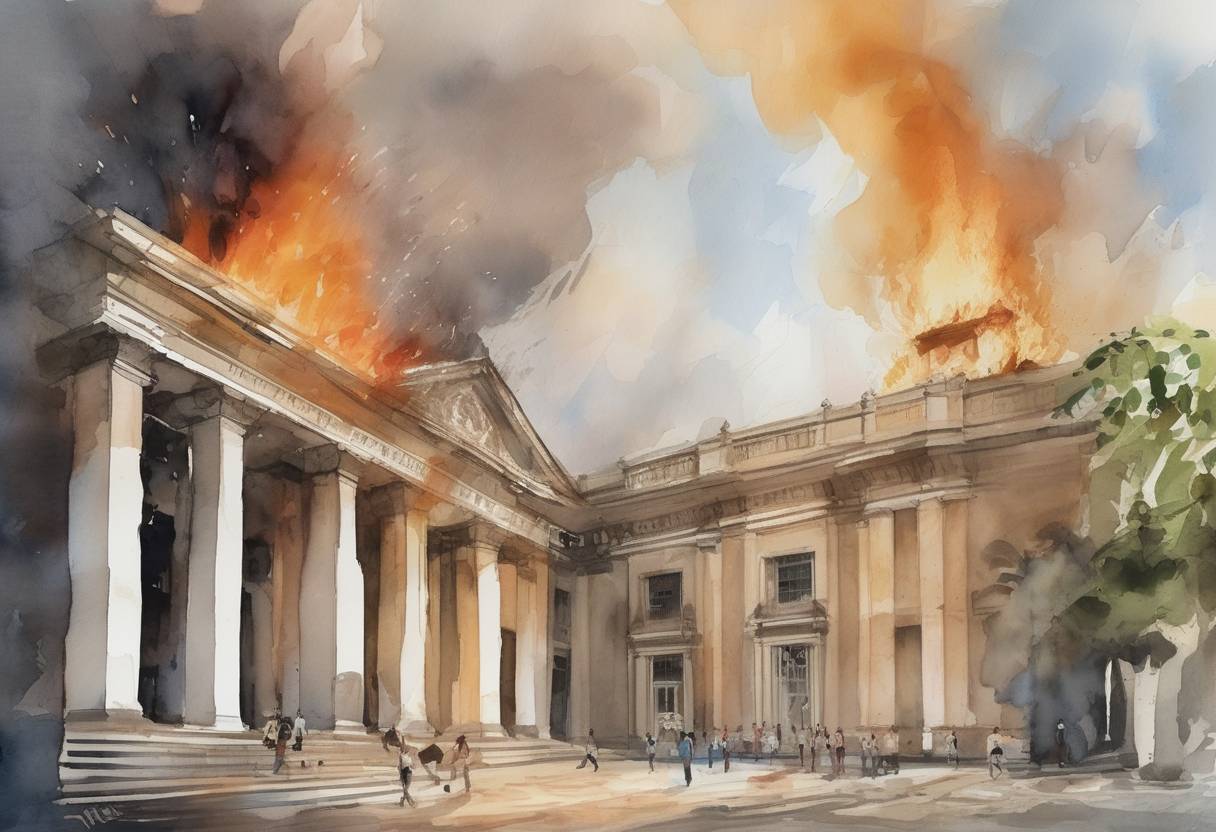
The National Museum of Brazil Fire - September 2, 2018
On the evening of September 2, 2018, a devastating fire engulfed the National Museum of Brazil in Rio de Janeiro, leading to one of the most catastrophic cultural heritage losses in recent history. The museum, which was celebrating its 200th anniversary in 2018, was home to over 20 million artifacts, including invaluable collections of natural history, anthropology, and archaeology.
Background
The National Museum of Brazil, established in 1818 by King John VI of Portugal, was one of the oldest scientific institutions in Brazil. It was housed in the historic Paço de São Cristóvão, a former royal palace. The museum’s collections were renowned for their breadth and significance, featuring items from various fields such as:
- Anthropology: The museum held extensive collections of indigenous Brazilian artifacts and items from ancient civilizations across the Americas.
- Natural History: It contained a vast array of specimens, including fossils, minerals, and a comprehensive collection of insects and other animals.
- Paleontology: The museum was famous for its dinosaur fossils and the oldest human fossil found in Brazil, known as “Luzia.”
The Fire
The fire began in the evening and quickly spread throughout the building, fueled by the wooden structure and the lack of modern fire prevention systems. By the time firefighters arrived, the blaze had already consumed much of the museum. Efforts to control the fire were hampered by insufficient water pressure in nearby hydrants.
Losses
The fire resulted in the destruction of approximately 90% of the museum’s collections. Among the irreplaceable losses were:
- Luzia Woman: The oldest human fossil in the Americas, dating back over 11,000 years.
- The Maxakalisaurus: A dinosaur skeleton that was a centerpiece of the museum’s paleontology collection.
- The Royal Family’s Archives: Documents and artifacts from Brazil’s imperial period.
Aftermath and Significance
The fire at the National Museum of Brazil was a profound cultural tragedy, highlighting issues such as inadequate funding and maintenance for cultural institutions in Brazil. The loss underscored the vulnerability of cultural heritage sites worldwide and prompted discussions about the need for better preservation and disaster preparedness.
In the wake of the fire, there was a global outpouring of support, with institutions and governments offering assistance in recovery efforts. Some items, like fragments of Luzia’s skull, were later recovered from the debris, providing a glimmer of hope for partial restoration.
The incident served as a stark reminder of the importance of safeguarding cultural heritage and the need for sustained investment in the preservation of historical and scientific collections.