Experimental Breeder Reactor I: A Milestone in Nuclear Power
1951 · Arco, United States
The experimental Breeder Reactor I in Idaho produced electricity for the first time, marking a milestone in nuclear power development.
November 6, 1971
The United States Atomic Energy Commission tested the largest underground hydrogen bomb, codenamed Cannikin, on Amchitka Island in Alaska.
Amchitka Island, United States | United States Atomic Energy Commission
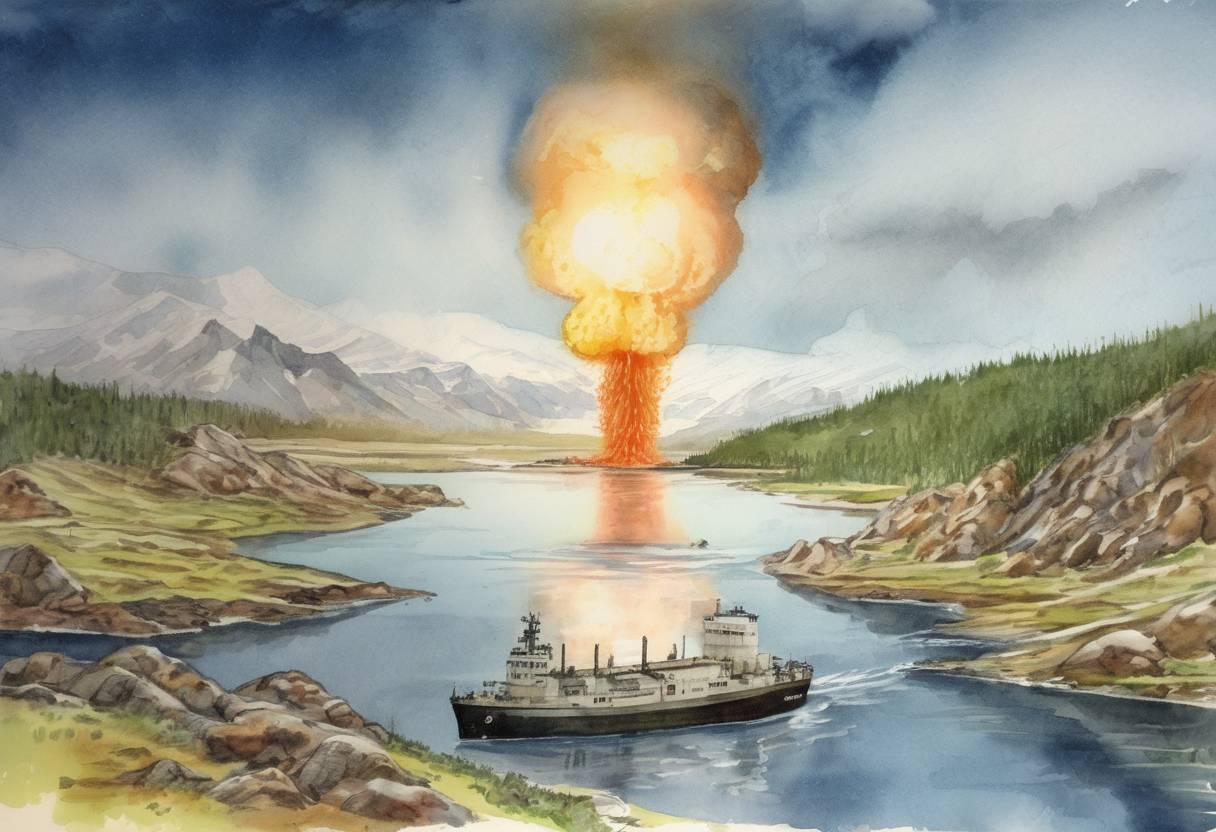
On November 6, 1971, the United States Atomic Energy Commission conducted the largest underground hydrogen bomb test in U.S. history, codenamed “Cannikin,” on Amchitka Island, Alaska. This test was part of a series of nuclear tests conducted during the Cold War era, aimed at advancing nuclear weapons technology and ensuring the reliability of the U.S. nuclear arsenal.
The Cannikin test was part of the Spartan anti-ballistic missile program, which was designed to develop a missile defense system capable of intercepting incoming nuclear warheads. The test was conducted under the auspices of the Atomic Energy Commission (AEC) and was a continuation of nuclear testing that had been ongoing since the 1940s.
Amchitka Island, located in the Aleutian Islands chain, was chosen as the test site due to its remote location and geological stability. The island had previously been used for other nuclear tests, including the Milrow test in 1969, which was a precursor to Cannikin.
The Cannikin test was met with significant opposition from environmental groups and local communities. Concerns were raised about the potential for seismic activity, environmental damage, and the impact on local wildlife, particularly the endangered sea otter population.
The Cannikin test marked a significant moment in the history of nuclear testing and environmental activism. It underscored the tensions between national security interests and environmental protection, a theme that would continue to resonate in subsequent decades.
In the broader context of the Cold War, the Cannikin test exemplified the technological and military competition between the United States and the Soviet Union, as both superpowers sought to maintain strategic advantages through advancements in nuclear capabilities.
Source: en.wikipedia.org