The Battle of Angion - September 1, 1299
1299 · Angion, Armenia
The Battle of Angion took place, marking part of the wider conflict between the Mamluks of Egypt and the Armenians of Cilicia.
May 10, 1291
The city of Acre, the last major stronghold of the Crusader states in the Holy Land, fell to the Mamluks, marking the end of Crusader presence in the region.
Acre, Israel | Mamluk Sultanate
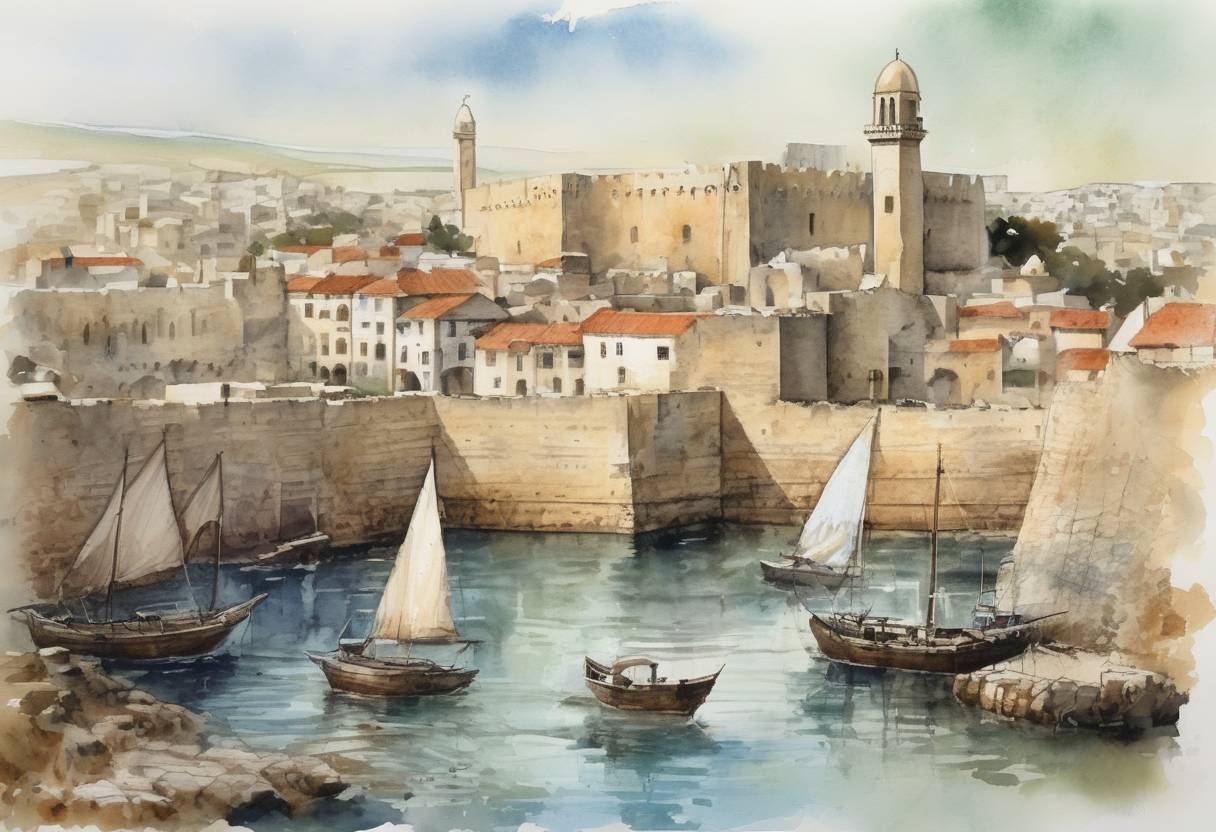
On May 10, 1291, the city of Acre, the last significant stronghold of the Crusader states in the Holy Land, fell to the Mamluks, marking a pivotal moment in the history of the Crusades. This event effectively ended the Crusader presence in the region and had profound implications for both the Christian and Muslim worlds.
The Crusades were a series of religious and military campaigns initiated by European Christians in the 11th century, aimed at reclaiming the Holy Land from Muslim control. Over the centuries, several Crusader states were established, with Acre becoming a crucial stronghold due to its strategic location and prosperous port.
By the late 13th century, the Crusader states had been significantly weakened by internal strife, lack of support from Europe, and the growing power of Muslim forces in the region. The Mamluks, a powerful military caste that ruled Egypt and Syria, emerged as the dominant Muslim force under the leadership of Sultan Al-Ashraf Khalil.
The siege of Acre began in April 1291, when Sultan Khalil led a large Mamluk army to besiege the city. The Crusaders, aware of their precarious situation, had fortified the city and called for reinforcements from Europe, but these efforts were insufficient.
The Mamluks employed a combination of siege tactics, including the use of trebuchets and sappers, to breach the city’s formidable defenses. Despite a valiant defense by the Crusaders, the Mamluks’ superior numbers and resources eventually overwhelmed the city’s defenders.
On May 10, 1291, the Mamluks breached Acre’s walls, leading to intense street fighting. The city fell after a brutal assault, resulting in significant casualties among the Crusaders and the civilian population. Many of the surviving Crusaders fled by sea, while others were captured or killed.
The fall of Acre marked the end of the Crusader states in the Holy Land. The loss of Acre was a devastating blow to the Crusader cause, as it eliminated their last major foothold in the region. The event signaled the conclusion of nearly two centuries of intermittent conflict known as the Crusades.
The fall of Acre had several long-term consequences:
End of the Crusader States: The loss of Acre effectively ended the Crusader presence in the Holy Land, shifting the focus of European powers away from the region.
Mamluk Dominance: The victory solidified Mamluk control over the Levant, allowing them to focus on other regional threats and consolidate their power.
Cultural and Economic Shifts: The end of the Crusades led to changes in trade routes and cultural exchanges between Europe and the Middle East, influencing the course of medieval history.
In summary, the fall of Acre on May 10, 1291, was a decisive moment that marked the end of the Crusader era in the Holy Land and reshaped the geopolitical landscape of the region.
Source: en.wikipedia.org