Coronation of Duke Władysław I as King of Poland
1320 · Kraków, Poland
Duke Wladyslaw I of Poland is crowned king, marking the beginning of the reunification of Poland after a period of fragmentation.
March 4, 1386
Władysław II Jagiełło was crowned King of Poland.
Kraków, Poland | Polish monarchy
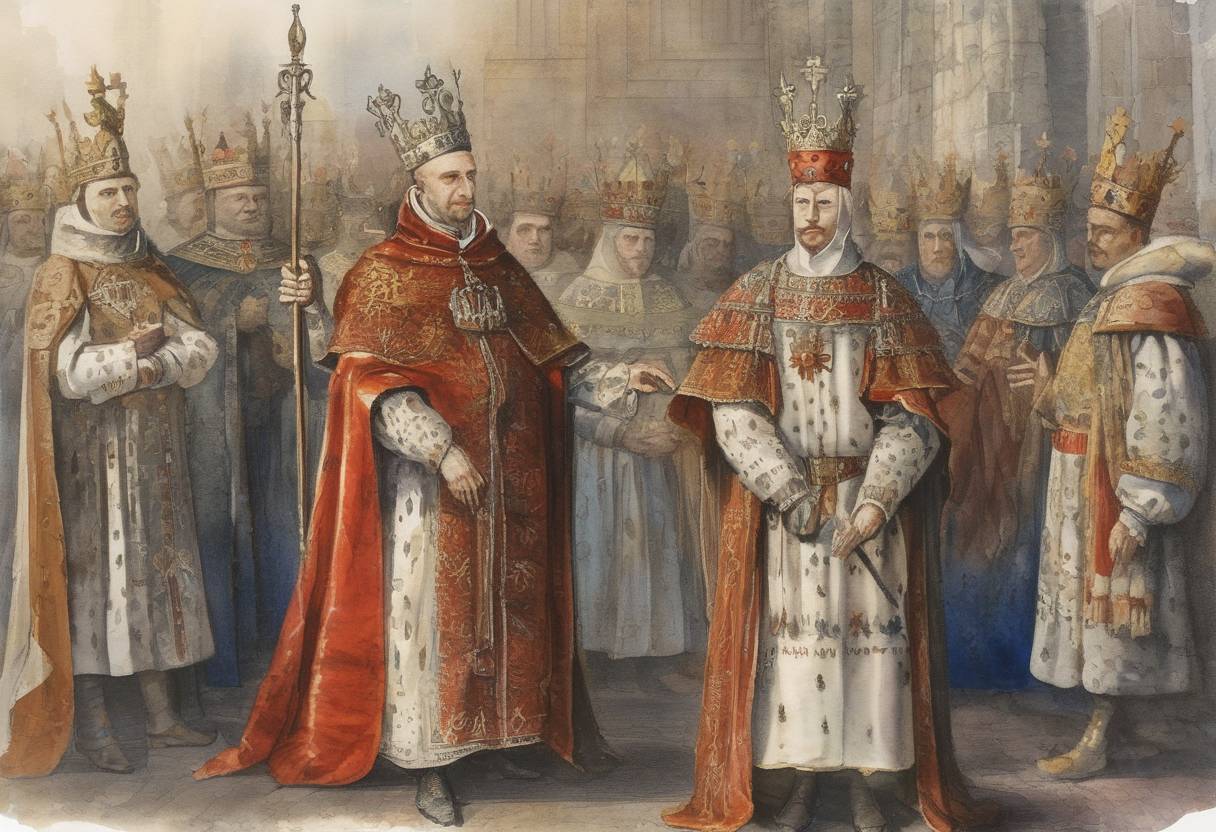
On March 4, 1386, Władysław II Jagiełło was crowned King of Poland, marking a significant moment in the history of both Poland and Lithuania. This event was the culmination of a series of political maneuvers and alliances that would shape the future of Eastern Europe.
Władysław II Jagiełło, originally named Jogaila, was the Grand Duke of Lithuania. His rise to the Polish throne was facilitated by the Union of Krewo in 1385, a pivotal agreement between the Kingdom of Poland and the Grand Duchy of Lithuania. The union was primarily orchestrated to counter the growing threat of the Teutonic Knights, a powerful military order that posed a significant threat to both nations.
The Union of Krewo was a dynastic and political alliance that stipulated several key conditions:
The coronation took place in Wawel Cathedral in Kraków, a traditional site for Polish royal ceremonies. This event not only solidified the personal union between Poland and Lithuania but also laid the groundwork for the eventual formation of the Polish-Lithuanian Commonwealth in 1569.
Strengthened Defense Against the Teutonic Knights: The union created a formidable alliance that could better resist the military campaigns of the Teutonic Order.
Cultural and Religious Impact: Jagiełło’s conversion to Christianity and subsequent promotion of the faith in Lithuania helped integrate the region into the broader Christian European community.
Political Stability and Expansion: The union facilitated greater political stability and territorial expansion, as the combined resources and strategic positions of Poland and Lithuania allowed for more effective governance and defense.
Foundation for the Polish-Lithuanian Commonwealth: The personal union set a precedent for the more formalized political union that would emerge in the 16th century, creating one of the largest and most populous states in Europe.
Władysław II Jagiełło’s coronation as King of Poland was a transformative event that had lasting implications for the political landscape of Eastern Europe. It marked the beginning of a powerful alliance that would endure for centuries, influencing the region’s cultural, religious, and political development.
Source: en.wikipedia.org