Xi Jinping's Election as President of the People's Republic of China
2013 · Beijing, China
Xi Jinping was formally elected as the President of the People's Republic of China by the National People's Congress, marking the beginning of his first term.
November 16, 2012
Xi Jinping was appointed as the General Secretary of the Communist Party of China, marking the beginning of his leadership in China.
Beijing, China | Communist Party of China
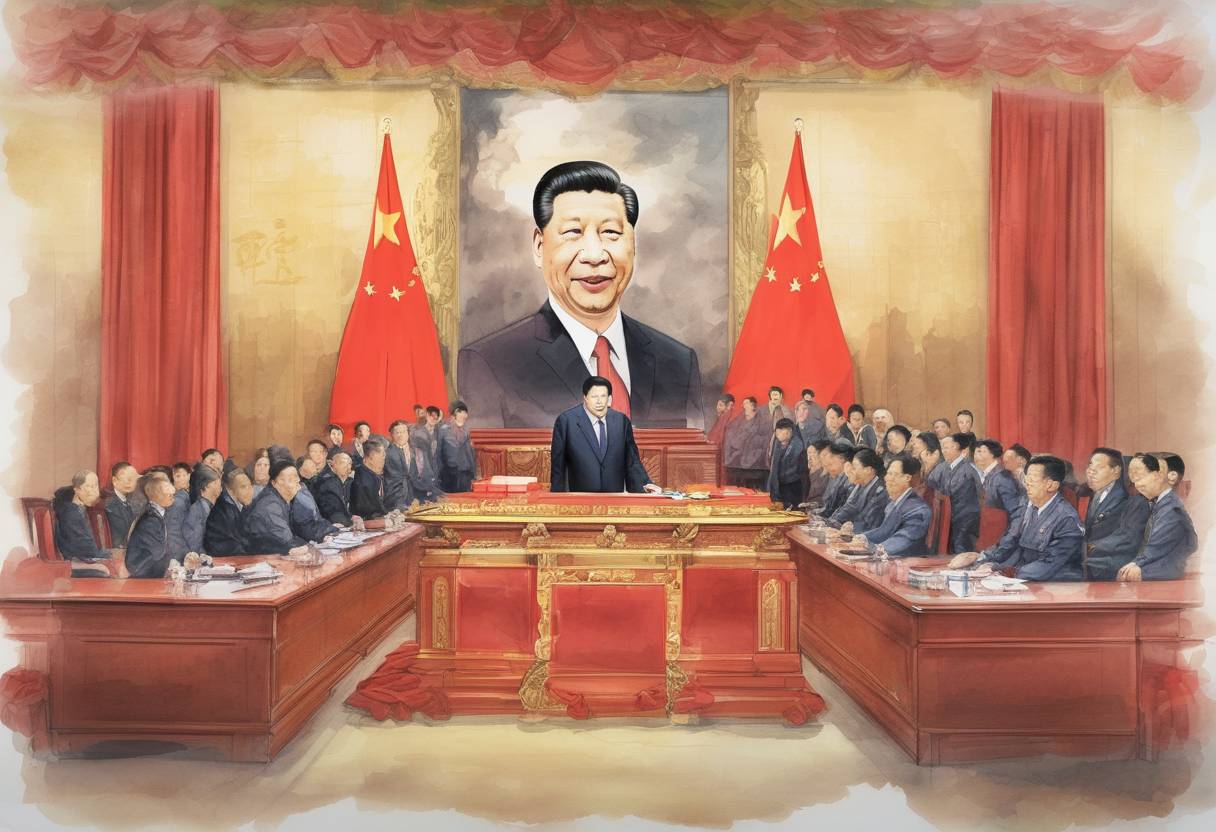
On November 16, 2012, Xi Jinping was appointed as the General Secretary of the Communist Party of China (CPC), marking the beginning of his leadership in China. This event was a significant milestone in Chinese politics, as it initiated a new era under Xi’s leadership, which has had profound implications for both China and the world.
Leadership Transition: The appointment of Xi Jinping as General Secretary was part of a carefully orchestrated leadership transition within the CPC. This transition occurs every ten years and involves the selection of new members for the Politburo Standing Committee, the top decision-making body in China.
Background: Xi Jinping, born in 1953, is the son of Xi Zhongxun, a revolutionary veteran and former vice-premier. Xi Jinping’s political career began in the provinces, where he held various positions, gaining a reputation for being pragmatic and reform-minded.
Predecessor: Xi succeeded Hu Jintao, who had served as General Secretary since 2002. Hu’s tenure was marked by a focus on economic growth and maintaining social stability.
18th National Congress of the CPC: Xi’s appointment was announced during the 18th National Congress of the Communist Party of China, a major political event held every five years. The Congress concluded with the election of a new Central Committee, which in turn elected the new Politburo and its Standing Committee.
Leadership Team: Alongside Xi, the new Politburo Standing Committee was unveiled, consisting of seven members, down from nine in the previous committee. This change was seen as a move to streamline decision-making processes.
Consolidation of Power: Xi Jinping’s leadership style has been characterized by a strong centralization of power. Over the years, he has consolidated his authority by taking on multiple key roles, including the Chairman of the Central Military Commission and the President of the People’s Republic of China.
Policy Initiatives: Xi has launched several significant policy initiatives, including the anti-corruption campaign, which has targeted both high-ranking officials and lower-level cadres. This campaign has been one of the most extensive in the history of the CPC.
International Impact: Under Xi’s leadership, China has taken a more assertive role on the global stage. Initiatives such as the Belt and Road Initiative have expanded China’s influence in international trade and diplomacy.
Domestic Reforms: Xi has emphasized the importance of the “Chinese Dream,” focusing on national rejuvenation and the modernization of the Chinese economy. However, his tenure has also seen increased censorship and a tightening of political control.
Xi Jinping’s rise to power marked a pivotal moment in China’s modern history. His leadership has reshaped China’s domestic policies and its role in global affairs. The changes implemented under his administration continue to influence China’s trajectory and its interactions with other nations.
In summary, Xi Jinping’s appointment as General Secretary of the Communist Party of China on November 16, 2012, was a defining moment that set the stage for significant political, economic, and social developments in China. His leadership continues to be a subject of global interest and analysis.
Source: www.britannica.com