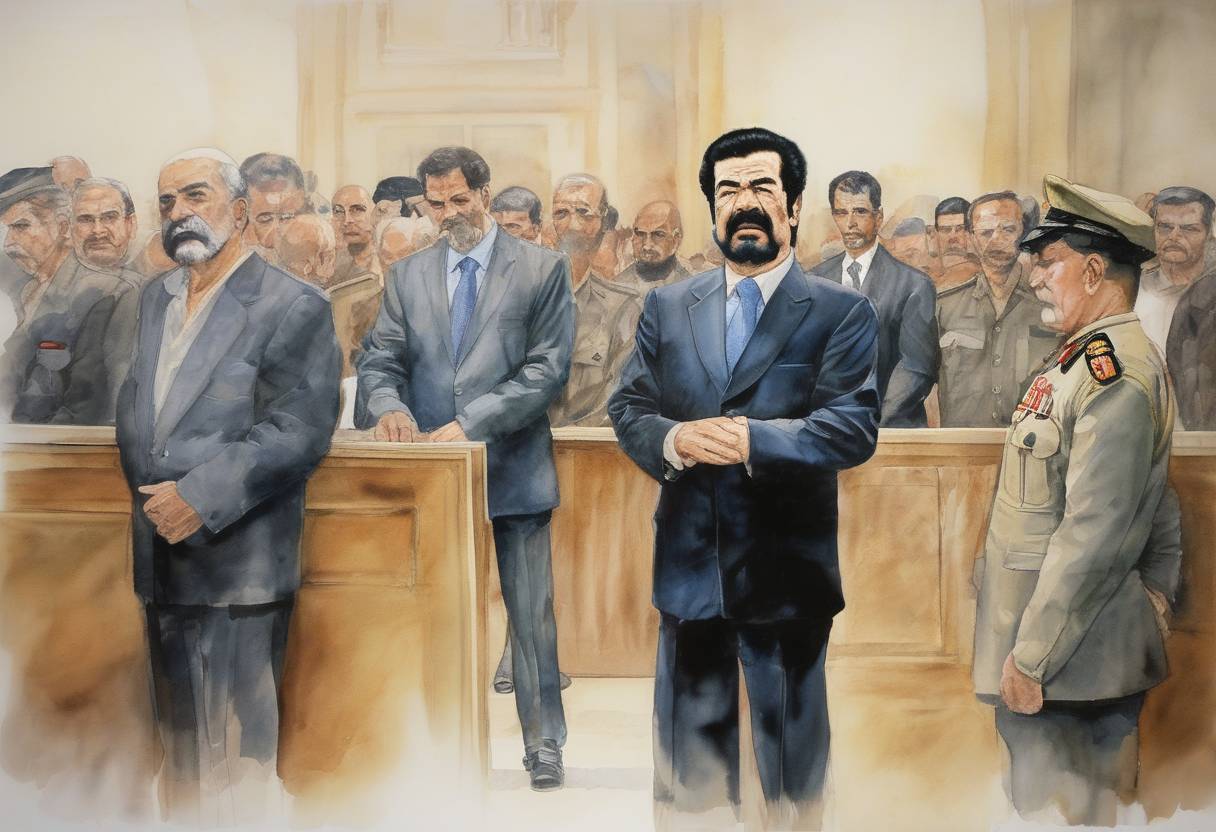
Saddam Hussein Sentenced to Death: November 5, 2006
On November 5, 2006, Saddam Hussein, the former President of Iraq, was sentenced to death by hanging by the Iraqi High Tribunal. This verdict marked a significant moment in Iraq’s history and the broader context of Middle Eastern politics.
Background
Saddam Hussein rose to power in Iraq in 1979, becoming the fifth President of the country. His regime was characterized by authoritarian rule, marked by widespread human rights abuses, including the use of chemical weapons, suppression of political dissent, and ethnic cleansing campaigns, particularly against the Kurdish population.
The Dujail Massacre
The specific charges leading to Saddam’s death sentence were related to the Dujail massacre. In 1982, an assassination attempt on Saddam occurred in the town of Dujail, predominantly inhabited by Shiite Muslims. In retaliation, Saddam’s regime ordered the execution of 148 Shiite men and boys, the detention and torture of hundreds of others, and the destruction of the town’s agricultural infrastructure.
The Trial
The trial of Saddam Hussein began on October 19, 2005, under the auspices of the Iraqi High Tribunal, a court established to prosecute former regime members for crimes against humanity. The trial was highly publicized and controversial, drawing international attention and criticism regarding its fairness and the influence of political pressures.
Key Points of the Trial
- Charges: Saddam was charged with crimes against humanity, specifically for the Dujail massacre.
- Defense: Saddam and his defense team argued that the trial was politically motivated and questioned the legitimacy of the court.
- Prosecution: The prosecution presented evidence of Saddam’s direct orders and involvement in the retaliatory actions against Dujail’s residents.
Verdict and Sentencing
On November 5, 2006, the court found Saddam Hussein guilty of crimes against humanity and sentenced him to death by hanging. The verdict was met with mixed reactions globally, with some viewing it as a step towards justice for the victims of his regime, while others criticized the trial’s conduct and fairness.
Aftermath
Saddam Hussein’s execution was carried out on December 30, 2006. His death marked the end of an era in Iraq but also left the country grappling with ongoing sectarian violence and instability. The trial and execution were pivotal in shaping Iraq’s post-Saddam political landscape and remain subjects of debate regarding their impact on justice and reconciliation in the region.
Broader Historical Significance
The sentencing and execution of Saddam Hussein were significant in the context of the U.S.-led invasion of Iraq in 2003, which aimed to dismantle his regime and eliminate alleged weapons of mass destruction. The events highlighted the challenges of transitional justice in post-conflict societies and the complexities of international involvement in sovereign judicial processes.
In summary, the sentencing of Saddam Hussein on November 5, 2006, was a landmark event in Iraq’s history, symbolizing both the end of a dictatorial regime and the beginning of a tumultuous period of rebuilding and reconciliation.