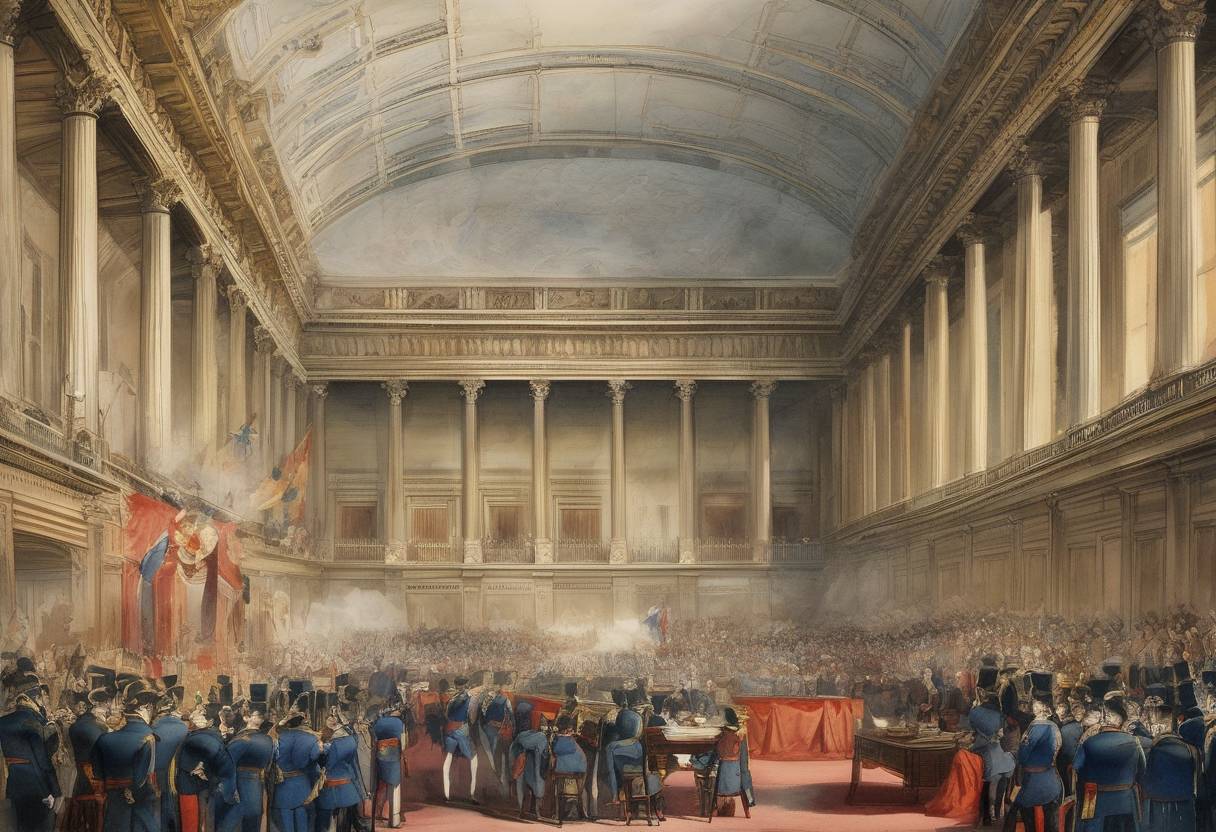
The Coup d’État of December 2, 1851
On December 2, 1851, Louis-Napoléon Bonaparte, then President of the French Second Republic, executed a coup d’état that dissolved the French National Assembly and set the stage for his eventual proclamation as Emperor Napoleon III. This event marked a significant turning point in French history, leading to the establishment of the Second French Empire.
Background
- Louis-Napoléon Bonaparte: Nephew of the famous Napoleon Bonaparte, Louis-Napoléon was elected President of the French Second Republic in 1848. His presidency was marked by political instability and economic challenges.
- Constitutional Limitations: The French Constitution of 1848 limited the president to a single four-year term without immediate re-election. As his term neared its end, Louis-Napoléon sought to amend the constitution to allow for re-election, but the National Assembly rejected his proposal.
The Coup
- Planning and Execution: Faced with the prospect of losing power, Louis-Napoléon and his supporters meticulously planned a coup. On the morning of December 2, 1851, troops loyal to him occupied strategic locations in Paris.
- Dissolution of the Assembly: Louis-Napoléon dissolved the National Assembly and declared a state of emergency. He justified his actions by claiming to restore order and protect the Republic from internal threats.
- Public Support and Repression: The coup was met with mixed reactions. While some segments of the population supported Louis-Napoléon, others, particularly republicans and socialists, opposed the move. The government swiftly suppressed uprisings and dissent, using military force to quell resistance.
Aftermath
- Referendum and Consolidation of Power: A plebiscite held later in December 1851 overwhelmingly supported Louis-Napoléon’s actions, although the fairness of the vote was questionable. This referendum provided him with the mandate to consolidate his power.
- Establishment of the Second Empire: On December 2, 1852, exactly one year after the coup, Louis-Napoléon declared himself Emperor Napoleon III, marking the beginning of the Second French Empire.
- Impact on France and Europe: The coup and the subsequent establishment of the empire had profound implications for France and Europe. Domestically, it led to a period of authoritarian rule, economic modernization, and significant infrastructure development. Internationally, it altered the balance of power in Europe and set the stage for future conflicts, including the Franco-Prussian War.
Historical Significance
The coup d’état of December 2, 1851, is a pivotal event in French history, illustrating the fragility of democratic institutions in the face of charismatic leadership and political ambition. It serves as a reminder of the complex interplay between power, legitimacy, and popular support in shaping the course of nations.