The Panic of 1873: A Catalyst for Economic Depression
1873 · New York City, United States
The Panic of 1873 begins, triggering a severe international economic depression in both Europe and the United States.
August 24, 1857
The Panic of 1857 begins, a financial crisis in the United States caused by the declining international economy and over-expansion of the domestic economy.
New York, United States | American banks
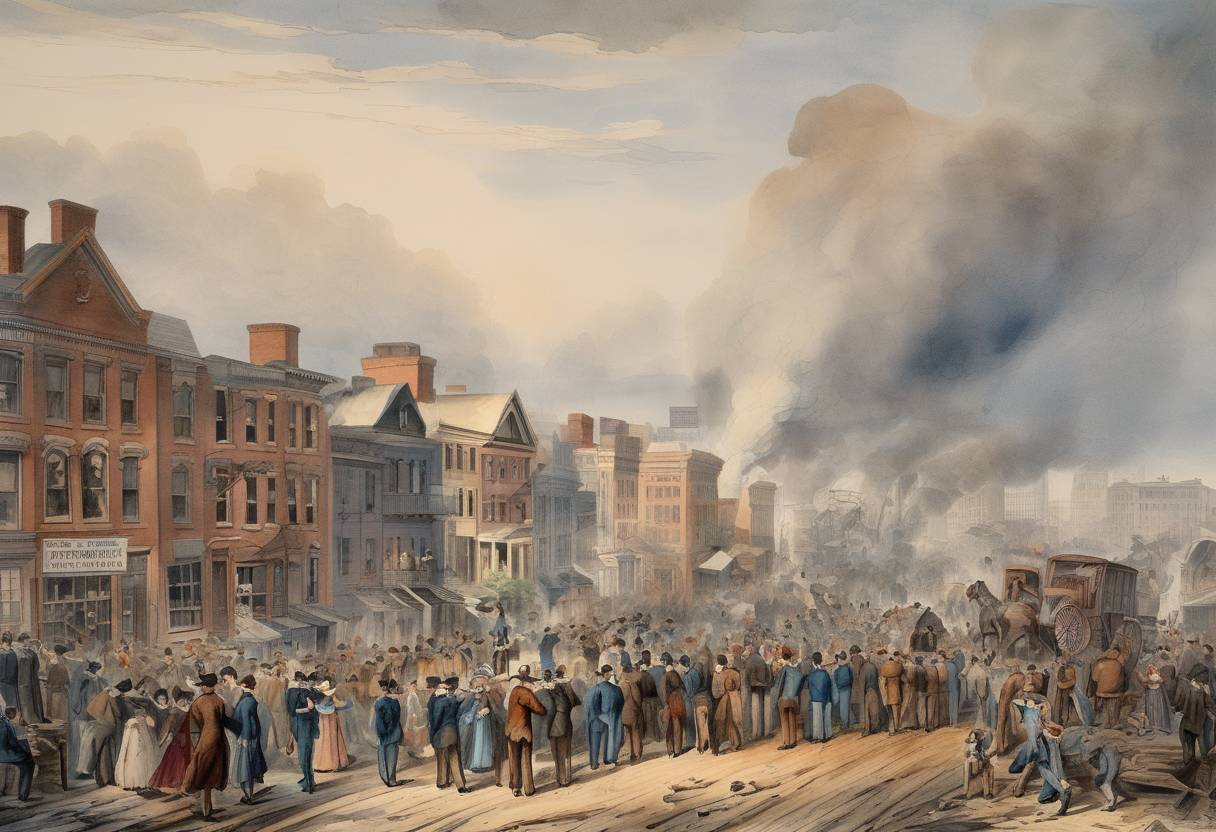
The Panic of 1857 was a significant financial crisis that began on August 24, 1857. It was primarily triggered by a combination of declining international economic conditions and over-expansion within the domestic economy of the United States. This panic was one of the first major financial crises to spread rapidly across the nation, affecting banks, businesses, and the general populace.
European Economic Downturn: The crisis was partly influenced by a recession in Europe, which led to a decrease in demand for American agricultural products, particularly wheat. This decline in exports affected American farmers and the economy at large.
End of the Crimean War: The conclusion of the Crimean War in 1856 led to a reduction in European demand for American goods, further exacerbating the economic slowdown.
Railroad Speculation: The 1850s saw a boom in railroad construction, heavily financed by speculative investments. Many of these investments were based on future growth projections that did not materialize, leading to financial instability.
Land Speculation: Similar to the railroads, land speculation was rampant, with many investors purchasing land on credit, expecting prices to continue rising. When prices fell, many were unable to meet their financial obligations.
Banking Practices: The banking sector was overextended, with many banks issuing loans based on inflated asset values. The lack of a central banking system meant there was little regulation or oversight.
Failure of the Ohio Life Insurance and Trust Company: On August 24, 1857, the Ohio Life Insurance and Trust Company, a major financial institution, announced its insolvency due to embezzlement and poor investments. This announcement triggered a wave of panic across the financial markets.
Bank Runs: Following the failure of Ohio Life, bank runs occurred as depositors rushed to withdraw their funds, fearing further bank failures.
Stock Market Decline: The New York Stock Exchange experienced a sharp decline as investors sold off stocks, particularly those related to railroads and banks.
Economic Contraction: The panic led to a significant contraction in the economy, with widespread business failures and unemployment.
Impact on the North and South: The crisis had a more pronounced effect in the industrial North than in the agrarian South, which contributed to growing economic tensions between the two regions.
Calls for Banking Reform: The panic highlighted the need for a more stable banking system, eventually leading to discussions that would culminate in the establishment of a national banking system during the Civil War.
The Panic of 1857 underscored the vulnerabilities of the American financial system and the interconnectedness of global economies. It also contributed to the mounting sectional tensions between the North and South, as differing economic impacts and responses to the crisis exacerbated existing divisions. This financial turmoil set the stage for further economic and political challenges leading up to the American Civil War.
Source: en.wikipedia.org