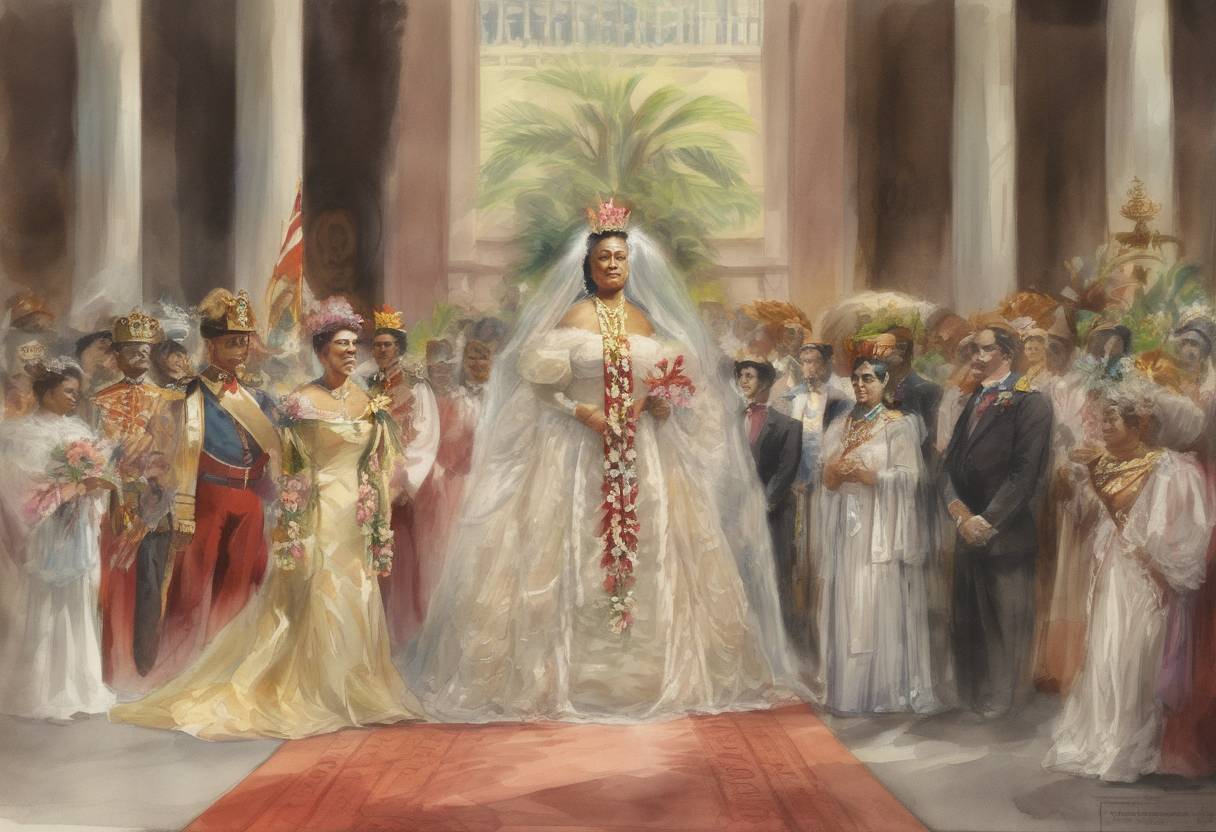
Liliuokalani Proclaimed Queen of Hawaii - January 29, 1891
On January 29, 1891, Liliuokalani was proclaimed the last monarch and the only queen regnant of the Kingdom of Hawaii. Her ascension marked a significant moment in Hawaiian history, as she became the first and only female monarch to rule the islands.
Background
Liliuokalani, born Lydia Liliʻu Loloku Walania Wewehi Kamakaʻeha, was part of the Hawaiian royal family. She was the sister of King Kalākaua, who reigned from 1874 until his death in 1891. Liliuokalani was well-educated and deeply involved in the political and cultural life of Hawaii, serving as regent during her brother’s world tour in 1881.
Ascension to the Throne
Upon King Kalākaua’s death on January 20, 1891, Liliuokalani ascended to the throne. Her formal proclamation as queen took place on January 29, 1891. Her reign began at a time of significant political and economic tension in Hawaii, largely due to the influence of American and European interests in the islands.
Reign and Challenges
Liliuokalani’s reign was marked by her efforts to restore the power of the monarchy and protect Hawaiian sovereignty. She sought to implement a new constitution, known as the “Bayonet Constitution,” which would have restored the monarchy’s authority and reduced the influence of foreign businessmen and politicians. However, her attempts were met with resistance from those who had benefited from the previous constitution, which had significantly limited the monarchy’s power.
Overthrow and Legacy
In 1893, a group of American and European businessmen, with the support of the U.S. Minister to Hawaii, orchestrated a coup that led to the overthrow of the Hawaiian monarchy. Liliuokalani was deposed, and a provisional government was established, eventually leading to Hawaii’s annexation by the United States in 1898.
Despite her overthrow, Liliuokalani remained a symbol of Hawaiian resistance and cultural pride. She spent her later years advocating for the rights of Native Hawaiians and preserving Hawaiian culture. Her legacy endures as a poignant reminder of Hawaii’s rich history and the struggles faced by its people during a period of significant change.
Conclusion
Liliuokalani’s proclamation as queen on January 29, 1891, was a pivotal moment in Hawaiian history. Her reign, though brief, highlighted the tensions between native Hawaiian sovereignty and foreign interests, setting the stage for the eventual annexation of Hawaii by the United States. Her life and legacy continue to inspire those who seek to honor and preserve Hawaiian culture and history.