The Arab Spring: Omani Protests Begin on January 15, 2011
2011 · Muscat, Oman
The Arab Spring: Protests began in Oman, marking the start of the Omani protests, part of the wider Arab Spring movement.
January 10, 2020
Sultan Qaboos bin Said of Oman, the longest-serving leader in the Middle East, dies at the age of 79.
Muscat, Oman | Omani government
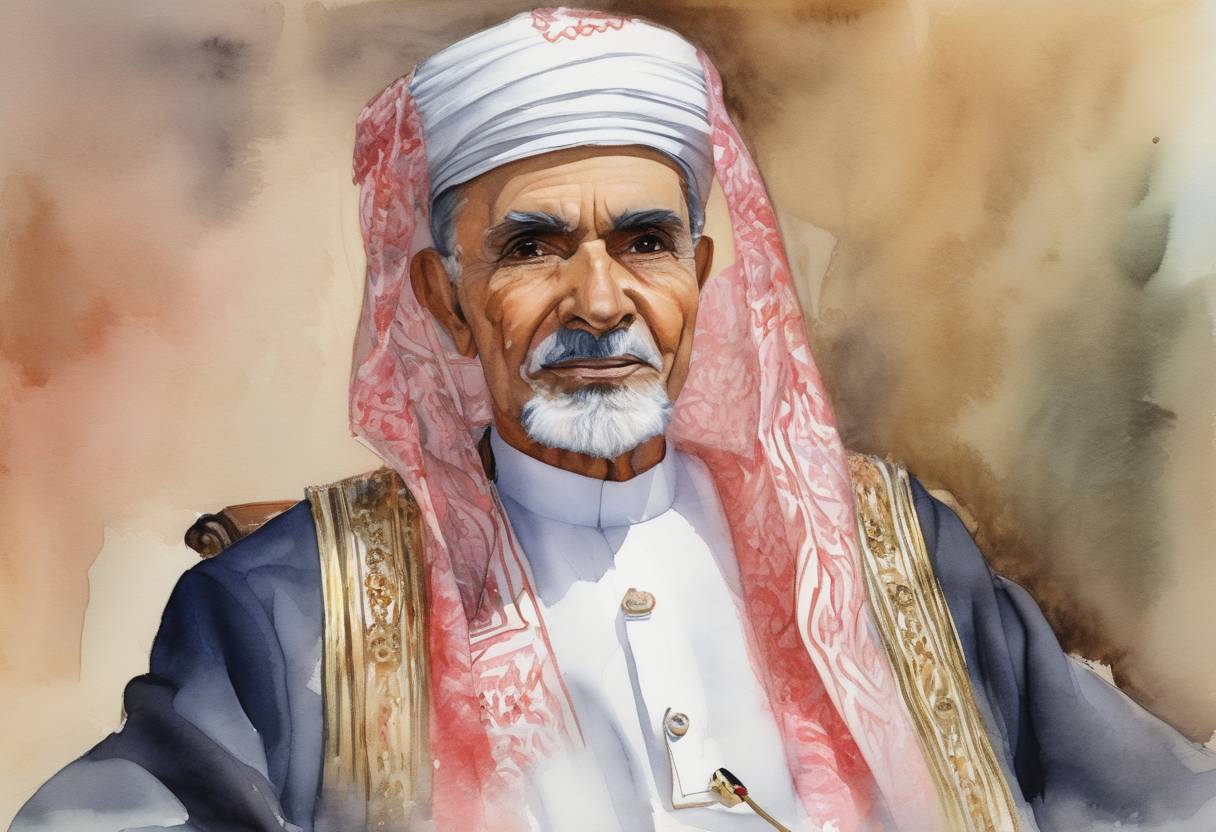
On January 10, 2020, Sultan Qaboos bin Said al Said, the longest-serving leader in the Middle East, passed away at the age of 79. His death marked the end of an era for Oman, a nation he had transformed significantly during his nearly five-decade reign.
Sultan Qaboos was born on November 18, 1940, in Salalah, Oman. He was the only son of Sultan Said bin Taimur and was educated in Oman and the United Kingdom, attending the Royal Military Academy Sandhurst. After completing his military training, he served in the British Army for a brief period.
Qaboos ascended to the throne on July 23, 1970, after overthrowing his father in a bloodless coup. At the time, Oman was an isolated and underdeveloped country with limited infrastructure and education systems.
Upon taking power, Sultan Qaboos embarked on a comprehensive modernization program. His reign saw the development of infrastructure, including roads, hospitals, and schools, and the establishment of a modern healthcare system. He also focused on diversifying the economy, which was heavily reliant on oil, by investing in tourism, agriculture, and fisheries.
Under his leadership, Oman transformed from a country with only a few miles of paved roads and three schools into a modern state with a high standard of living. Sultan Qaboos was known for his moderate and diplomatic approach, maintaining neutrality in regional conflicts and fostering good relations with both Western and Arab nations.
Sultan Qaboos played a crucial role in regional diplomacy. He was instrumental in mediating conflicts and fostering dialogue between rival states. Notably, Oman served as a backchannel for secret talks between the United States and Iran, which eventually led to the 2015 Iran nuclear deal.
His foreign policy was characterized by a commitment to peace and stability in the region, earning him respect and recognition on the international stage.
Sultan Qaboos died without an heir, as he had no children. His death prompted the implementation of a succession plan he had put in place. The royal family swiftly named his cousin, Haitham bin Tariq al Said, as his successor, ensuring a smooth transition of power.
Sultan Qaboos’s legacy is one of transformation and modernization. He is remembered for his visionary leadership, which brought Oman into the modern era while preserving its cultural heritage. His contributions to regional diplomacy and his efforts to maintain peace and stability in the Middle East remain significant aspects of his enduring legacy.
In summary, Sultan Qaboos bin Said’s passing marked the end of a transformative period in Oman’s history, leaving behind a nation that had evolved significantly under his guidance. His leadership style and diplomatic efforts continue to influence the region and serve as a model for governance and development.
Source: www.bbc.com