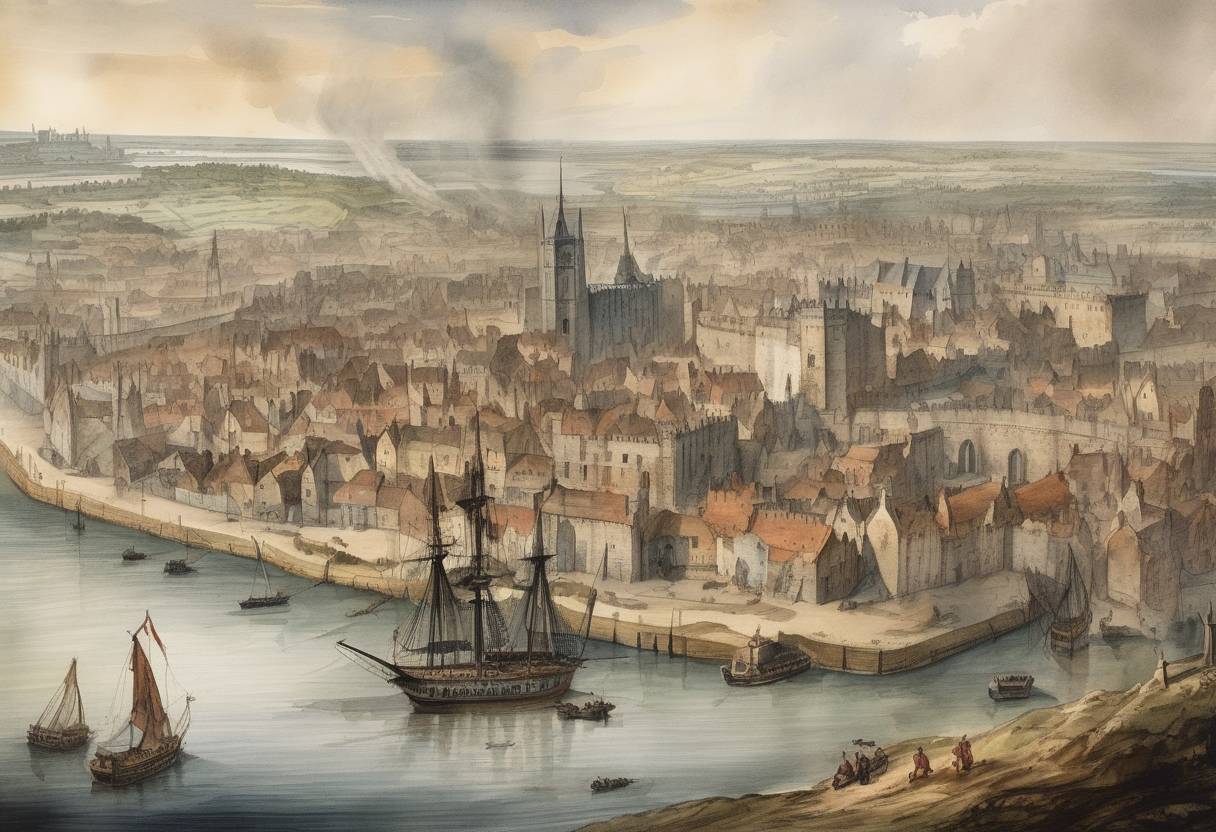
The Siege of Drogheda: October 11, 1649
On October 11, 1649, the city of Drogheda in Ireland fell to the forces of Oliver Cromwell after a ten-day siege. This event was a significant and controversial episode during the Irish Confederate Wars, part of the larger conflict known as the Wars of the Three Kingdoms, which included the English Civil War.
Context and Background
The Irish Confederate Wars began in 1641, rooted in religious, political, and ethnic tensions between the predominantly Catholic Irish and the Protestant English and Scottish settlers. By 1649, the English Civil War had concluded with the execution of King Charles I, and the establishment of the Commonwealth under Oliver Cromwell.
Cromwell, appointed as Lord Lieutenant of Ireland, was tasked with reasserting English control over Ireland, which had been largely under the control of the Irish Confederates and Royalists. His campaign aimed to subdue the Irish Catholic Confederation and Royalist forces, and Drogheda was one of the first targets.
The Siege
Cromwell arrived in Ireland in August 1649 with a well-equipped and disciplined New Model Army. Drogheda, a strategic port town on the east coast of Ireland, was defended by a garrison of approximately 2,500 men under Sir Arthur Aston, a Royalist commander.
The siege began on September 3, 1649. Cromwell’s forces, numbering around 12,000, surrounded the town and commenced a bombardment. Despite the defenders’ efforts, the town’s fortifications were breached on September 11. Cromwell ordered an assault, and his troops stormed the city.
The Aftermath
The fall of Drogheda was marked by a brutal massacre. Cromwell’s forces killed most of the garrison and many civilians. Estimates of the death toll vary, but it is believed that around 2,000 to 3,500 people were killed. Cromwell justified the massacre as a necessary act to deter further resistance, stating it was a “righteous judgment of God upon these barbarous wretches.”
The sack of Drogheda had significant repercussions. It instilled fear in other Irish towns and cities, leading to a swift capitulation of several other strongholds. However, it also fueled animosity and resentment towards Cromwell and the English, deepening the sectarian divide in Ireland.
Historical Significance
The siege and subsequent massacre at Drogheda are often cited as one of the most infamous episodes of Cromwell’s campaign in Ireland. It exemplified the brutal nature of 17th-century warfare and had lasting impacts on Anglo-Irish relations. The event is remembered as a symbol of the suffering endured by the Irish during the Cromwellian conquest and remains a contentious topic in Irish history.
Cromwell’s campaign continued after Drogheda, leading to further conquests and the eventual subjugation of Ireland. The legacy of these events contributed to the complex historical relationship between Ireland and England, influencing political and cultural narratives for centuries.