Guglielmo Marconi and the First Transatlantic Radio Signal
1901 · St. John's, Canada
Guglielmo Marconi receives the first transatlantic radio signal in St. John's, Newfoundland, marking a significant milestone in wireless communication.
October 17, 1907
Guglielmo Marconi's company began the first commercial transatlantic wireless service between Glace Bay, Nova Scotia, Canada, and Clifden, Ireland.
Glace Bay, Canada | Marconi Company
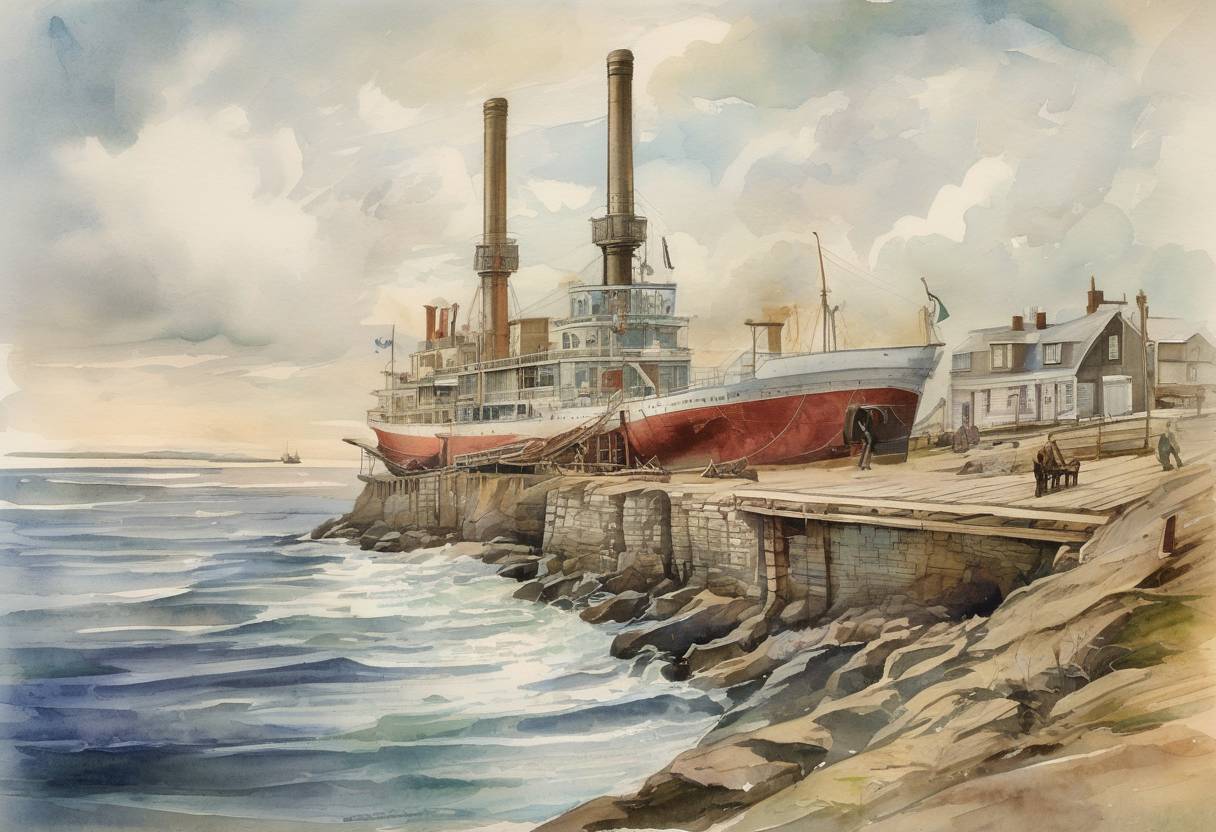
On October 17, 1907, a significant milestone in communication history was achieved when Guglielmo Marconi’s company inaugurated the first commercial transatlantic wireless service. This service connected Glace Bay, Nova Scotia, Canada, with Clifden, Ireland, marking a pivotal moment in the evolution of global communication.
Guglielmo Marconi, an Italian inventor and electrical engineer, is renowned for his pioneering work on long-distance radio transmission. By the early 20th century, Marconi had already made significant strides in wireless communication, including the first successful transatlantic radio signal in 1901. However, this initial achievement was more of an experimental demonstration rather than a commercial service.
The establishment of a reliable commercial service required overcoming numerous technical challenges, including signal clarity and transmission power over vast distances. Marconi’s company, the Marconi Wireless Telegraph Company, invested heavily in developing more powerful transmitters and better receiving equipment.
The first commercial message sent on October 17, 1907, marked the beginning of a new era in communication. This service allowed for messages to be sent across the Atlantic in a matter of hours, a significant improvement over the weeks it took for messages to travel by ship.
The inauguration of this service had profound implications:
The success of the transatlantic wireless service solidified Marconi’s reputation as a leading figure in the field of wireless communication. It also demonstrated the potential of wireless technology, paving the way for future advancements in global connectivity.
In conclusion, the establishment of the first commercial transatlantic wireless service by Marconi’s company on October 17, 1907, was a landmark achievement that transformed the landscape of international communication and set the stage for the interconnected world we live in today.
Source: en.wikipedia.org