Palestinian Suicide Bombing Outside Tel Aviv - July 22, 2002
2002 · Tel Aviv, Israel
A Palestinian suicide bomber kills nine and injures 20 at a bus stop outside Tel Aviv, Israel.
June 25, 2006
Gilad Shalit, an Israeli soldier, was captured by Palestinian militants in a cross-border raid from the Gaza Strip, leading to a prolonged conflict and negotiations for his release.
Kerem Shalom, Israel | Hamas
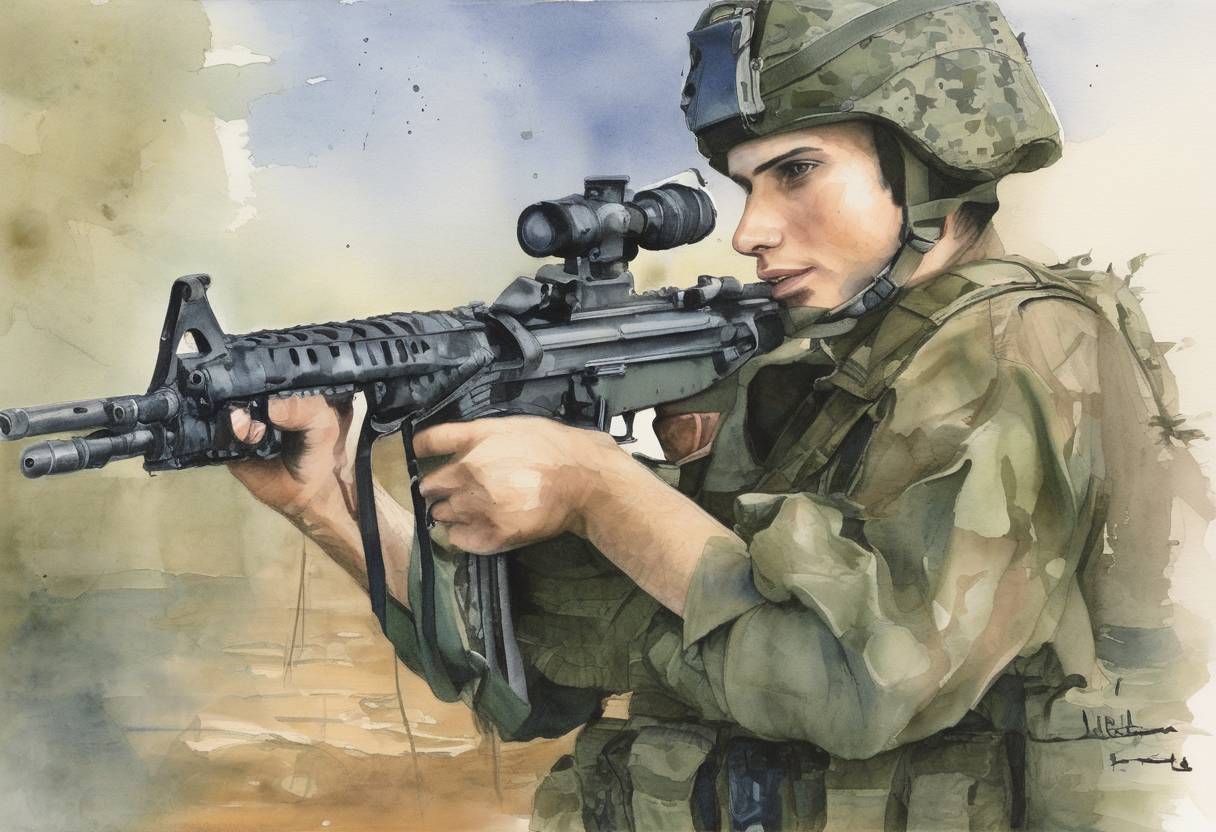
On June 25, 2006, a significant and highly publicized event occurred in the Israeli-Palestinian conflict: the capture of Israeli soldier Gilad Shalit by Palestinian militants. This incident not only intensified the ongoing conflict but also led to prolonged negotiations and military operations.
Gilad Shalit, born on August 28, 1986, was serving as a corporal in the Israel Defense Forces (IDF) when he was captured. The incident took place near the Kerem Shalom crossing, close to the border between Israel and the Gaza Strip. The capture was orchestrated by a coalition of Palestinian militant groups, including Hamas, the Popular Resistance Committees (PRC), and the Army of Islam.
The operation, known as “Operation Dispersive Illusion,” involved a well-coordinated attack on an IDF post. Militants used a tunnel dug from the Gaza Strip into Israeli territory to launch a surprise assault. During the raid, two Israeli soldiers were killed, and several others were wounded. Gilad Shalit was taken hostage and transported back to Gaza.
The capture of Shalit had immediate and far-reaching consequences:
Military Response: In response to the abduction, Israel launched a military operation named “Operation Summer Rains.” The operation aimed to pressure Hamas and other groups to release Shalit. It involved airstrikes and ground incursions into Gaza, resulting in significant casualties and infrastructure damage.
Negotiations: The capture led to prolonged and complex negotiations mediated by various international actors, including Egypt. The negotiations were marked by fluctuating demands and intermittent progress over several years.
Public Campaigns: Shalit’s family and supporters launched extensive public campaigns to keep his plight in the international spotlight. These efforts included rallies, media appearances, and diplomatic appeals.
After more than five years in captivity, Gilad Shalit was released on October 18, 2011, as part of a prisoner exchange deal between Israel and Hamas. The agreement involved the release of 1,027 Palestinian prisoners in exchange for Shalit. The deal was brokered with the help of Egyptian mediators and marked a significant moment in Israeli-Palestinian relations.
The capture and subsequent release of Gilad Shalit had several broader implications:
The capture and release of Gilad Shalit remain a poignant episode in the history of the Israeli-Palestinian conflict, illustrating the complexities and human dimensions of the ongoing struggle.
Source: en.wikipedia.org