André-Jacques Garnerin's First Recorded Parachute Jump
1797 · Paris, France
André-Jacques Garnerin makes the first recorded parachute jump from a hot air balloon over Paris.
April 15, 2019
A major fire engulfed the Notre-Dame Cathedral in Paris, causing significant damage to the historic structure, including the collapse of its spire and roof.
Paris, France | none
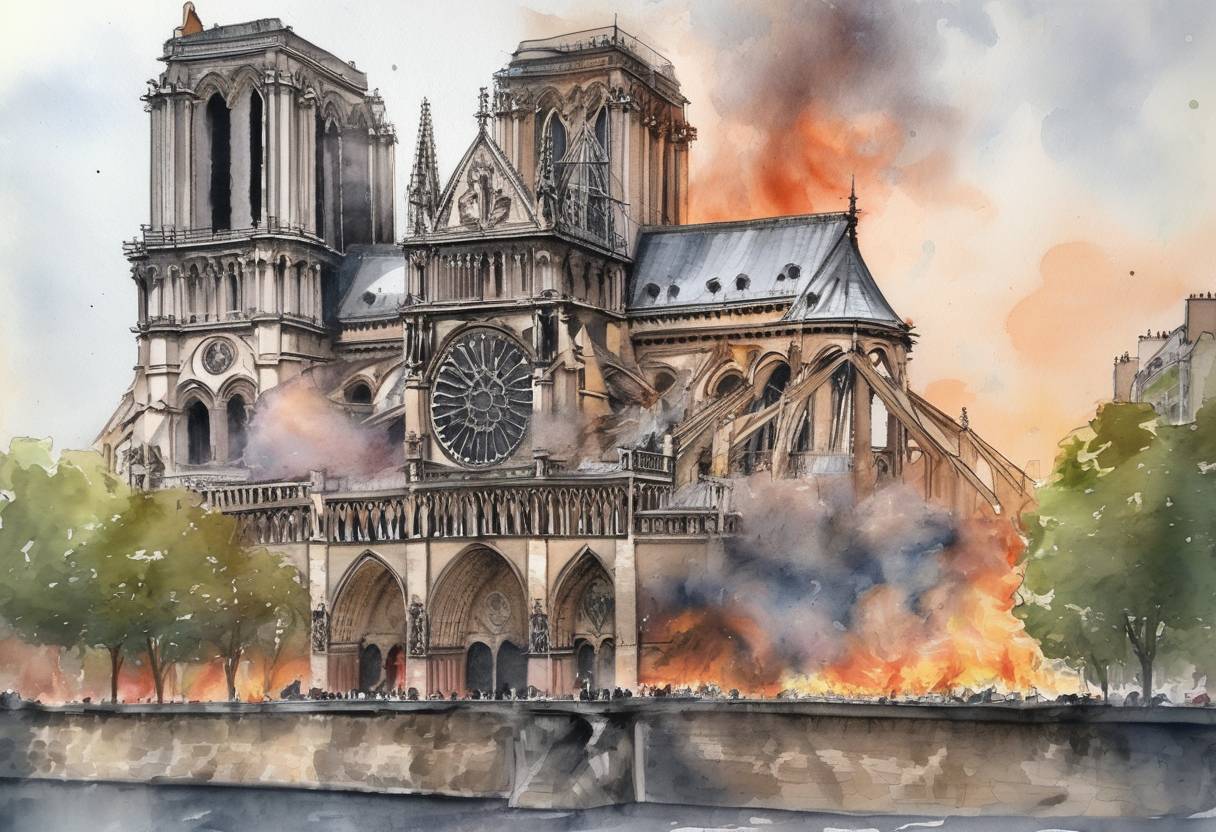
On April 15, 2019, a major fire broke out at the Notre-Dame Cathedral in Paris, France, causing extensive damage to one of the world’s most iconic Gothic structures. The fire began in the early evening and quickly spread, engulfing the roof and leading to the collapse of the cathedral’s spire.
Notre-Dame de Paris, meaning “Our Lady of Paris,” is a medieval Catholic cathedral on the Île de la Cité in the heart of Paris. Construction began in 1163 and was largely completed by 1260, although it has undergone numerous modifications and restorations over the centuries. The cathedral is renowned for its French Gothic architecture, its historical significance, and its role as a symbol of Parisian and French heritage.
Time and Origin: The fire was first reported at approximately 6:20 PM local time. It is believed to have started in the attic beneath the cathedral’s roof, although the exact cause remains undetermined. Investigations suggested it might have been linked to ongoing renovation work.
Extent of Damage: The fire caused the collapse of the cathedral’s spire, a 19th-century addition by architect Eugène Viollet-le-Duc, and destroyed much of the wooden roof structure, known as “the forest” due to its intricate lattice of wooden beams. The lead-covered wooden roof was also severely damaged.
Efforts to Contain the Fire: Over 400 firefighters were deployed to battle the blaze. Their efforts were focused on preventing the fire from spreading to the two main towers and preserving as much of the structure as possible.
Preservation of Artifacts: Many of the cathedral’s invaluable artifacts and religious relics, including the Crown of Thorns, were saved thanks to the efforts of emergency responders and cathedral staff.
Structural Integrity: Despite the extensive damage, the main structure, including the two iconic towers, was preserved. However, the cathedral required significant stabilization and restoration work.
Global Reaction and Support: The fire prompted an outpouring of grief and solidarity from around the world. French President Emmanuel Macron vowed to rebuild the cathedral, and substantial donations for the restoration poured in from individuals, corporations, and governments globally.
Restoration Efforts: The French government set a five-year timeline for the restoration, aiming to have the cathedral ready for the 2024 Summer Olympics in Paris. The restoration project involves meticulous work to restore the cathedral to its former glory while ensuring modern safety standards.
The Notre-Dame fire was a poignant reminder of the vulnerability of cultural heritage sites. It underscored the importance of preservation efforts and sparked discussions about the protection and restoration of historical monuments worldwide. The event also highlighted Notre-Dame’s enduring significance as a symbol of French culture and history.
In summary, the fire at Notre-Dame Cathedral was a tragic event that damaged a cherished historical landmark but also demonstrated global unity in the face of cultural loss and the determination to restore and preserve heritage for future generations.
Source: www.britannica.com