Abolition of the Monarchy in Nepal: May 28, 2008
2008 · Kathmandu, Nepal
Nepal abolishes its monarchy and becomes a federal democratic republic, ending 240 years of royal rule.
June 4, 2001
Gyanendra is crowned King of Nepal following the royal massacre in which King Birendra and several members of the royal family were killed.
Kathmandu, Nepal | Nepalese Monarchy
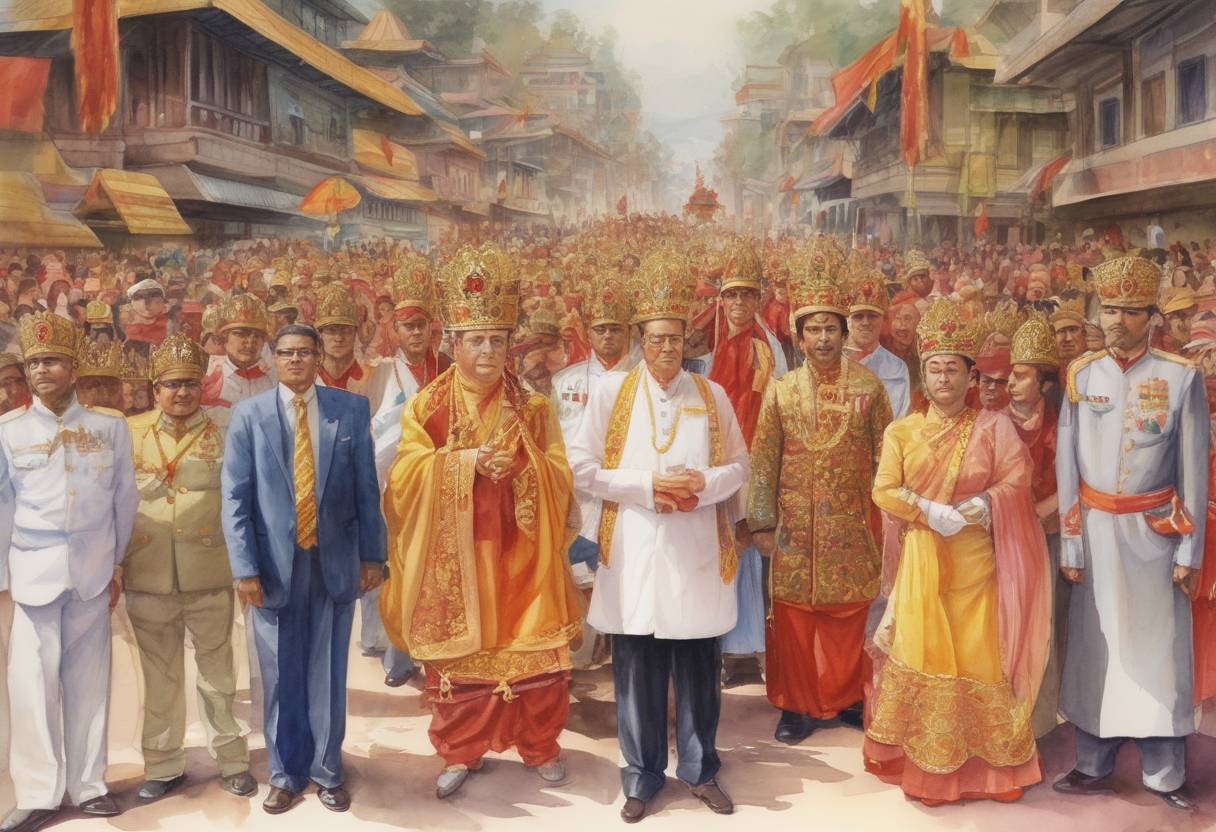
On June 1, 2001, a tragic and unprecedented event unfolded in the Narayanhiti Royal Palace in Kathmandu, Nepal, which would alter the course of the nation’s monarchy. This event, known as the “Nepalese Royal Massacre,” resulted in the deaths of King Birendra, Queen Aishwarya, and several other members of the royal family. The massacre was reportedly carried out by Crown Prince Dipendra, who allegedly opened fire on his family during a party before turning the gun on himself.
The massacre occurred during a family gathering in the palace. The motive behind Crown Prince Dipendra’s actions remains a subject of speculation and controversy, with various theories suggesting personal grievances and disputes over marriage choices. The incident shocked the nation and the world, given the revered status of the Nepalese monarchy, which was considered semi-divine by many Nepalese.
Following the massacre, Crown Prince Dipendra was declared king while in a coma, but he succumbed to his injuries on June 4, 2001. With his death, the throne passed to Gyanendra, the younger brother of King Birendra. Gyanendra had previously served as king for a brief period in 1950-51 when he was a child, during a political crisis.
On June 4, 2001, Gyanendra was officially crowned King of Nepal. His ascension was met with mixed reactions. While some viewed it as a necessary step to stabilize the monarchy, others were suspicious of the circumstances surrounding the massacre and the rapid transition of power.
King Gyanendra’s reign was marked by significant political turmoil. In the years following his ascension, Nepal experienced a growing Maoist insurgency, which had begun in 1996, and increasing demands for democratic reforms. Gyanendra’s attempts to consolidate power, including the dissolution of parliament and assumption of direct control in 2005, led to widespread protests and political unrest.
In 2006, a popular movement known as the “April Uprising” forced Gyanendra to relinquish absolute power and reinstate the parliament. This movement paved the way for the abolition of the monarchy and the establishment of a federal democratic republic in 2008, ending 240 years of royal rule in Nepal.
The events surrounding the royal massacre and Gyanendra’s subsequent reign are pivotal in understanding Nepal’s transition from a monarchy to a republic. They highlight the complex interplay of tradition, politics, and public sentiment in shaping the nation’s modern history.
Source: en.wikipedia.org