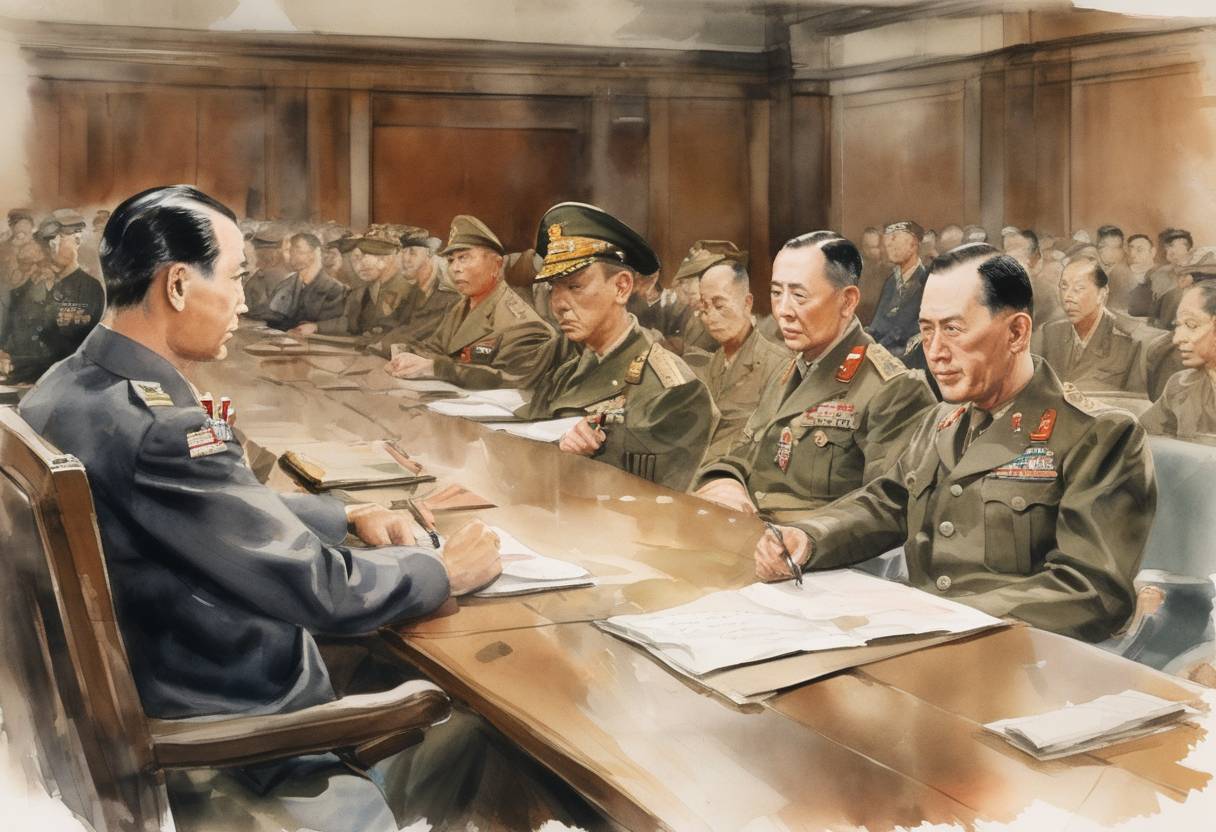
Establishment of the International Military Tribunal for the Far East
On January 19, 1946, General Douglas MacArthur, the Supreme Commander for the Allied Powers in the Pacific, established the International Military Tribunal for the Far East (IMTFE) in Tokyo. This tribunal was set up to prosecute Japanese leaders for war crimes committed during World War II, similar to the Nuremberg Trials in Europe.
Context and Background
- End of World War II: Following Japan’s surrender on September 2, 1945, the Allied powers sought to address the atrocities committed by Japanese military and political leaders during the war.
- Allied Occupation: Japan was under Allied occupation, primarily led by the United States, with General MacArthur overseeing the reconstruction and demilitarization efforts.
Establishment of the Tribunal
- Charter Issuance: MacArthur issued a special proclamation establishing the IMTFE, which outlined the tribunal’s jurisdiction, procedures, and the types of crimes to be prosecuted.
- Legal Framework: The tribunal was based on the principles of international law and was tasked with trying individuals for crimes against peace, war crimes, and crimes against humanity.
Key Features of the Tribunal
- Composition: The tribunal consisted of judges from 11 Allied nations, including the United States, the Soviet Union, China, the United Kingdom, and others.
- Defendants: Twenty-eight Japanese military and political leaders were indicted, including former Prime Minister Hideki Tojo.
- Charges: The charges included waging aggressive war, committing atrocities against civilians and prisoners of war, and other violations of international law.
Proceedings and Outcomes
- Trials: The trials began on May 3, 1946, and continued until November 12, 1948.
- Verdicts: Of the 28 defendants, 25 were found guilty. Sentences ranged from death by hanging to life imprisonment.
- Significance: The IMTFE was a landmark in international law, establishing precedents for prosecuting war crimes and reinforcing the principles of accountability and justice.
Aftermath and Legacy
- Impact on Japan: The trials were part of broader efforts to reform Japanese society and government, contributing to the country’s post-war democratization.
- International Law: The tribunal’s proceedings influenced the development of international criminal law and the establishment of future war crimes tribunals.
The IMTFE remains a significant historical event, reflecting the international community’s commitment to addressing wartime atrocities and setting a precedent for future international justice efforts.