Operation Just Cause: The U.S. Invasion of Panama
1989 · Panama City, Panama
The United States launched Operation Just Cause, an invasion of Panama to depose its leader, Manuel Noriega.
January 3, 1990
Former leader of Panama, Manuel Noriega, surrendered to U.S. forces.
Panama City, Panama | United States Military
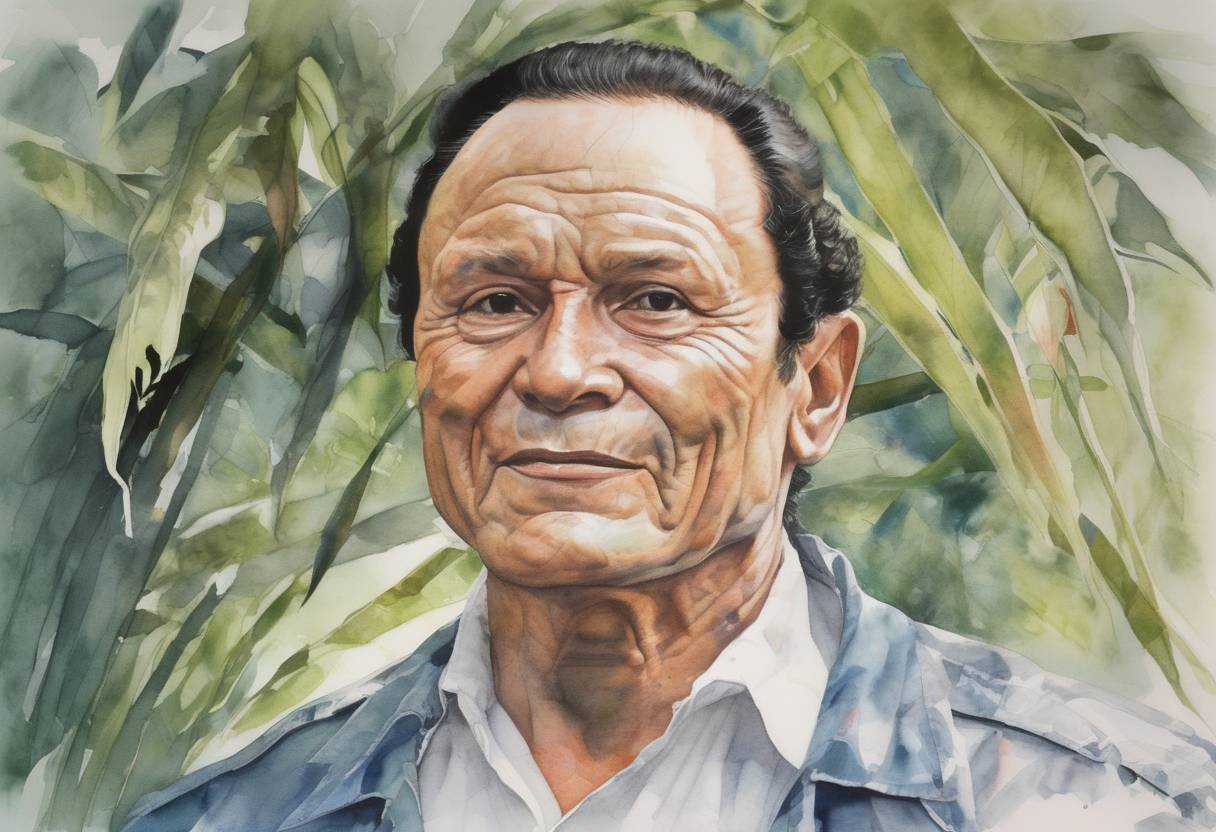
On January 3, 1990, Manuel Noriega, the former military leader of Panama, surrendered to U.S. forces, marking the end of a significant chapter in U.S.-Panamanian relations and the culmination of a complex geopolitical and military operation.
Manuel Noriega rose to power in Panama in the 1980s, becoming the de facto leader of the country. Initially, he was a valuable ally to the United States, particularly the Central Intelligence Agency (CIA), due to his role in countering communist influences in Central America. However, his involvement in drug trafficking, money laundering, and human rights abuses increasingly strained relations with the U.S.
By the late 1980s, Noriega’s regime was widely criticized for its corruption and brutality. His refusal to step down after losing the 1989 Panamanian elections further exacerbated tensions. The U.S. government, under President George H.W. Bush, decided to take decisive action against Noriega.
On December 20, 1989, the United States launched “Operation Just Cause,” a large-scale military invasion of Panama. The operation aimed to depose Noriega, protect U.S. citizens in Panama, defend democracy, and combat drug trafficking. The invasion involved over 27,000 U.S. troops and was one of the largest American military operations since the Vietnam War.
After the invasion, Noriega sought refuge in the Vatican Embassy in Panama City. For nearly two weeks, he remained holed up in the embassy, protected by diplomatic immunity. The U.S. military employed psychological warfare tactics, including blasting loud rock music, to pressure him into surrendering.
On January 3, 1990, Noriega finally surrendered to U.S. forces. He was immediately taken into custody and flown to the United States to face charges of drug trafficking, racketeering, and money laundering.
Noriega’s surrender marked the end of his regime and the beginning of a new era for Panama. The U.S. helped to establish a democratic government in Panama, and Guillermo Endara was sworn in as president.
In the United States, Noriega was tried and convicted on multiple charges, receiving a 40-year prison sentence. His trial and conviction were significant as they underscored the U.S. commitment to combating international drug trafficking and corruption.
The events surrounding Noriega’s surrender highlighted the complexities of U.S. foreign policy in Latin America, particularly the challenges of balancing strategic interests with ethical considerations. The operation also raised questions about the use of military force in international relations and its implications for sovereignty and international law.
Noriega’s surrender and subsequent trial served as a cautionary tale about the consequences of political and criminal misconduct, influencing future U.S. policy and military interventions in the region.
Source: en.wikipedia.org