Recognition of Baltic Independence by the Soviet Union on September 6, 1991
1991 · Moscow, Soviet Union
The Soviet Union recognizes the independence of the Baltic states: Estonia, Latvia, and Lithuania.
August 23, 1989
The Baltic Way, a peaceful political demonstration, took place with approximately two million people forming a human chain across the Baltic states.
Tallinn, Riga, Vilnius, Estonia, Latvia, Lithuania | Baltic States
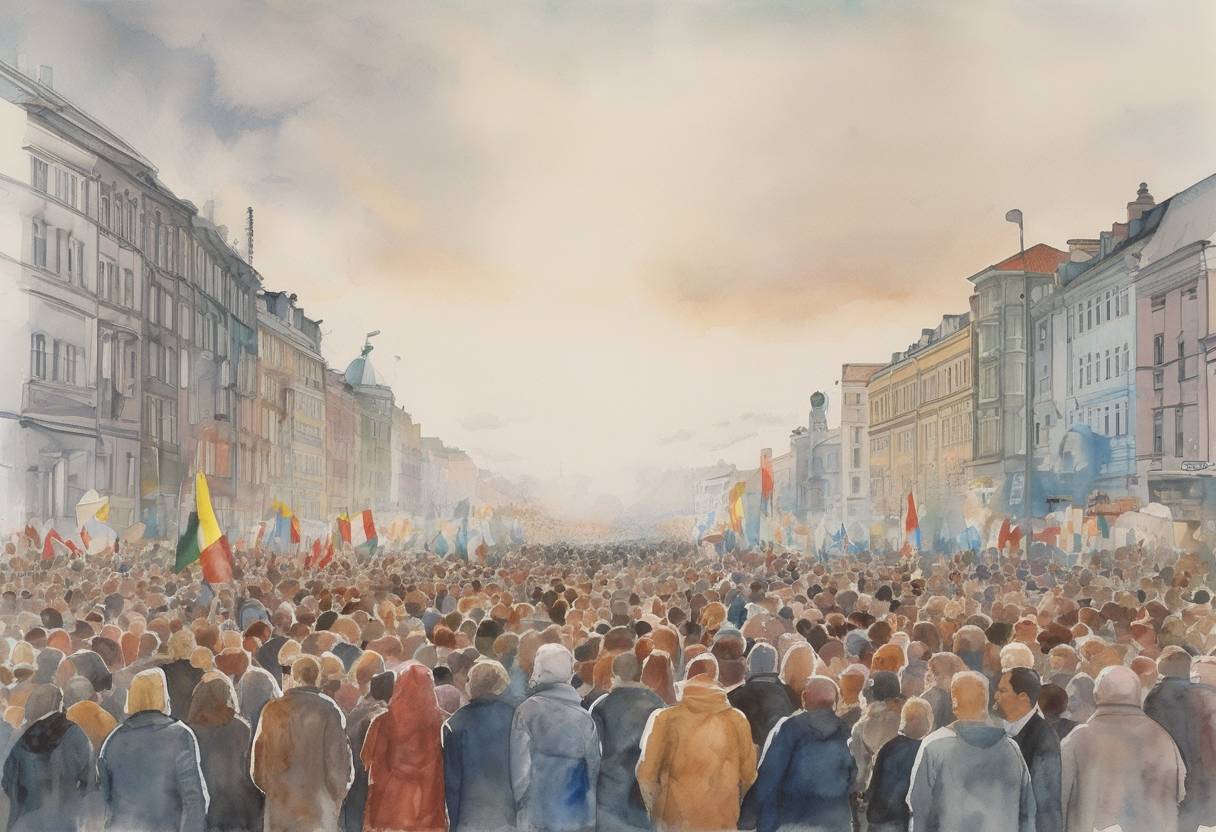
On August 23, 1989, a remarkable and peaceful political demonstration known as “The Baltic Way” took place. Approximately two million people joined hands to form a human chain spanning over 600 kilometers (about 370 miles) across the three Baltic states of Estonia, Latvia, and Lithuania. This event was a powerful symbol of unity and a call for independence from Soviet rule.
The Baltic Way occurred on the 50th anniversary of the Molotov-Ribbentrop Pact, a secret agreement signed on August 23, 1939, between Nazi Germany and the Soviet Union. This pact included a protocol that divided Eastern Europe into spheres of influence, leading to the Soviet occupation of the Baltic states in 1940.
By the late 1980s, the Baltic states were experiencing a resurgence of national identity and a growing independence movement. The policies of Glasnost (openness) and Perestroika (restructuring) introduced by Soviet leader Mikhail Gorbachev provided a more open political environment, allowing for increased expression of nationalist sentiments.
The Baltic Way was organized by the Popular Fronts of Estonia, Latvia, and Lithuania, which were the leading pro-independence movements in each country. The demonstration was meticulously planned to coincide with the anniversary of the Molotov-Ribbentrop Pact, highlighting the historical injustice of the Baltic states’ annexation.
Participants formed a continuous human chain that stretched from Tallinn in Estonia, through Riga in Latvia, to Vilnius in Lithuania. The event was not only a demonstration of solidarity among the Baltic peoples but also a peaceful protest against Soviet occupation and a demand for the restoration of independence.
The Baltic Way was a significant moment in the history of the Baltic states and the broader context of the collapse of Soviet influence in Eastern Europe. It drew international attention to the Baltic independence movements and underscored the desire for freedom and self-determination.
The demonstration was a precursor to the eventual independence of the Baltic states. In 1990, Lithuania declared independence, followed by Latvia and Estonia in 1991. The Soviet Union recognized their independence later that year, marking the end of decades of Soviet control.
The Baltic Way remains a powerful symbol of peaceful resistance and unity. It is commemorated annually in the Baltic states and is remembered as a pivotal moment in their struggle for independence.
Source: en.wikipedia.org