Establishment of the International Military Tribunal for the Far East
1946 · Tokyo, Japan
General Douglas MacArthur established the International Military Tribunal for the Far East in Tokyo to try Japanese war criminals.
September 2, 1945
World War II officially ended when Japan signed the Instrument of Surrender aboard the USS Missouri in Tokyo Bay.
Tokyo, Japan | Allied Powers
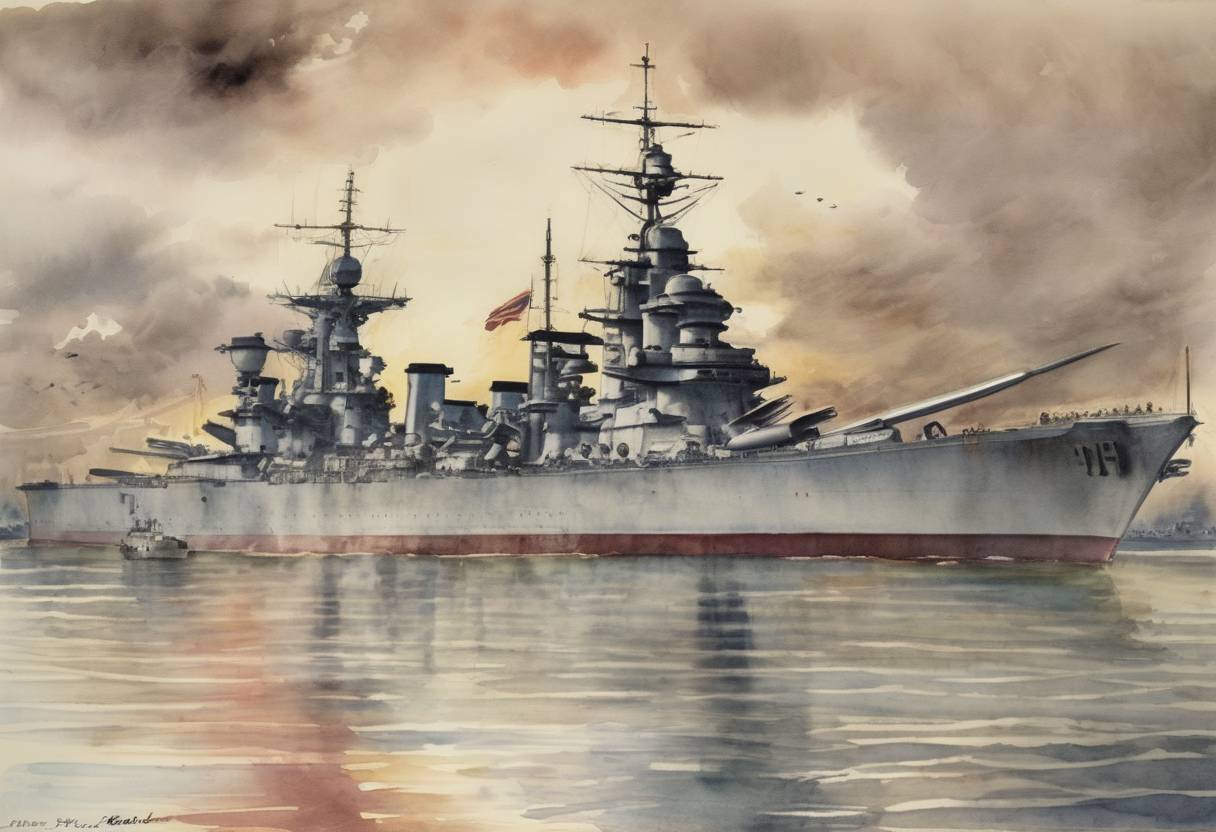
On September 2, 1945, World War II officially came to an end when Japan signed the Instrument of Surrender aboard the USS Missouri in Tokyo Bay. This momentous event marked the conclusion of a global conflict that had lasted six years, involving most of the world’s nations and resulting in unprecedented destruction and loss of life.
The Pacific War: By mid-1945, Japan was facing severe setbacks in the Pacific. The Allied forces, primarily led by the United States, had achieved significant victories in battles such as Midway, Iwo Jima, and Okinawa, bringing them closer to the Japanese mainland.
Atomic Bombings: In August 1945, the United States dropped atomic bombs on the Japanese cities of Hiroshima (August 6) and Nagasaki (August 9). These bombings resulted in massive civilian casualties and demonstrated the devastating power of nuclear weapons.
Soviet Declaration of War: On August 8, 1945, the Soviet Union declared war on Japan and launched a large-scale invasion of Japanese-occupied territories in Manchuria, further pressuring Japan to surrender.
Location: The surrender ceremony took place aboard the USS Missouri, an American battleship anchored in Tokyo Bay. The choice of the Missouri was symbolic, as it represented the might of the United States Navy.
Participants: The ceremony was attended by representatives from the Allied powers, including General Douglas MacArthur, who served as the Supreme Commander for the Allied Powers, and Fleet Admiral Chester Nimitz. Japanese officials, led by Foreign Minister Mamoru Shigemitsu and General Yoshijiro Umezu, signed the surrender document on behalf of Japan.
The Instrument of Surrender: The document outlined the unconditional surrender of Japan and the terms under which the country would be governed post-war. It stipulated the disarmament of Japanese forces and the occupation of Japan by Allied forces.
Occupation of Japan: Following the surrender, Japan was occupied by Allied forces, primarily led by the United States. This occupation lasted until 1952 and involved significant political, economic, and social reforms, including the drafting of a new constitution.
End of World War II: The signing of the Instrument of Surrender marked the official end of World War II, bringing peace to a world that had been ravaged by conflict since 1939.
Legacy: The end of the war led to significant geopolitical changes, including the emergence of the United States and the Soviet Union as superpowers and the beginning of the Cold War. It also set the stage for the establishment of the United Nations, aimed at preventing future global conflicts.
The surrender ceremony aboard the USS Missouri remains a powerful symbol of the end of World War II and the beginning of a new era in international relations.
Source: en.wikipedia.org