Byzantine Iconoclasm Begins: Emperor Leo III's Decree
730 · Constantinople, Byzantine Empire
Emperor Leo III issues a decree banning the veneration of icons, marking the beginning of the Byzantine Iconoclasm.
February 18, 0842
The Council of Constantinople ends, which was convened to address the issue of iconoclasm in the Byzantine Empire.
Constantinople, Byzantine Empire | Byzantine Empire
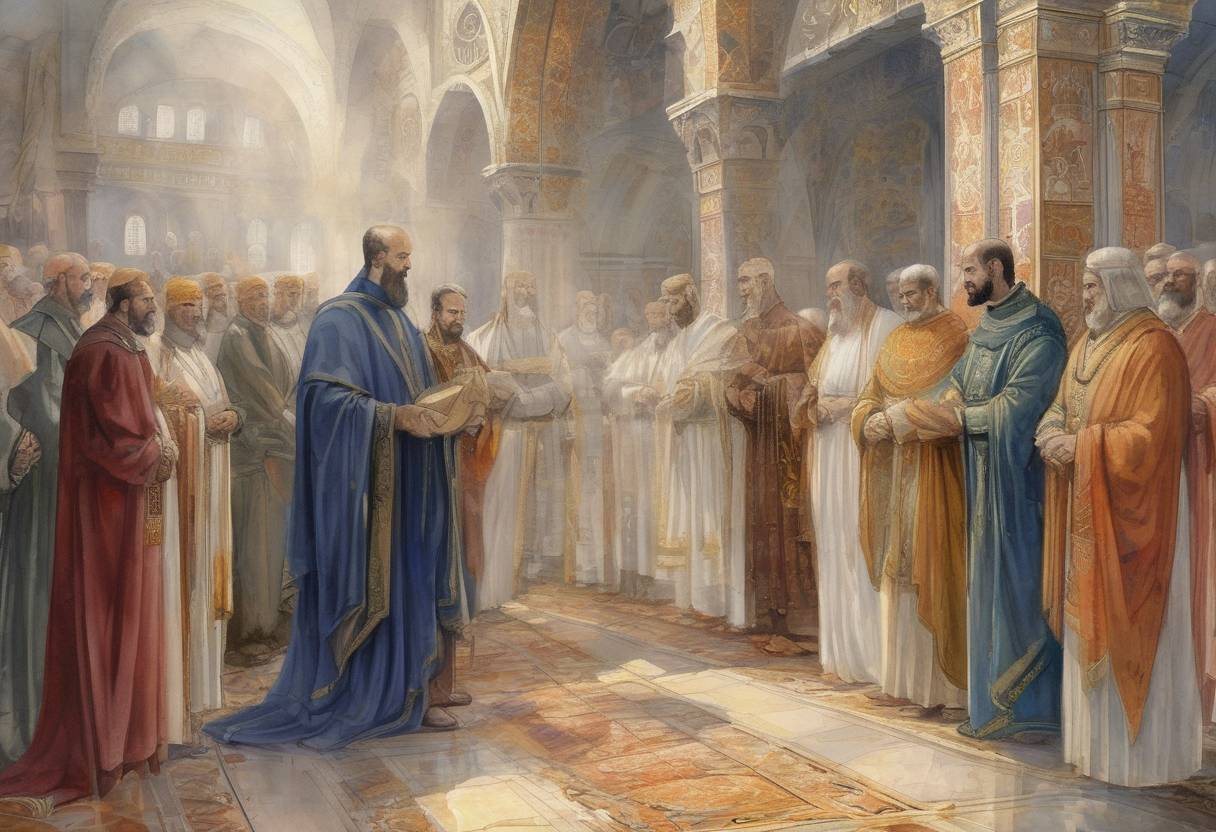
The Council of Constantinople, which concluded on February 18, 842, was a pivotal event in the history of the Byzantine Empire, primarily addressing the contentious issue of iconoclasm. This council marked a significant turning point in the religious and political landscape of the empire.
Iconoclasm, the rejection and destruction of religious images or icons, had been a source of intense conflict within the Byzantine Empire for over a century. The controversy began in earnest during the reign of Emperor Leo III in 726, who initiated the first phase of iconoclasm, arguing that the veneration of icons was tantamount to idolatry. This policy was continued by his successors, leading to widespread destruction of religious images and persecution of iconophiles (those who supported the veneration of icons).
The issue was not merely theological but also political, as it reflected deeper tensions between different factions within the empire, including the church, the state, and various regional and cultural groups.
The council that ended on February 18, 842, was convened under the regency of Empress Theodora, following the death of her husband, Emperor Theophilos, who was a staunch iconoclast. Theodora, acting as regent for her young son Michael III, was an iconophile and sought to restore the veneration of icons.
The council, often referred to as the “Triumph of Orthodoxy,” was held in the Hagia Sophia in Constantinople. It reaffirmed the decisions of the Second Council of Nicaea (787), which had previously restored the veneration of icons but had been overturned by subsequent iconoclast emperors.
Restoration of Icons: The council officially ended the period of iconoclasm, restoring the veneration of icons in the Byzantine Empire. This decision was celebrated with the establishment of the “Feast of Orthodoxy,” which is still observed in the Eastern Orthodox Church today.
Religious Unity: The resolution of the iconoclast controversy helped to unify the Byzantine Church and consolidate the power of the iconophile faction within the empire.
Cultural Impact: The restoration of icons had a profound impact on Byzantine art and culture, leading to a flourishing of religious art and the development of the distinctive Byzantine style that would influence Eastern Orthodox Christianity for centuries.
Political Stability: By resolving a major source of internal conflict, the council helped to stabilize the Byzantine Empire, allowing it to focus on external threats and internal development.
The conclusion of the Council of Constantinople in 842 was a defining moment in Byzantine history, marking the end of a divisive era and setting the stage for a period of religious and cultural revival.
Source: en.wikipedia.org