Charles Lindbergh's Historic Transatlantic Flight
1927 · New York, United States
Charles Lindbergh took off from Roosevelt Field in New York, beginning the first solo nonstop transatlantic flight, which he completed the next day in Paris.
January 9, 1923
Juan de la Cierva made the first successful flight of an autogyro, a predecessor to the helicopter.
Getafe, Spain
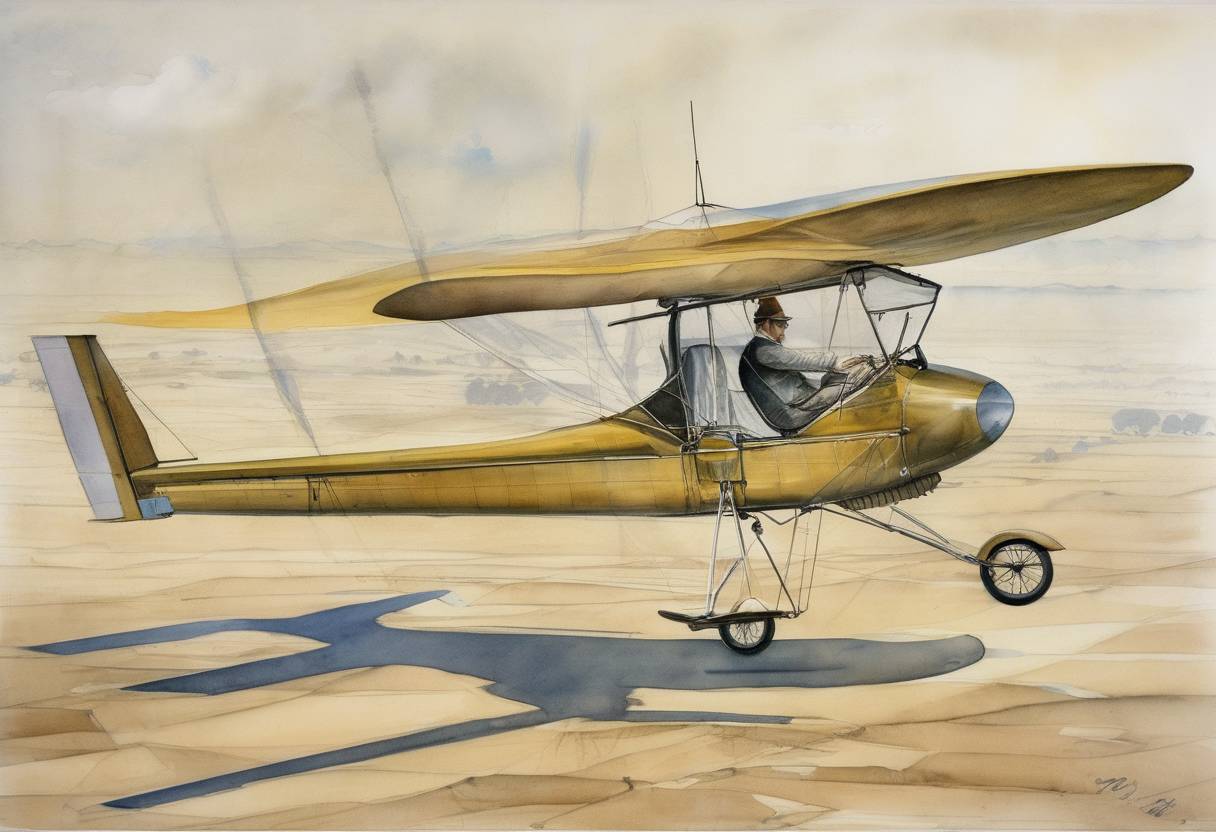
On January 9, 1923, Spanish engineer Juan de la Cierva achieved a significant milestone in aviation history by successfully flying the first autogyro, a pioneering step towards the development of rotary-wing aircraft. This event took place in Getafe, near Madrid, Spain, and marked a crucial advancement in the field of aerodynamics and aircraft design.
Juan de la Cierva was born on September 21, 1895, in Murcia, Spain. He was an innovative engineer with a keen interest in solving the stability issues that plagued fixed-wing aircraft. After witnessing several airplane crashes, de la Cierva was motivated to design an aircraft that could fly safely at low speeds and avoid stalling, a common problem with early airplanes.
The autogyro, or gyroplane, is a type of rotorcraft that uses an unpowered rotor to develop lift, while an engine-driven propeller provides thrust. Unlike helicopters, the rotor of an autogyro is not powered; instead, it spins freely in the airstream as the aircraft moves forward, a phenomenon known as autorotation. This design allows for short takeoff and landing distances and improved safety due to its resistance to stalling.
On January 9, 1923, de la Cierva’s prototype, the C.4, took to the skies for its first successful flight. The C.4 was equipped with a four-bladed rotor and a conventional airplane fuselage. This flight demonstrated the autogyro’s ability to fly safely and stably, validating de la Cierva’s innovative design.
The successful flight of the autogyro was a groundbreaking achievement that paved the way for future developments in rotary-wing aviation. De la Cierva’s work laid the foundation for the eventual creation of the helicopter, which would become a vital tool in both civilian and military aviation.
De la Cierva continued to refine his designs, leading to the production of more advanced autogyros. His contributions to aviation were recognized worldwide, and his innovations influenced many engineers and inventors in the field.
Juan de la Cierva’s successful flight of the autogyro on January 9, 1923, represents a pivotal moment in aviation history. It showcased the potential of rotary-wing aircraft and set the stage for future advancements that would revolutionize air travel and transport. His legacy endures in the continued use and development of rotorcraft technology today.
Source: www.britannica.com