The Siege of Quebec Begins - December 9, 1775
1775 · Quebec City, Canada
American Revolutionary War: The Siege of Quebec begins, a joint colonial military campaign aiming to bring Quebec into the rebellious colonies' fold.
November 13, 1775
American Revolutionary War: Patriot revolutionary forces under Colonel Ethan Allen attack Montreal, but are defeated by British defenders.
Montreal, Canada | Continental Army
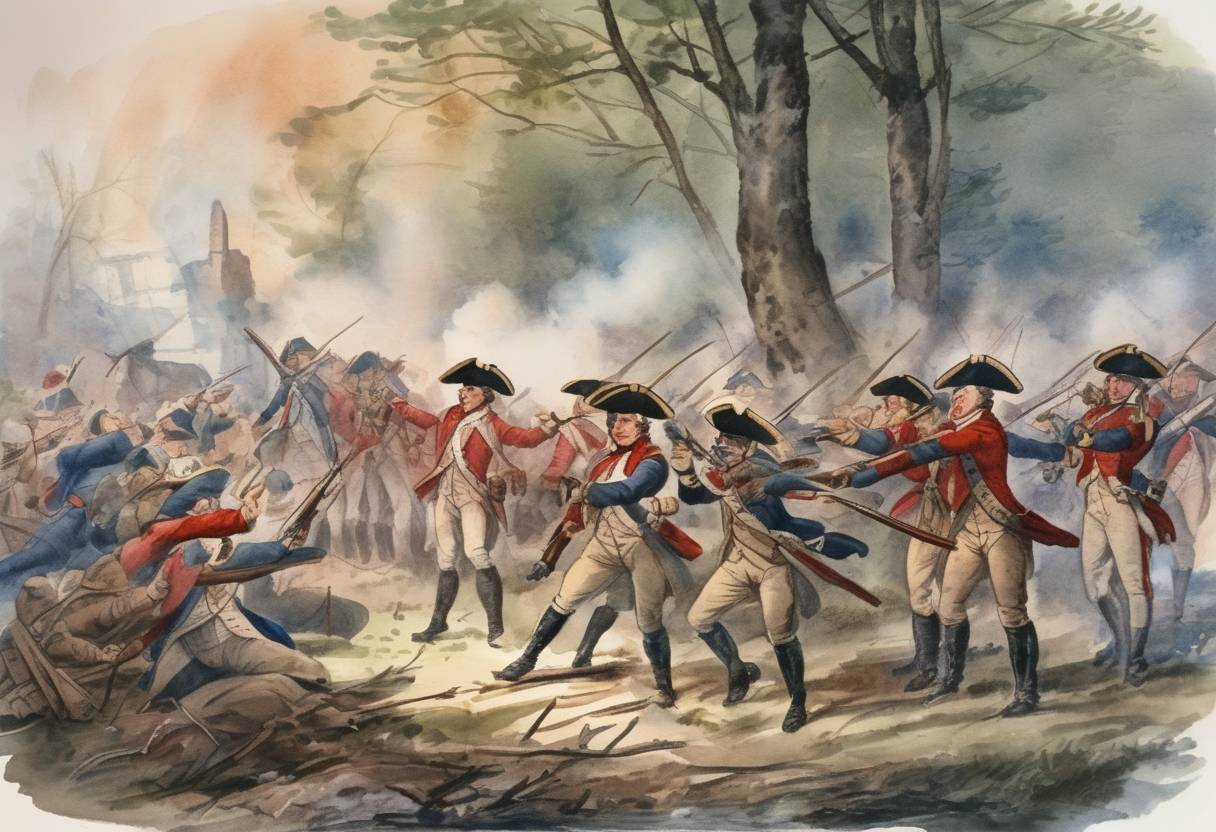
On November 13, 1775, during the early stages of the American Revolutionary War, Patriot revolutionary forces led by Colonel Ethan Allen attempted to capture Montreal, a strategic city in the British-controlled province of Quebec. This event was part of the larger Continental Army’s invasion of Canada, which aimed to bring the Canadian provinces into the rebellion against British rule.
The invasion of Canada was a strategic initiative by the Continental Congress to weaken British control in North America and to encourage Canadian support for the American cause. The campaign was launched in the summer of 1775, with two main expeditions: one led by General Richard Montgomery, advancing from Fort Ticonderoga towards Montreal, and another led by Colonel Benedict Arnold, marching through the wilderness of Maine towards Quebec City.
Ethan Allen, a prominent leader of the Green Mountain Boys, had previously gained fame for his role in the capture of Fort Ticonderoga in May 1775. His involvement in the Canadian campaign was part of a broader effort to secure the northern frontier and disrupt British supply lines.
On November 13, 1775, Ethan Allen, along with a small force of about 110 men, attempted to take Montreal by surprise. However, the attack was poorly coordinated and lacked sufficient manpower. The British defenders, under the command of General Guy Carleton, were well-prepared and effectively repelled the assault.
Allen’s forces were quickly overwhelmed by the superior numbers and organization of the British troops. The attack resulted in a decisive defeat for the Patriots, with Allen himself being captured and taken prisoner. He was subsequently sent to England, where he was held until his exchange in 1778.
The failed attack on Montreal was a setback for the American invasion of Canada. Despite this defeat, General Richard Montgomery continued his advance and successfully captured Montreal on November 13, 1775, the same day as Allen’s failed assault. Montgomery’s success temporarily bolstered the American campaign, but the overall invasion of Canada ultimately failed with the defeat at the Battle of Quebec on December 31, 1775.
The attempt to capture Montreal highlighted the challenges faced by the Continental Army in coordinating and executing military operations in unfamiliar and hostile territory. It also underscored the difficulties of securing Canadian support for the American cause, as many Canadians remained loyal to the British Crown.
In the broader context of the American Revolutionary War, the invasion of Canada demonstrated the Continental Congress’s willingness to expand the conflict beyond the Thirteen Colonies. Although the campaign did not achieve its objectives, it provided valuable lessons in military strategy and logistics that would inform future operations in the war for independence.
Source: en.wikipedia.org