The Opening of The Lincoln Center for the Performing Arts
1962 · New York City, United States
The Lincoln Center for the Performing Arts opened in New York City, becoming a major cultural venue.
January 26, 1934
The Apollo Theater opened in Harlem, New York City, becoming a significant venue for African American performers.
New York City, United States
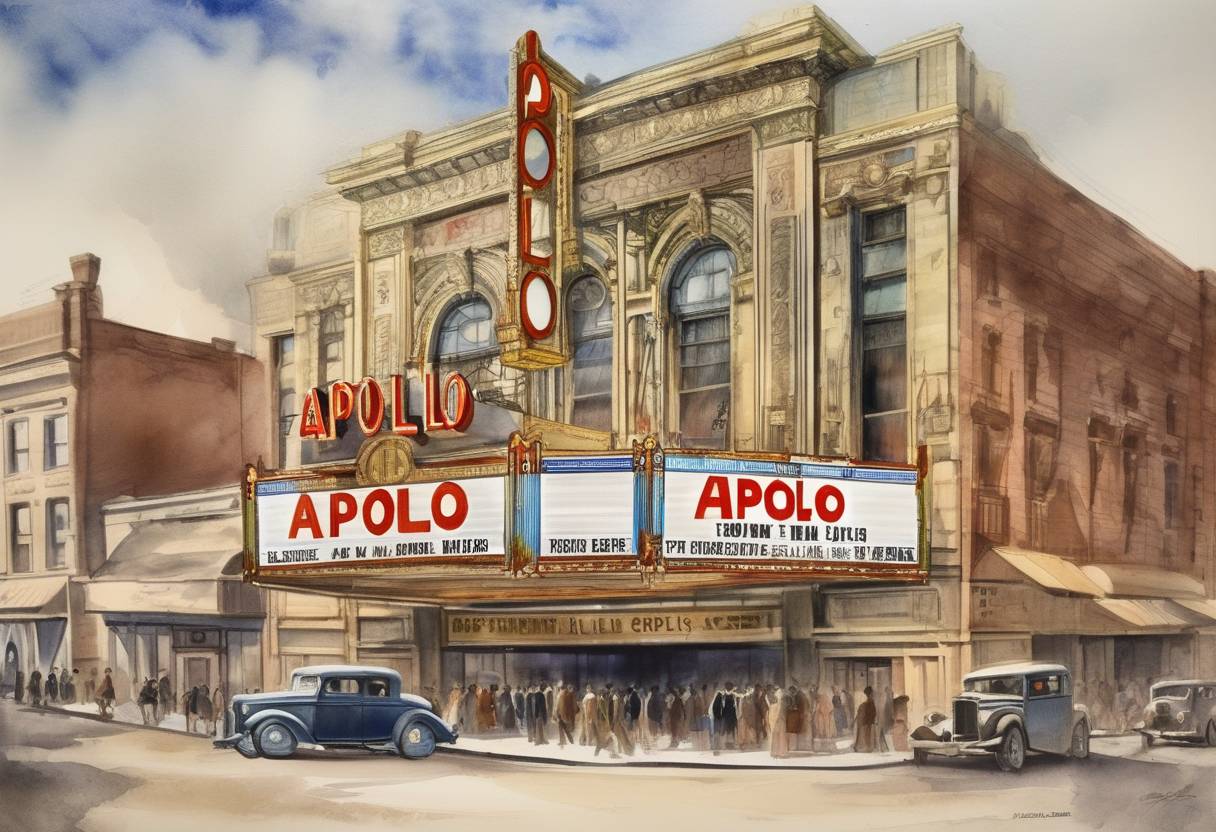
On January 26, 1934, the Apollo Theater officially opened its doors in Harlem, New York City, marking the beginning of its journey as a pivotal venue for African American performers and a cornerstone of American music history.
Harlem Renaissance: The opening of the Apollo Theater occurred during the Harlem Renaissance, a cultural, social, and artistic explosion centered in Harlem. This period saw a flourishing of African American culture, with Harlem becoming a hub for black artists, musicians, writers, and thinkers.
Great Migration: The early 20th century witnessed the Great Migration, where millions of African Americans moved from the rural Southern United States to urban areas in the North, including New York City. This migration significantly influenced the cultural landscape of cities like Harlem.
Location: Situated on 125th Street in Harlem, the Apollo Theater was originally built in 1913 as a burlesque venue named Hurtig & Seamon’s New Burlesque Theater. It was later purchased by Sidney Cohen and Morris Sussman, who transformed it into a venue for African American performers.
Opening Night: The theater’s opening night featured a variety of acts, including jazz and swing performances, which were immensely popular at the time. The Apollo quickly became known for its “Amateur Night” contests, which provided a platform for emerging talent.
Cultural Impact: The Apollo Theater became a launching pad for numerous legendary African American artists, including Ella Fitzgerald, Billie Holiday, James Brown, and later, artists like Michael Jackson and Lauryn Hill. It played a crucial role in the development of genres such as jazz, blues, soul, and R&B.
Social Influence: Beyond entertainment, the Apollo Theater served as a cultural and social gathering place for the African American community, fostering a sense of pride and identity during a time of racial segregation and discrimination.
Enduring Legacy: Today, the Apollo Theater remains an iconic symbol of African American culture and continues to host performances and events that celebrate its rich history and ongoing influence in the arts.
The opening of the Apollo Theater on January 26, 1934, was not just the inauguration of a performance venue but the beginning of a legacy that would shape the cultural and musical landscape of America for decades to come.
Source: en.wikipedia.org