The Battle of Brandywine: September 11, 1777
1777 · Chadds Ford Township, United States
The Battle of Brandywine occurred during the American Revolutionary War, resulting in a British victory.
November 16, 1776
The Battle of Fort Washington ends in a decisive British victory during the American Revolutionary War.
New York City, United States | British Army
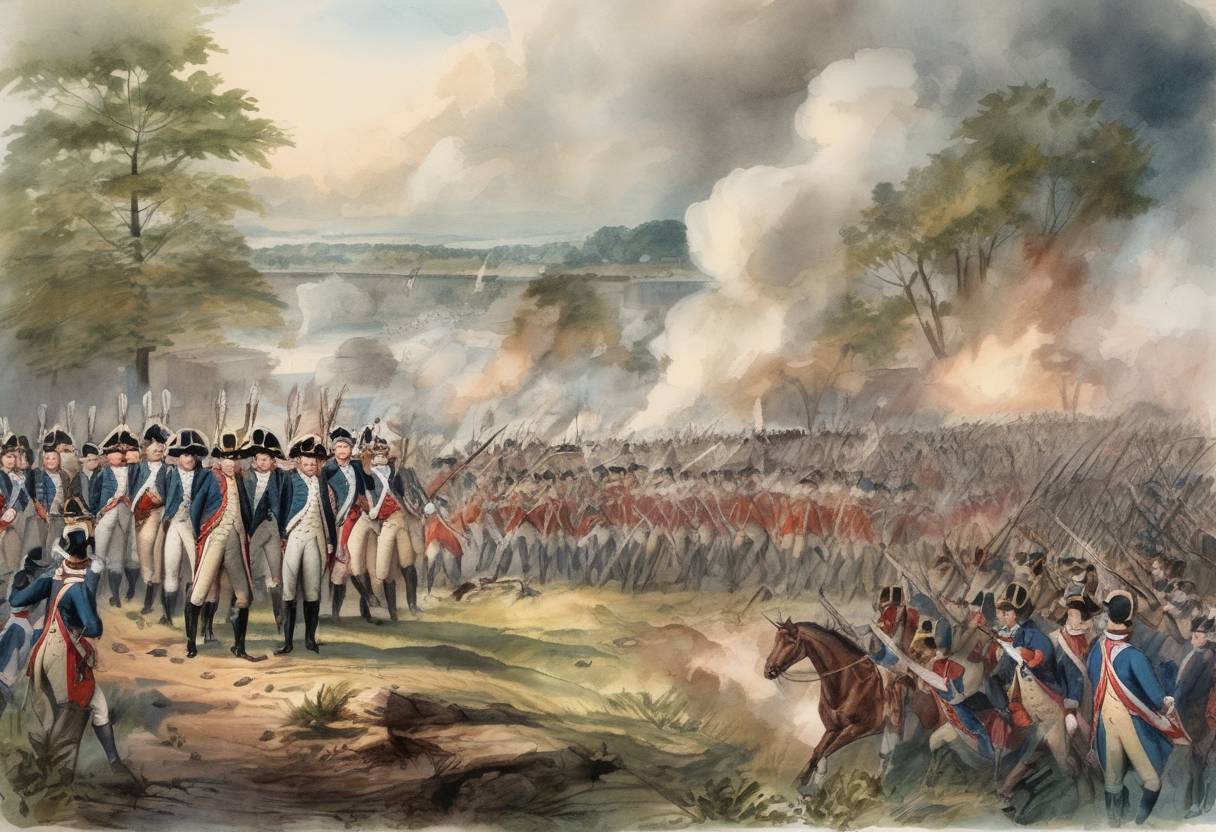
The Battle of Fort Washington was a significant engagement during the American Revolutionary War, taking place in the early stages of the conflict. The fort was located on the northern tip of Manhattan Island, New York, and was a strategic point for the Continental Army, commanded by General George Washington. The fort’s position was intended to prevent British naval movements along the Hudson River and to protect the American forces’ retreat from New York City, which had fallen to the British earlier in the campaign.
British Campaign in New York: Following their victory in the Battle of Long Island in August 1776, British forces, led by General William Howe, sought to consolidate control over New York City and its surroundings. The capture of Fort Washington was part of this broader strategy.
American Defensive Position: The fort was garrisoned by approximately 3,000 Continental troops under the command of Colonel Robert Magaw. Despite its strategic importance, the fort was vulnerable due to its isolation and the overwhelming strength of the British forces.
British Assault: On November 16, 1776, General Howe launched a coordinated assault on Fort Washington. The attack involved a multi-pronged approach, with British and Hessian troops attacking from different directions.
Overwhelming Forces: The British forces, numbering around 8,000, included seasoned British regulars and Hessian mercenaries. They were well-equipped and outnumbered the American defenders significantly.
American Surrender: Despite a determined defense, the American forces were overwhelmed by the superior numbers and firepower of the British. Colonel Magaw, recognizing the futility of further resistance, surrendered the fort by the afternoon.
Casualties and Prisoners: The Americans suffered significant casualties, with around 59 killed and 96 wounded. Approximately 2,837 American soldiers were taken prisoner, marking one of the largest surrenders of American troops during the war.
Strategic Impact: The loss of Fort Washington was a severe blow to the Continental Army. It led to the abandonment of Fort Lee across the Hudson River in New Jersey and forced the American forces to retreat further, marking the beginning of a difficult winter campaign.
British Control: The victory solidified British control over New York City and the surrounding areas, which remained under British occupation for the remainder of the war.
The Battle of Fort Washington highlighted the challenges faced by the Continental Army in terms of manpower, resources, and strategic positioning. It underscored the need for better coordination and support among American forces. Despite this setback, the Continental Army would eventually regroup and continue the struggle for independence, learning valuable lessons from such defeats.
The battle also demonstrated the effectiveness of British and Hessian troops in conventional warfare, emphasizing the need for the Americans to adapt their tactics in future engagements. The loss at Fort Washington was a sobering moment for the American cause, but it also steeled the resolve of the revolutionaries to continue their fight for independence.
Source: en.wikipedia.org