Christopher Columbus Lands in Cuba: October 28, 1492
1492 · Cuba, Spain
Christopher Columbus lands in Cuba during his first voyage to the New World.
October 12, 1492
Christopher Columbus made landfall in the Bahamas, marking the first European encounter with the Americas in what is now known as the Age of Exploration.
San Salvador Island, Bahamas | Spanish Crown
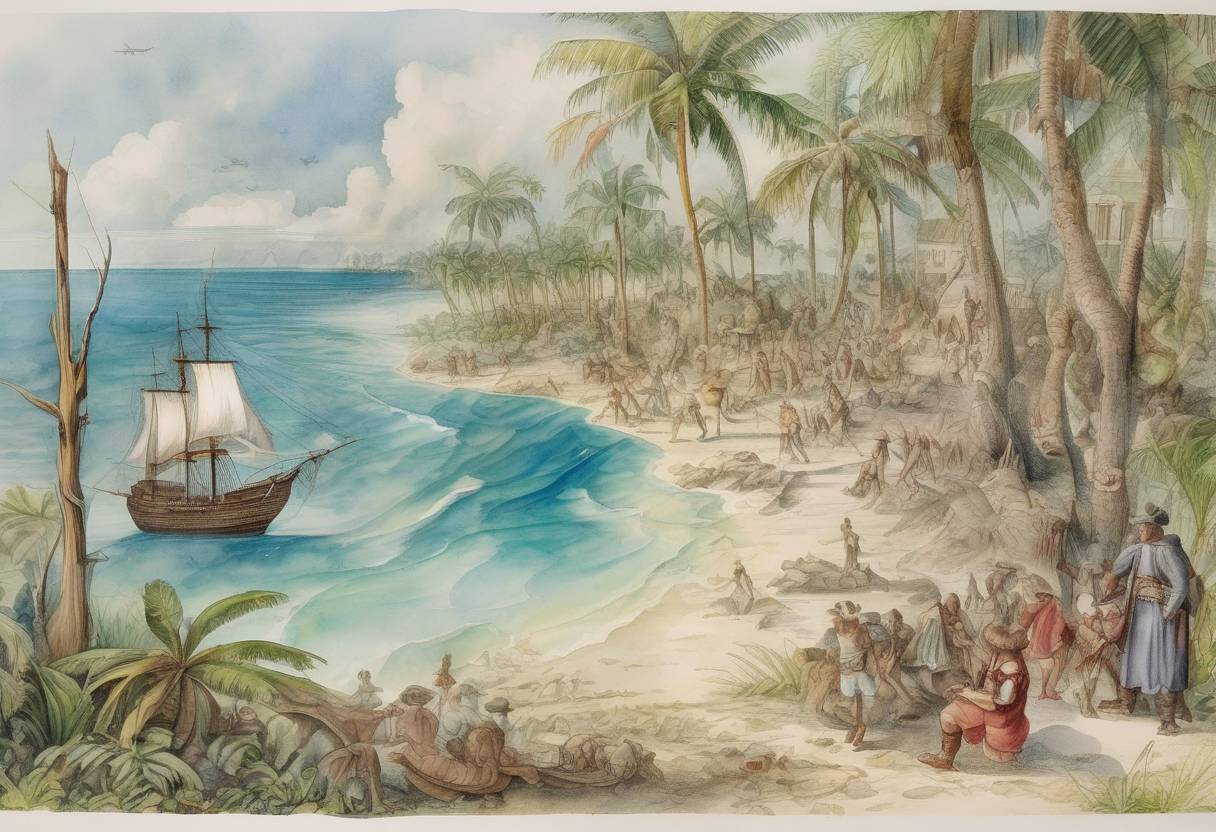
On October 12, 1492, Christopher Columbus, an Italian navigator sailing under the Spanish flag, made landfall in the Bahamas, marking a pivotal moment in world history. This event is often cited as the beginning of the Age of Exploration, a period characterized by European global exploration and the subsequent colonization of various parts of the world.
Sponsorship by Spain: Columbus’s voyage was sponsored by the Catholic Monarchs of Spain, King Ferdinand II and Queen Isabella I. They sought a westward sea route to Asia to establish direct trade links for valuable commodities such as spices and silk.
The Fleet: Columbus set sail from Palos de la Frontera, Spain, on August 3, 1492, with three ships: the Niña, the Pinta, and the Santa María. The expedition was manned by a crew of about 90 men.
Crossing the Atlantic: After a stopover in the Canary Islands, Columbus and his crew embarked on their transatlantic journey. They faced challenges such as unpredictable weather and growing discontent among the crew due to the prolonged voyage.
Landfall: On the morning of October 12, 1492, land was sighted. Columbus and his crew landed on an island in the Bahamas, which he named San Salvador. The exact location of this first landfall is debated, but it is generally believed to be one of the islands in the present-day Bahamas.
First Encounter: Columbus’s landing marked the first recorded European encounter with the Americas. This event paved the way for the widespread exploration and eventual colonization of the New World by European powers.
Cultural Exchange: The encounter initiated a period of extensive cultural exchange between the Old and New Worlds, often referred to as the Columbian Exchange. This exchange included the transfer of plants, animals, technology, and unfortunately, diseases, which had profound effects on both continents.
Colonial Expansion: Columbus’s voyages opened the door for subsequent expeditions by other European nations, leading to the establishment of colonies throughout the Americas. This had lasting impacts on indigenous populations and global geopolitics.
Columbus’s Legacy: Columbus made three more voyages to the New World, exploring parts of the Caribbean and Central and South America. Despite his initial belief that he had reached Asia, his discoveries were instrumental in changing the European understanding of world geography.
Controversy and Impact: Columbus’s legacy is complex and controversial. While celebrated for his role in connecting the continents, his expeditions also led to the exploitation and suffering of indigenous peoples. This dual legacy continues to be the subject of debate and reflection.
In summary, Columbus’s landfall in the Bahamas on October 12, 1492, was a landmark event that reshaped the course of history, setting the stage for the Age of Exploration and the profound transformations that followed.
Source: en.wikipedia.org