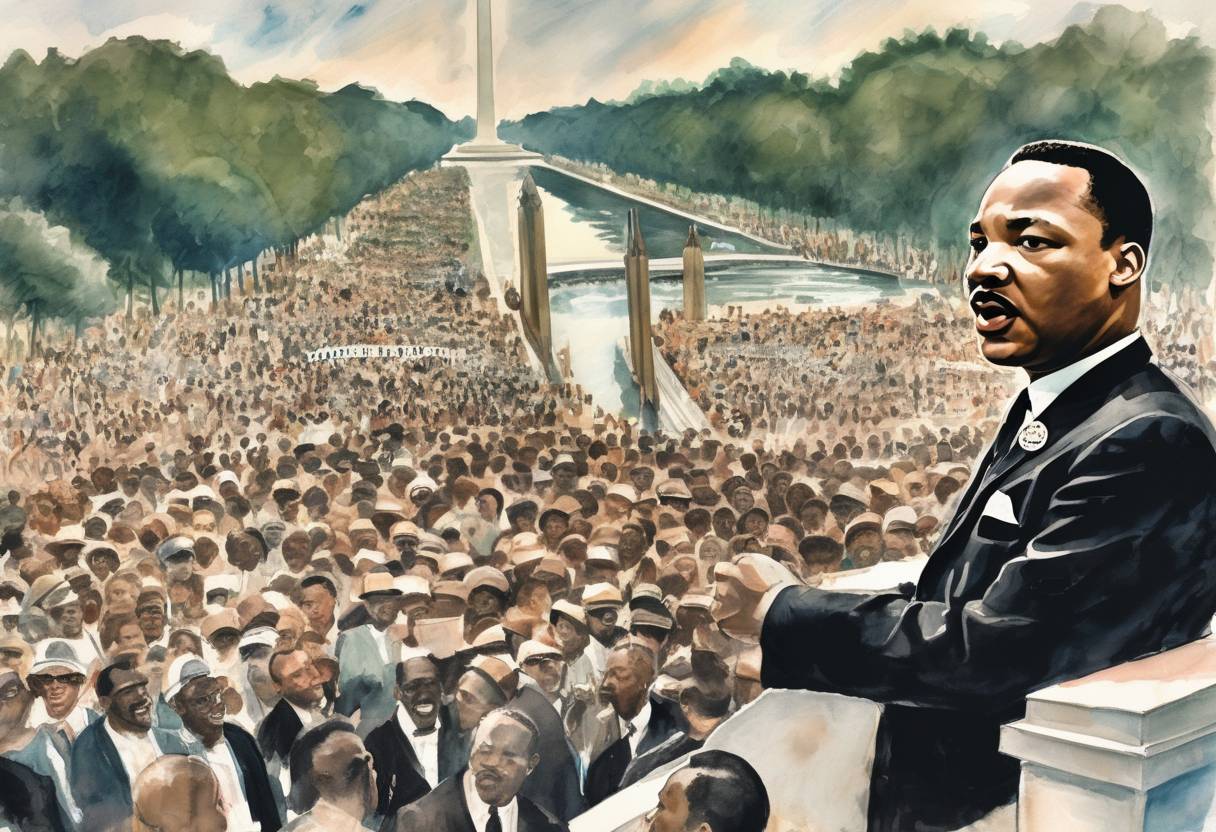
Martin Luther King Jr.’s “I Have a Dream” Speech
On August 28, 1963, Martin Luther King Jr. delivered his iconic “I Have a Dream” speech during the March on Washington for Jobs and Freedom. This event was a pivotal moment in the American Civil Rights Movement and is remembered as one of the most powerful speeches in history.
Context Leading Up to the Event
The early 1960s were marked by significant racial tensions and widespread discrimination against African Americans in the United States. The Civil Rights Movement was gaining momentum, with activists advocating for equal rights and an end to segregation. The March on Washington was organized by a coalition of civil rights, labor, and religious organizations to advocate for civil and economic rights for African Americans.
The March on Washington
- Date: August 28, 1963
- Location: Washington, D.C.
- Attendance: Approximately 250,000 people
- Purpose: To advocate for civil and economic rights for African Americans and to call for the passage of civil rights legislation.
The march was one of the largest gatherings for civil rights in U.S. history and was peaceful, with participants marching from the Washington Monument to the Lincoln Memorial.
The “I Have a Dream” Speech
- Speaker: Martin Luther King Jr.
- Location: Steps of the Lincoln Memorial
- Duration: Approximately 17 minutes
Key Themes and Content
Vision of Equality: King articulated his vision of a racially integrated and harmonious America. He famously declared his dream of a nation where people would be judged by their character rather than the color of their skin.
Historical References: King referenced the Emancipation Proclamation and the unfulfilled promise of freedom for African Americans, highlighting the ongoing struggle for civil rights.
Call to Action: He urged America to live up to its democratic ideals and called for nonviolent protest to achieve civil rights goals.
Hope and Unity: The speech emphasized hope, faith, and the possibility of achieving racial justice through unity and perseverance.
Notable Excerpts
- “I have a dream that one day this nation will rise up and live out the true meaning of its creed: ‘We hold these truths to be self-evident, that all men are created equal.’”
- “Let freedom ring from every hill and molehill of Mississippi. From every mountainside, let freedom ring.”
Aftermath and Significance
The “I Have a Dream” speech became a defining moment in the Civil Rights Movement, galvanizing support for civil rights legislation. It contributed to the passage of the Civil Rights Act of 1964 and the Voting Rights Act of 1965, which were landmark achievements in the fight against racial discrimination.
King’s speech remains a symbol of the struggle for equality and justice, and it continues to inspire movements for civil rights and social justice worldwide. The March on Washington and King’s speech are commemorated annually, reflecting their enduring impact on American society and the global fight for human rights.