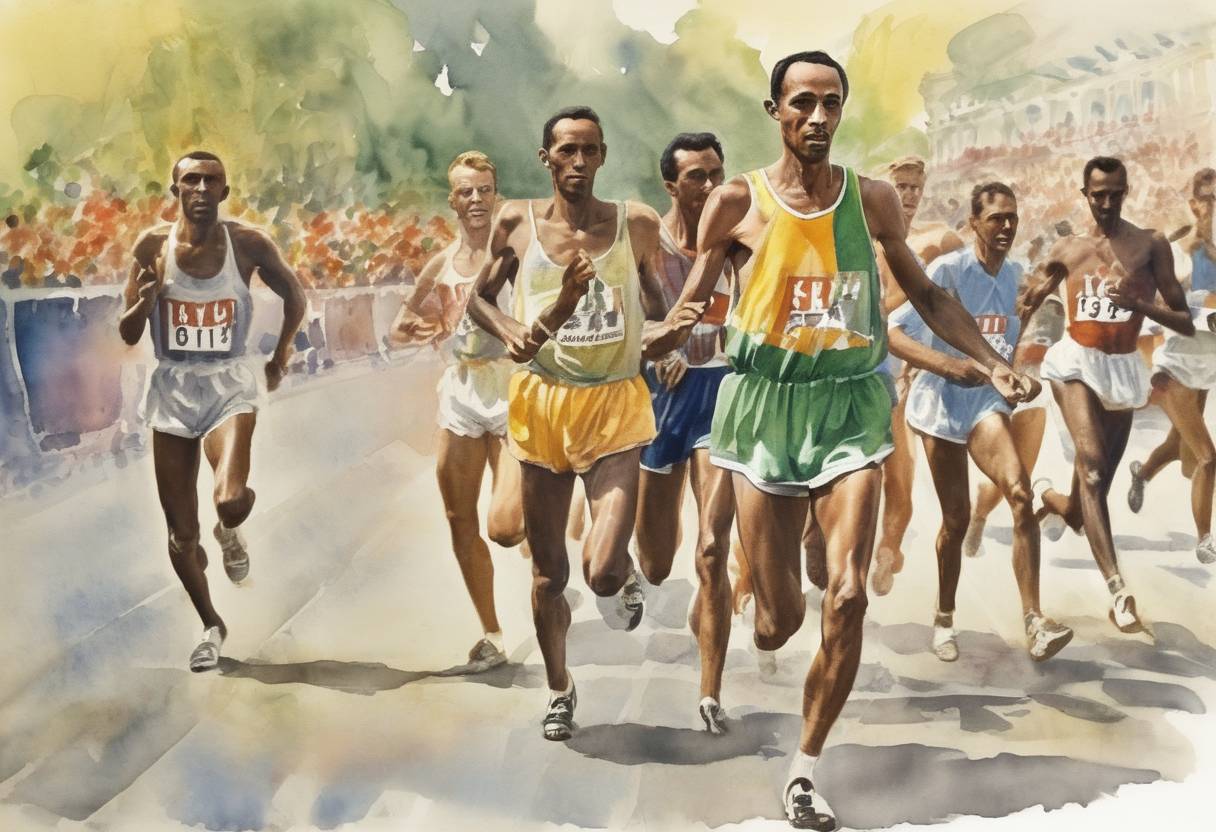
Abebe Bikila’s Historic Marathon Victory at the 1960 Rome Olympics
On September 10, 1960, Abebe Bikila of Ethiopia made history at the Summer Olympics in Rome by winning the marathon barefoot. This remarkable achievement marked the first time an African athlete had won an Olympic gold medal, setting a precedent for future generations of athletes from the continent.
Context and Background
- Ethiopia’s Olympic Participation: Ethiopia had only begun participating in the Olympics in 1956. By 1960, the nation was still relatively new to the international sporting arena.
- Abebe Bikila: Born on August 7, 1932, in the small village of Jato, Ethiopia, Bikila was a member of the Imperial Guard of Ethiopia. He was discovered by Swedish coach Onni Niskanen, who recognized his potential as a long-distance runner.
The Marathon Event
- Running Barefoot: Bikila ran the marathon without shoes, a decision made after the pair provided by the Olympic team caused him discomfort. This choice became a defining feature of his victory.
- The Race: The marathon course in Rome was challenging, winding through the historic streets and ending at the Arch of Constantine. Bikila maintained a steady pace throughout the race, staying close to the leading pack.
- Historic Finish: Bikila surged ahead in the final kilometers, overtaking Moroccan runner Rhadi Ben Abdesselam. He crossed the finish line in a record time of 2:15:16.2, setting a new world record.
Significance and Aftermath
- First African Gold Medalist: Bikila’s victory was a monumental moment for Africa, symbolizing the continent’s potential in international athletics.
- Inspiration and Legacy: Bikila’s triumph inspired countless athletes across Africa and the world. His story of perseverance and determination became a source of national pride for Ethiopia.
- Continued Success: Bikila went on to defend his title at the 1964 Tokyo Olympics, this time wearing shoes, becoming the first athlete to win consecutive Olympic marathons.
Broader Historical Impact
- Rise of African Athletes: Bikila’s success paved the way for future African athletes, who have since become dominant figures in long-distance running events.
- Cultural Significance: His victory highlighted the importance of sports as a platform for cultural exchange and international recognition.
Abebe Bikila’s barefoot marathon victory remains one of the most iconic moments in Olympic history, celebrated for its athletic excellence and its profound impact on the global sporting community.