The Battle of Stilo: Otto II's Campaign in Southern Italy
982 · Crotone, Italy
Otto II, Holy Roman Emperor, defeats an Arab force near Crotone in Southern Italy, marking a significant moment in his campaign to extend influence into Italy.
July 13, 0982
The Battle of Capo Colonna takes place, where the forces of the Holy Roman Emperor Otto II are defeated by the Muslim forces of the Emirate of Sicily.
Capo Colonna, Italy | Holy Roman Empire
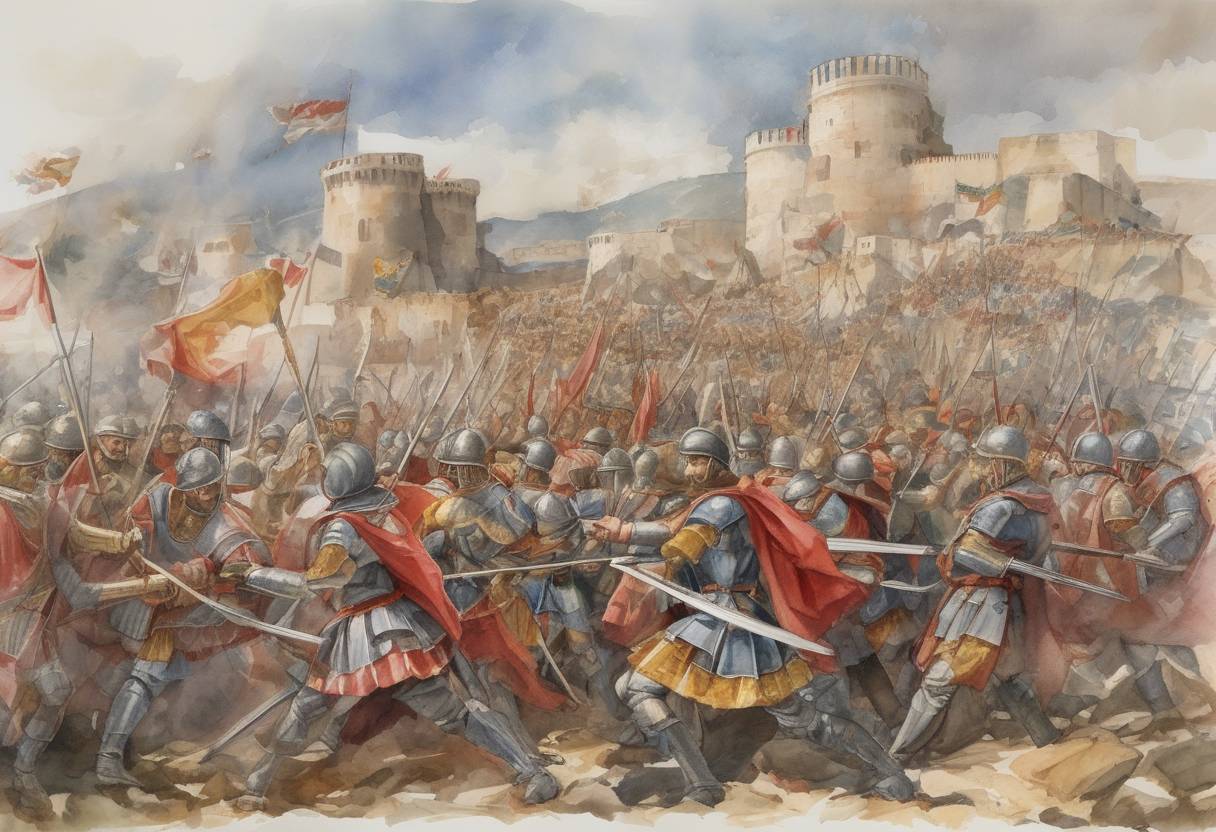
The Battle of Capo Colonna, fought on July 13, 982, was a significant military engagement between the forces of the Holy Roman Emperor Otto II and the Muslim forces of the Emirate of Sicily. This battle is notable for its impact on the power dynamics in Southern Italy during the late 10th century.
Holy Roman Empire: Otto II, who reigned as Holy Roman Emperor from 973 to 983, sought to expand his influence in Southern Italy. His ambitions were part of a broader strategy to consolidate imperial power in the region, which was fragmented and contested by various powers, including the Byzantine Empire and Muslim states.
Emirate of Sicily: At the time, Sicily was under the control of Muslim rulers who had established their presence on the island since the 9th century. The Emirate of Sicily was a formidable power in the Mediterranean, with interests in maintaining and expanding its influence in Southern Italy.
Preceding Events: Otto II’s campaign in Southern Italy was part of a series of military efforts to assert control over the region. Prior to the battle, Otto had achieved some successes, including alliances with local Lombard princes.
Location: The battle took place near Capo Colonna, located on the eastern coast of Calabria in Southern Italy. This strategic location was crucial for controlling access to the Italian peninsula.
Forces Involved: Otto II led a coalition of forces that included German, Lombard, and Byzantine troops. The Muslim forces were primarily composed of troops from the Emirate of Sicily, commanded by Emir Abu al-Qasim.
Outcome: The battle resulted in a decisive defeat for Otto II’s forces. The Muslim army effectively utilized their knowledge of the terrain and superior tactics to overcome the imperial forces. Otto II narrowly escaped with his life, but many of his troops were killed or captured.
Impact on Otto II: The defeat at Capo Colonna was a significant setback for Otto II. It curtailed his ambitions in Southern Italy and weakened his position in the region. The loss also had broader implications for the stability of his reign, as it exposed vulnerabilities in his military and political strategies.
Muslim Influence: The victory reinforced the position of the Emirate of Sicily in Southern Italy, allowing them to maintain and expand their influence in the region. It also demonstrated the military prowess of the Muslim forces in the Mediterranean.
Historical Significance: The battle is a key event in the history of medieval Italy, illustrating the complex interplay of power between Christian and Muslim states in the Mediterranean. It highlights the challenges faced by the Holy Roman Empire in exerting control over distant territories and the resilience of local powers in defending their interests.
In summary, the Battle of Capo Colonna was a pivotal moment in the struggle for control over Southern Italy, with lasting consequences for the political landscape of the region.
Source: en.wikipedia.org