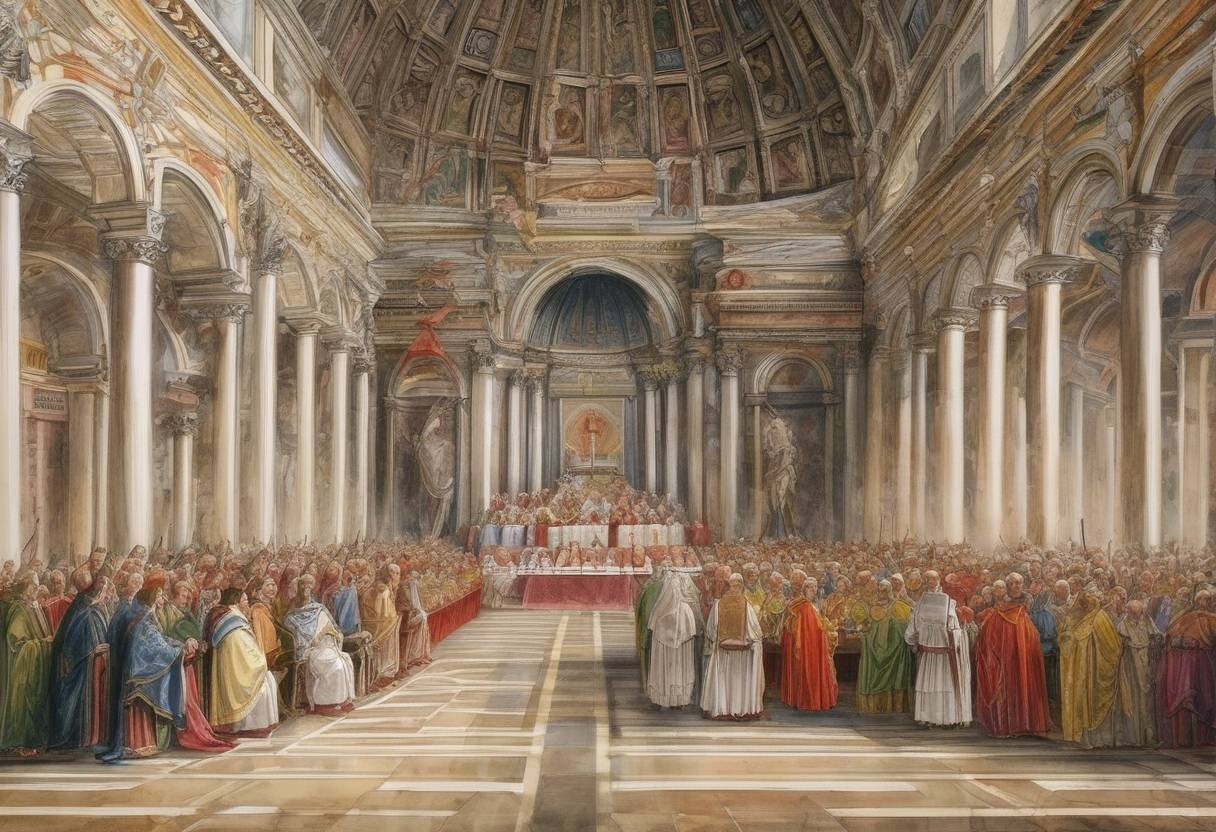
The Fourth Lateran Council: November 11, 1215
The Fourth Lateran Council, convened by Pope Innocent III, began on November 11, 1215, in Rome. This ecumenical council is recognized as one of the most significant in the history of the Catholic Church due to its comprehensive reforms and doctrinal definitions.
Context and Background
- Pope Innocent III: Elected in 1198, Innocent III was one of the most powerful and influential popes of the Middle Ages. His papacy was marked by efforts to reform the Church and assert papal authority.
- Preceding Events: The Church faced numerous challenges, including internal corruption, the need for doctrinal clarity, and external threats such as heretical movements like the Cathars and Waldensians.
Key Events and Decisions
- Transubstantiation: The council provided the first official definition of transubstantiation, the doctrine that during the Eucharist, the bread and wine become the actual body and blood of Christ. This was a crucial theological clarification that addressed debates about the nature of the Eucharist.
- Church Reforms: The council issued 70 canons (church laws) addressing various aspects of Church life and governance. These included:
- Clerical Conduct: Measures to improve the moral and ethical standards of the clergy.
- Sacramental Practice: Mandating annual confession and communion for all Christians.
- Marriage: Establishing clearer regulations regarding marriage and prohibiting clandestine marriages.
- Crusades: The council called for a new crusade to the Holy Land, emphasizing the Church’s ongoing commitment to reclaiming Jerusalem.
- Heretical Movements: It condemned heresies and laid the groundwork for the establishment of the Inquisition to combat heretical teachings.
Aftermath and Significance
- Impact on the Church: The reforms initiated by the Fourth Lateran Council had a lasting impact on the structure and discipline of the Church, reinforcing papal authority and setting a precedent for future councils.
- Doctrinal Clarity: By defining key theological concepts, the council helped unify Christian doctrine and practice across Europe.
- Social and Political Influence: The council’s decisions influenced not only religious life but also social and political structures, as the Church played a central role in medieval society.
The Fourth Lateran Council remains a pivotal moment in Church history, reflecting the dynamic interplay between religious doctrine, ecclesiastical reform, and the broader socio-political context of the 13th century.