Nelson Mandela's Inauguration as South Africa's First Black President
1994 · Pretoria, South Africa
Nelson Mandela is inaugurated as South Africa's first black president.
December 5, 2013
Nelson Mandela, the former President of South Africa and anti-apartheid revolutionary, passes away at the age of 95. His death marks the end of an era in South African history and prompts a global outpouring of tributes and reflections on his legacy.
Johannesburg, South Africa | South African Government
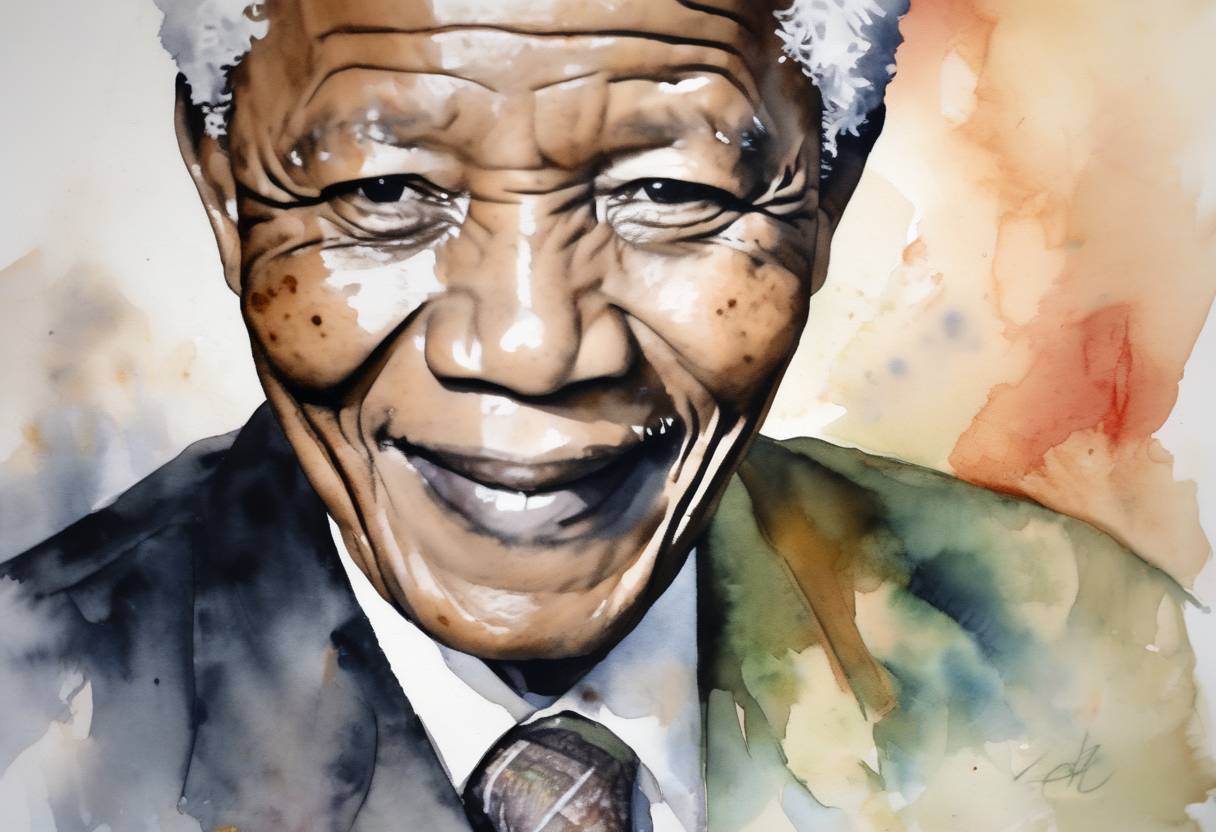
On December 5, 2013, Nelson Mandela, the revered former President of South Africa and iconic anti-apartheid revolutionary, passed away at the age of 95. His death marked the end of an era in South African history and prompted a global outpouring of tributes and reflections on his profound legacy.
Nelson Mandela was born on July 18, 1918, in the village of Mvezo in Umtata, then part of South Africa’s Cape Province. He became actively involved in the anti-apartheid movement in his 20s and joined the African National Congress (ANC) in 1943. Mandela’s leadership and commitment to ending racial segregation and discrimination in South Africa made him a central figure in the struggle against apartheid.
Imprisonment: In 1962, Mandela was arrested and later sentenced to life imprisonment for his involvement in planning to overthrow the government. He spent 27 years in prison, primarily on Robben Island, becoming a symbol of resistance against apartheid.
Release and Negotiations: Mandela was released from prison on February 11, 1990, amid growing domestic and international pressure on the South African government. His release marked the beginning of a transition from apartheid to a democratic South Africa.
Presidency: In 1994, Mandela became South Africa’s first Black president after the country’s first multiracial elections. His presidency focused on reconciliation and nation-building, establishing the Truth and Reconciliation Commission to address past human rights abuses.
Mandela’s leadership and vision for a united South Africa earned him global admiration. He was awarded the Nobel Peace Prize in 1993, alongside then-President F.W. de Klerk, for their efforts to dismantle apartheid peacefully.
Mandela’s passing was met with an outpouring of grief and tributes from leaders and citizens worldwide. South African President Jacob Zuma announced Mandela’s death, stating, “Our nation has lost its greatest son.” Memorial services and tributes highlighted Mandela’s enduring influence on the fight for justice and equality.
Mandela’s legacy continues to inspire movements for social justice and equality worldwide. His life and work remain a testament to the power of forgiveness, reconciliation, and the enduring struggle for human rights.
In summary, Nelson Mandela’s death on December 5, 2013, marked a significant moment in history, reflecting on a life dedicated to the fight against oppression and the pursuit of a more equitable world. His legacy endures as a beacon of hope and resilience for future generations.
Source: www.bbc.com