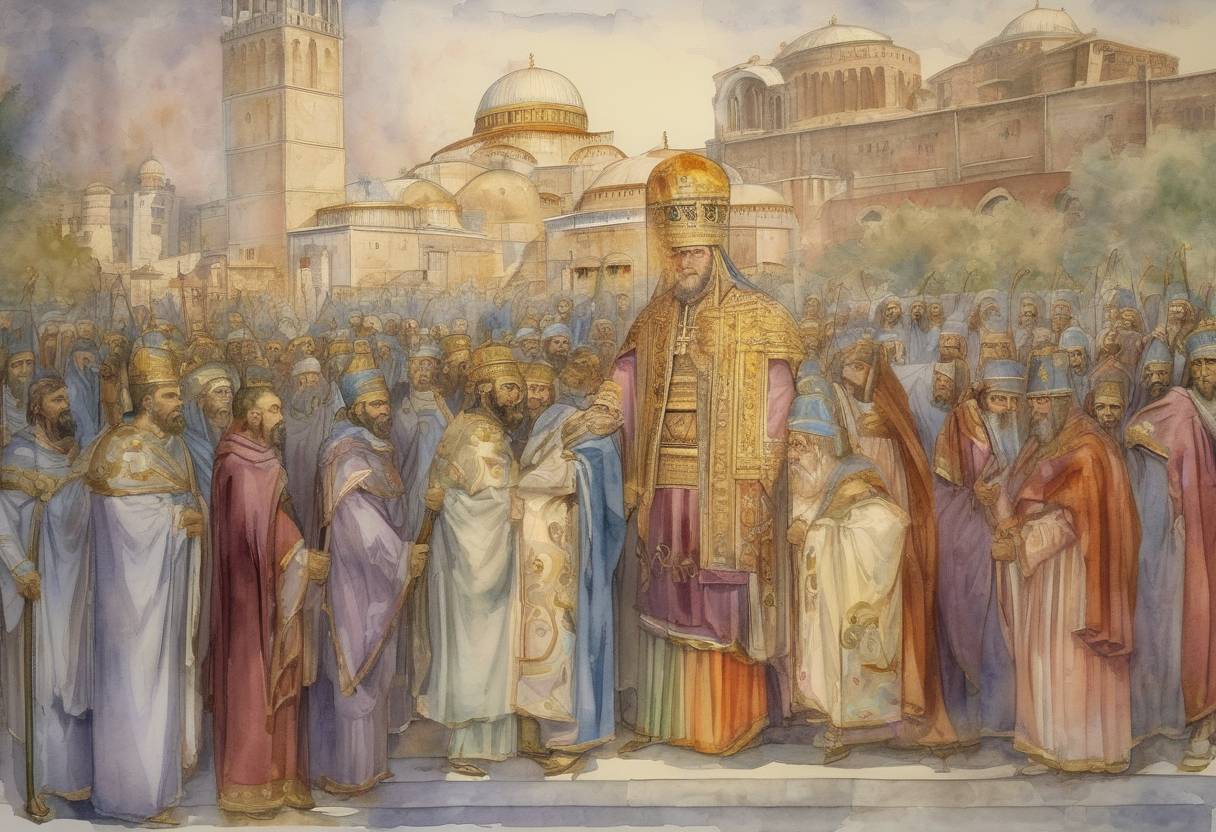
Theophilos Becomes Byzantine Emperor on October 2, 829
On October 2, 829, Theophilos ascended to the throne as the Byzantine Emperor, marking the beginning of a reign that would last until his death in 842. His accession followed the death of his father, Emperor Michael II, and he became the sole ruler of the Byzantine Empire.
Background
Theophilos was born around 813, during a period of significant internal and external challenges for the Byzantine Empire. His father, Michael II, had come to power in 820 after a revolt against Emperor Leo V, which led to a period of instability. Theophilos was well-educated and known for his interest in the arts and sciences, which was reflective of the broader cultural revival occurring during the Byzantine Renaissance.
Key Events During Theophilos’ Reign
Military Campaigns: Theophilos is noted for his military campaigns against the Abbasid Caliphate. He sought to reclaim lost territories and defend the empire’s eastern frontiers. Despite some initial successes, such as the capture of Melitene in 837, his campaigns ultimately faced setbacks, including a significant defeat at the Battle of Anzen in 838.
Iconoclasm: Theophilos was a staunch supporter of Iconoclasm, the policy of opposing the veneration of religious images, which had been a contentious issue within the empire. His reign saw the continuation of the Iconoclastic Controversy, which had profound religious and political implications for Byzantine society.
Cultural Patronage: Despite the religious controversies, Theophilos was a patron of the arts and education. He is credited with fostering a cultural revival, supporting scholars, and commissioning the construction of new buildings, including the expansion of the imperial palace in Constantinople.
Administrative Reforms: Theophilos implemented several administrative reforms aimed at improving the efficiency of the Byzantine government. He worked to strengthen the central authority and improve the empire’s fiscal policies.
Aftermath and Legacy
Theophilos’ reign ended with his death on January 20, 842. His policies, particularly his support for Iconoclasm, had lasting impacts on the Byzantine Empire. After his death, the Iconoclastic Controversy was resolved in favor of the veneration of icons during the regency of his widow, Empress Theodora, and their son, Michael III.
Theophilos is remembered as a complex figure who balanced military ambitions with cultural patronage. His reign is often seen as a period of both conflict and cultural flourishing, reflecting the broader dynamics of the Byzantine Empire during the 9th century.